
Why the Universe Seems Too Ordered to Be Random
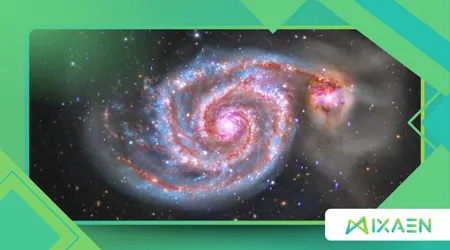
The Universe Seems Too Ordered to Be Random is a compelling philosophical and scientific conundrum that has fascinated thinkers for centuries.
When we observe the cosmos, from the delicate balance within an atom to the structure of galactic superclusters, precision is everywhere.
This apparent fine-tuning challenges our perception of simple, chaotic chance. The argument isn’t about conscious design, but about statistical improbability.
The physical constants that govern the universe appear perfectly calibrated to allow for complexity and, crucially, for life.
What Fundamental Constants Exhibit Astounding Fine-Tuning?
The evidence that the Universe Seems Too Ordered to Be Random rests heavily on the specific values of fundamental physical constants.
If these constants were infinitesimally different, the universe as we know it could not exist.
These values, such as the strength of gravity or the mass of an electron, appear arbitrarily precise. They define the very architecture of reality.
++ Why There Are Still No Answers About What Happened Before the Big Bang
Why is the Strength of Gravity so Critically Balanced?
The strength of the gravitational force is one such finely tuned constant. If gravity were even slightly stronger, stars would burn out rapidly.
A marginally weaker gravitational force, conversely, would prevent gases from clumping to form stars and galaxies. In either scenario, complex chemistry, planets, and life would be impossible.
Also read: Is There a Shadow Universe Interacting with Ours?
How Does the Electromagnetic Force Affect Element Formation?
The relative strengths of the electromagnetic and strong nuclear forces are also critical. This balance dictates how atomic nuclei form within stars.
If the electromagnetic force were slightly weaker, there would be no hydrogen the basic building block of all stars. If it were stronger, carbon, the basis of life, could not form.
Read more: The Hypothetical Planet Nine: Clues from the Outer Solar System
The Carbon Resonance
Physicist Fred Hoyle noted a stunning example concerning carbon production. For carbon to be synthesized in stars, the energy levels (resonance) of carbon, helium, and oxygen nuclei must align perfectly.
Hoyle called this “triple-alpha process” a coincidence of absolutely astronomical proportions. This perfect energy level alignment is essential for life’s chemistry.
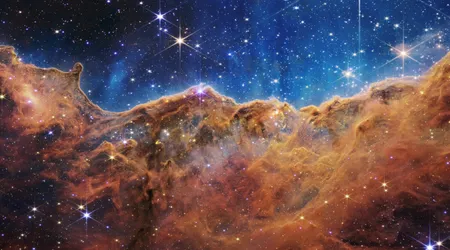
How Does the Initial State of the Universe Suggest Order?
The initial conditions immediately following the Big Bang also suggest an astonishing level of order, specifically concerning low entropy.
Entropy measures disorder, and the universe began in a highly improbable, low-entropy state.
This extremely high initial order was necessary for the smooth expansion and the eventual formation of structure, arguing strongly that the Universe Seems Too Ordered to Be Random.
What is the Significance of Low Initial Entropy?
For the universe to evolve into planets, galaxies, and life, it had to start remarkably uniform and concentrated. A random start would likely result in immediate, uniform dissipation (high entropy).
The low initial entropy provided the “gravitational smoothness” necessary for matter to aggregate into stars and galaxies over billions of years.
How Did the Uniformity of the Early Universe Enable Structure?
Observations of the Cosmic Microwave Background (CMB) show the early universe was incredibly uniform. However, tiny fluctuations in density were present.
These microscopic ripples served as the seeds for all future cosmic structure. Had these fluctuations been much larger, the universe would have collapsed into black holes quickly.
The Cosmic Jigsaw Puzzle
The early universe is like a perfectly organized cosmic jigsaw puzzle.
All the pieces (matter and energy) were precisely arranged in a low-entropy state, allowing gravity to slowly assemble the picture (galaxies and stars) over time. Randomness would have created a pile of dust.
What Are the Scientific Explanations for the Apparent Fine-Tuning?
While the apparent order is stunning, science offers several explanations that rely on known physics and probability, rather than invoking supernatural intervention.
These theories attempt to incorporate the improbable into a larger, coherent framework.
The primary scientific counter-arguments are based on the Anthropic Principle and the Multiverse Hypothesis, suggesting we only observe what is possible.
What is the Weak Anthropic Principle?
The Weak Anthropic Principle states that we must necessarily observe a universe capable of generating conscious observers. If the constants were different, we simply wouldn’t be here to ask the question.
In essence, the conditions for life are necessary prerequisites for observation itself. We are biased observers in our uniquely hospitable environment.
How Does the Multiverse Hypothesis Address Improbability?
The Multiverse Hypothesis posits the existence of an enormous, perhaps infinite, number of universes, each with different physical laws and constants.
If this is true, then statistically, at least one universe must have the right constants for life. We happen to live in that one, explaining why the Universe Seems Too Ordered to Be Random.
The Cosmic Race
Consider a hypothetical constant, the ratio of the neutron mass to the proton mass. If this ratio were slightly higher, all protons would have decayed into neutrons, preventing stable hydrogen atoms.
What Challenges Remain for the Multiverse Theory?
While the Multiverse Hypothesis elegantly addresses the probability problem, it introduces its own significant challenges that keep the debate alive in physics circles. Primarily, it raises the issue of falsifiability.
A scientific theory must be testable, but the very definition of other universes means they are beyond our light cone and direct observation.
Why is the Multiverse Theory Difficult to Falsify?
Since there is no currently conceivable way to empirically observe or measure other universes, the Multiverse remains a purely theoretical construct. This makes it impossible to definitively prove or disprove its existence.
This lack of testability raises questions about its status as a truly scientific theory, despite its explanatory power for why the Universe Seems Too Ordered to Be Random.
How Does Complexity Emerge from Simple Physical Laws?
Another crucial area of study is complexity theory. Even with fixed constants, the simple laws of physics can generate incredible complexity and structure purely through self-organization.
Snowflakes, weather patterns, and biological systems emerge from basic rules. This suggests that order is a natural, inevitable outcome, not a statistical fluke.
Research published in Physical Review Letters in 2024 proposed models suggesting that for certain fundamental constants, the ‘habitable range’ is not a single point but a stable attractor basin within the landscape of possibilities.
This indicates that some order is dynamically favored, not purely accidental.
| Physical Constant | Impact if Slightly Larger | Impact if Slightly Smaller |
Gravitational Force “ G” G” | Stars burn too fast, collapse quickly | No stars/galaxies form; universe is dilute |
| Cosmological Constant (Λ) | Universe expands too fast; no structure | Universe collapses quickly (Big Crunch) |
| Strong Nuclear Force | No hydrogen (all helium); no water | No stable heavy elements (no carbon/oxygen) |
Conclusion: Order as a Reflection of Possibility
The argument that the Universe Seems Too Ordered to Be Random remains a powerful driver of modern physics and cosmology.
The staggering precision of the constants and initial conditions compels us to seek deeper explanations beyond mere chance.
Whether the answer lies in the statistical inevitability of a Multiverse or in undiscovered principles of self-organization, the cosmos reveals a fundamental elegance.
The fact that the universe supports observers is arguably the most ordered observation of all.
Does the sheer improbability of our existence imply necessity, or is it just the ultimate cosmic lottery win? Share your perspective on the fine-tuning debate in the comments!
Frequently Asked Questions
What is “Fine-Tuning” in cosmology?
Fine-tuning refers to the phenomenon where fundamental physical constants must fall within an incredibly narrow range of values for life and complex structures (like galaxies) to exist.
Is the Anthropic Principle a scientific law?
No. It is a controversial philosophical argument, not a falsifiable law. It explains why we observe certain conditions but doesn’t explain how those conditions arose.
3. Does the Multiverse violate Occam’s Razor?
Critics argue the Multiverse violates Occam’s Razor (the principle that the simplest explanation is usually the best) because it posits the existence of infinite, unobservable entities to solve one problem.
4. What is the role of the Higgs Boson in cosmic order?
The Higgs Boson helps explain why particles have mass. Its field is essential to the stability of the electron and proton masses. If the Higgs field strength were different, chemistry would be unstable.
5. What is the opposite of a low-entropy state?
High entropy. If the universe had begun with high entropy, matter would have been uniformly distributed. This would prevent the clumping necessary to form stars, planets, and life.
