
How Close Can We Get to the Sun Without Melting?
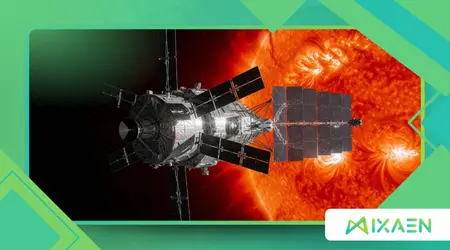
How Close Can We Get to the Sun Without Melting is a question that defines the very edge of modern aerospace engineering and solar science.
As we move through 2025, our understanding of thermal protection systems has reached unprecedented heights, allowing us to touch the stars.
The sun is a chaotic ball of plasma, radiating energy that could vaporize most materials instantly.
Yet, human ingenuity has crafted shields that defy these extreme conditions, pushing the boundaries of what we once thought was physically impossible.
What are the Physical Limits of Approaching Our Star?
The primary challenge in answering How Close Can We Get to the Sun Without Melting lies in the difference between heat and temperature.
In space, high temperatures don’t always mean high heat transfer, which is a vital distinction for survival.
Radiation is the only way heat travels in a vacuum. A spacecraft must reflect most of this energy back into the void to keep its internal components functional.
++ How Scientists Photograph the Sun Without Blinding Themselves
How Does the Inverse Square Law Impact Solar Missions?
The intensity of solar radiation increases exponentially as a probe moves closer. According to the inverse square law, halving the distance quadruples the radiation hitting the surface.
This means that small movements toward the sun require massive leaps in shielding technology. Engineers must account for this rapid escalation to prevent the total structural failure of the vessel.
Also read: Could a Sudden Solar Shift Disrupt Earth’s Climate?
What Role Does the Solar Corona Play in Thermal Planning?
Surprisingly, the Sun’s outer atmosphere, the corona, is much hotter than its surface. This region presents a unique paradox that scientists are still working to fully understand today.
Spacecraft entering this zone face temperatures of millions of degrees. However, because the plasma is sparse, the actual heat transferred to the probe is manageable with modern carbon composites.
Read more: Why the Sun Sometimes “Goes Quiet” and What That Means
Why is Thermal Equilibrium the Ultimate Goal?
Achieving thermal equilibrium means the heat absorbed by the craft equals the heat it radiates away. If this balance fails, the internal electronics will fry within seconds of exposure.
Researchers use sophisticated radiators and heat pipes to move warmth from the sun-facing side to the cold, dark side. This constant redistribution is what keeps the mission alive during its closest approach.
What Happens to Common Materials Near the Sun?
At these distances, standard aluminum or steel would simply soften and lose structural integrity. Even specialized glass would darken and crack under the intense ultraviolet and X-ray bombardment.
Materials must have extremely high melting points and low thermal expansion. Without these properties, the spacecraft would warp and break apart long before reaching its destination perihelion.
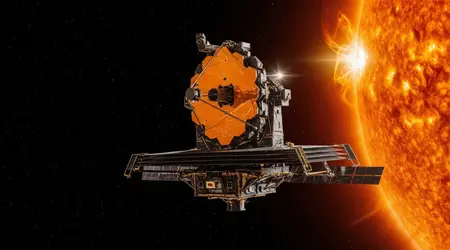
How Does Carbon Shielding Technology Protect Spacecraft?
NASA’s Parker Solar Probe provides the definitive answer to How Close Can We Get to the Sun Without Melting. Its success relies on a 4.5-inch thick Carbon-Composite Heat Shield that faces the solar fire.
This shield, known as the Thermal Protection System (TPS), is remarkably light. It consists mostly of air trapped between two sheets of carbon-carbon panels, providing incredible insulation.
What is the Secret of the Carbon-Carbon Composite?
Carbon-carbon composites can withstand temperatures up to 1,650°C (3,000°F) while maintaining their shape. This material is essentially a reinforced version of the graphite found in your everyday pencil.
By using specialized foams, engineers ensure that the back of the shield stays at a comfortable room temperature. This allows delicate sensors to operate just inches away from a literal inferno.
How Do Autonomous Cooling Systems Operate?
The spacecraft cannot rely on signals from Earth to adjust its position because of the communication delay. Instead, it uses solar sensors to detect when the shield is out of alignment.
If the sun’s edge touches the side of the craft, the probe automatically rotates to hide behind its shield. This autonomous reflex is the only reason the mission hasn’t melted yet.
What Statistic Proves the Efficiency of Solar Shielding?
In a recent 2024 update on the Parker Solar Probe mission, NASA confirmed a staggering data point. While the front of the TPS reached 1,370°C, the instruments behind it stayed at just 29°C.
This massive temperature gradient is a testament to the power of carbon-based insulation. It represents one of the most significant thermal engineering feats in the history of human space exploration.
What Analogy Best Explains Solar Thermal Protection?
Imagine standing in front of a roaring campfire while holding a thick piece of specialized Styrofoam. The side facing the fire might be charring, but your hand remains perfectly cool.
How Close Can We Get to the Sun Without Melting is essentially a high-tech version of this scenario. The foam is the carbon shield, and the “hand” is the million-dollar scientific instrument package.
Why is Current Research Pushing Even Closer?
Scientists are not satisfied with just observing; they want to sample the sun’s actual environment. This drive requires even more advanced materials that can survive the intense solar wind and magnetic storms.
Every mile closer provides data on how the sun affects space weather on Earth. Understanding these phenomena can protect our global power grids and communication satellites from catastrophic solar flares.
What are the Benefits of Sampling the Solar Wind?
The solar wind carries particles that can strip away planetary atmospheres over billions of years. By getting closer, we can see these particles at their origin before they accelerate.
This data helps us predict “solar storms” with much greater accuracy. A well-prepared Earth can save trillions of dollars in potential damage to our modern digital infrastructure.
How are Liquid Cooling Loops Changing the Game?
Newer designs are experimenting with circulating liquid metals or high-pressure water through the interior of the craft. This acts like a car’s radiator, pulling heat away from critical areas.
This active cooling allows probes to carry even more powerful cameras and sensors. It represents the next evolutionary step in our quest to answer How Close Can We Get to the Sun Without Melting.
What Does “Touching the Sun” Actually Mean for Science?
In late 2021, the Parker probe officially “touched” the sun by entering the Alfven critical surface. This is the boundary where the sun’s magnetic field and gravity truly dominate the plasma.
This milestone changed our perspective on the solar system’s evolution. By being “in” the sun, we are finally seeing the mechanics of the star that powers all life on our planet.
Is the Ultimate Limit Determined by Technology or Physics?
Currently, our limits are technological, but eventually, we will hit a wall of pure physics. At a certain point, no material on Earth can resist the raw kinetic energy of the sun’s dense interior.
How Close Can We Get to the Sun Without Melting will eventually be limited by the sublimation point of carbon. Beyond that, a probe would simply turn into gas, becoming part of the sun itself.
Thermal Resistance of Aerospace Materials in Solar Missions
| Material | Melting Point (°C) | Role in Spacecraft | Mission Application |
| Carbon-Carbon | ~3,500°C (Sublimation) | Primary Heat Shield | Parker Solar Probe |
| Tungsten | 3,422°C | Sensors/Wires | High-temp instrumentation |
| Titanium | 1,668°C | Structural Brackets | Solar Orbiter (ESA) |
| Niobium Alloy | 2,477°C | Thruster Nozzles | Deep space maneuvering |
In summary, our journey toward the sun is a brilliant dance between extreme heat and innovative shielding.
By utilizing carbon-carbon composites and autonomous cooling systems, we have managed to survive environments that would vaporize most metals.
The question of How Close Can We Get to the Sun Without Melting is answered by a shield that stays cool while facing a 1,400-degree inferno.
As we look toward future missions in late 2025 and beyond, our ability to “touch” the sun will only improve, revealing the secrets of our star and protecting our technological world.
How do you think these solar shielding technologies could be applied to life on a warming Earth? Share your experience and thoughts in the comments below!
Frequently Asked Questions
Why doesn’t the Parker Solar Probe melt instantly?
It survives because of its Thermal Protection System (TPS). This carbon-carbon shield is highly reflective and insulating, allowing the instruments behind it to stay at a comfortable room temperature while the front glows red-hot.
What is the closest any human-made object has gotten to the sun?
As of 2025, the Parker Solar Probe holds the record. It has flown within approximately 3.8 million miles of the sun’s surface, which is incredibly close considering the sun’s immense diameter and heat.
Could a human survive inside a shielded spacecraft near the sun?
Theoretically, yes, if the life support and shielding were perfect. However, the intense radiation and G-forces of the necessary orbital maneuvers would make it extremely dangerous and currently impossible for a manned mission.
What happens if the heat shield fails for even a second?
If the craft loses its orientation and the sun hits the unshielded side, it would be destroyed almost immediately.
The internal electronics and aluminum structures would melt or vaporize within seconds due to the concentrated solar energy.
Q: Is carbon really the best material for these shields?
A: Currently, yes. Carbon-carbon composites have a unique ability to maintain structural strength at temperatures where metals melt. It also has a high sublimation point, meaning it turns directly into gas rather than melting into a liquid, which helps preserve the shield’s shape.
