
Is the Sun Actually White, Not Yellow? (And Why We See It Differently)
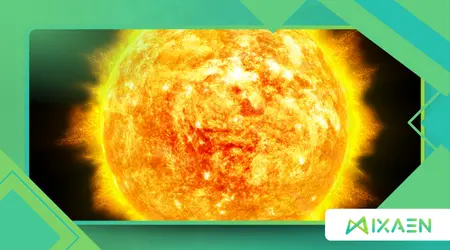
Is the Sun Actually White, Not Yellow is a question that challenges our most basic childhood perceptions and the very drawings we made in school.
While we instinctively reach for a yellow crayon, the physical reality of our star is far more complex and colorless.
As we observe the solar cycle in late 2025, understanding the true nature of light helps us appreciate the intricate physics of our atmosphere.
This revelation changes how we view every sunset, sunrise, and the “natural” light we use daily.
What is the Real Color of Solar Radiation?
Is the Sun Actually White, Not Yellow? The scientific answer is a resounding yes, because the Sun emits light across all visible wavelengths.
When you combine every color of the rainbow red, orange, yellow, green, blue, indigo, and violet the resulting visual perception is pure white.
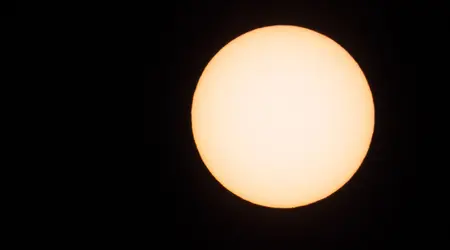
Space-based observations from the Parker Solar Probe confirm that without an atmosphere to distort the view, the Sun appears as a brilliant white orb.
It is a “G-type main-sequence star,” often called a yellow dwarf, though this name refers to its temperature, not its visual hue.
How Does Planck’s Law Define Star Color?
Physicists use the concept of a “blackbody” to determine the color of stars based on their surface temperature.
At approximately 5,500 degrees Celsius, the Sun’s peak emission happens in the green-blue part of the spectrum.
However, because it emits so much light in the surrounding frequencies, our eyes perceive the total output as white.
The “yellow” label is a spectroscopic classification used by astronomers to categorize stars within the vast cosmic neighborhood.
++ How Close Can We Get to the Sun Without Melting?
Why Does the Atmosphere Distort Solar Light?
Earth’s atmosphere acts like a complex filter, scattering shorter wavelengths of light more effectively than longer ones.
This process, known as Rayleigh scattering, is the reason the sky appears blue during the bright daylight hours.
As the blue and violet light scatters away, the remaining direct light from the Sun becomes slightly “depleted” of those cooler tones.
This subtle shift leaves behind a warmer, yellowish tint that our brains interpret as the Sun’s true color.
Also read: How Scientists Photograph the Sun Without Blinding Themselves
What is the Role of Rayleigh Scattering?
Rayleigh scattering occurs when sunlight hits gas molecules in our atmosphere, sending blue light in every direction across the horizon.
This phenomenon is precisely why we don’t see a black sky during the day, even though space is dark.
By removing the blue light from the direct path to your eyes, the atmosphere effectively “paints” the Sun yellow.
This creates the daily illusion that supports the frequent search for the truth: Is the Sun Actually White, Not Yellow?
Read more: Could a Sudden Solar Shift Disrupt Earth’s Climate?
How Do Different Altitudes Change Our Perception?
Pilots and astronauts witness a starkly different sun than those of us standing at sea level. At higher altitudes, where the air is thinner, the Sun looks significantly whiter and much more intense.
This proves that the “yellowness” is a local atmospheric byproduct rather than a stellar property. The higher you go, the more the blue light remains in the direct beam, returning the Sun to its natural white state.
Why Do We See Yellow, Orange, and Red at Sunset?
The transition from a yellow afternoon sun to a deep red sunset is a masterclass in atmospheric physics. During these hours, sunlight must travel through a much thicker layer of atmosphere to reach your eyes.
This increased distance means even more of the short-wavelength blue and green light is scattered away. By the time the light arrives, only the longest wavelengths red and orange survive the journey through the dense air.
How Does the Angle of Light Affect Hue?
When the Sun is directly overhead, it passes through the minimum amount of atmosphere, appearing nearly white or pale yellow. As it approaches the horizon, the angle increases the path length of the light significantly.
This path can be up to 40 times longer than the midday path, forcing light to interact with more dust and molecules.
This creates the dramatic fiery hues we admire, further obscuring the fact: Is the Sun Actually White, Not Yellow?
What is the Impact of Pollution and Dust?
Aerosols, smoke, and volcanic ash can intensify the colors of the Sun by scattering even more light. Large particles in the air can shift the color toward a muddy brown or an incredibly vibrant crimson.
These particles act as a secondary filter, blocking even the yellow wavelengths and leaving only the deepest reds.
This environmental interference is a constant reminder that the colors we see are purely atmospheric interpretations.
What Research Defines the Sun’s Spectral Output?
A 2024 study by the National Solar Observatory (NSO) utilized advanced spectrographs to measure the Sun’s “total solar irradiance” with unprecedented precision.
The data showed an almost perfectly flat distribution across the visible spectrum. This research confirms that the Sun does not have a “preferred” color in the visible range.
It emits a balanced white light, supporting the argumentative stance that Is the Sun Actually White, Not Yellow is a scientific fact.
What Analogy Explains the Atmospheric Filter?
Think of the atmosphere as a stained-glass window in a cathedral that is mostly clear but has a subtle blue tint. When you look at a white light through that window, the light on the floor appears warm.
The light source hasn’t changed its color; the glass has simply absorbed or redirected specific parts of the light. The Sun is the white light, and our atmosphere is the tinted glass that tricks our eyes every single day.
How Does Solar Color Knowledge Change Science?
Accepting that Is the Sun Actually White, Not Yellow is vital for fields like solar energy and satellite photography. Engineers must calibrate solar panels to catch the full white spectrum, not just the “yellow” we see.
Photographers and cinematographers also use this knowledge to adjust “white balance” in their equipment.
By understanding that daylight is actually a cool white, they can recreate natural-looking images that match human perception.
Why is White Balance Critical in Digital Media?
Digital cameras have a “Daylight” setting that usually hovers around 5,500 to 6,500 Kelvin. This setting assumes the light source is a neutral white, allowing the camera to capture true colors.
If the Sun were truly yellow, all our photos would have a sickly orange cast without heavy digital correction. The fact that white paper looks white under the midday sun is the best proof of its true color.
How Does This Affect Solar Energy Efficiency?
Solar cells are designed to absorb “photons” across the entire visible and infrared range emitted by our star. If engineers focused only on yellow light, we would lose over 70% of the potential energy available.
Modern multi-junction cells are “tuned” to the specific white-light signature of the Sun to maximize power.
This industrial application relies on the objective truth behind Is the Sun Actually White, Not Yellow.
What is an Original Example of the “True White” Sun?
Look at the moon during a clear night when it is high in the sky. The moon does not produce its own light; it merely reflects the light of the Sun like a giant mirror.
The moon appears white or silvery because it is reflecting the Sun’s true, unfiltered color back to us. If the Sun were yellow, the moon would look like a giant lemon in the night sky, regardless of the atmosphere.
Can We Ever See the Sun’s True Color from Earth?
The closest we get to seeing the true color is at high noon on a perfectly clear day with zero humidity. During these rare moments, the Sun appears so blindingly white that it is impossible to look at directly.
Even then, the subtle blue of the sky tells us that some scattering is still happening. To see it perfectly, you would need to be in a vacuum, proving Is the Sun Actually White, Not Yellow.
Solar Perception vs. Physical Reality (2025 Data)
| Condition | Observed Color | Physical Explanation | Scientific Reality |
| Space (Vacuum) | Brilliant White | Unfiltered multi-wavelength emission | Is the Sun Actually White, Not Yellow? Yes. |
| High Noon (Clear) | Pale Yellow / White | Minimal Rayleigh scattering of blue light | White light with 5% blue depletion |
| Late Afternoon | Golden / Yellow | Moderate scattering as light path increases | Primarily yellow and red wavelengths remain |
| Sunset / Sunrise | Vivid Red / Orange | Extreme scattering of all short wavelengths | Only long-wave red light reaches the eye |
| Through Clouds | Neutral Grey / White | Mie scattering (all colors scattered equally) | Diffused white light |
In conclusion, the realization that Is the Sun Actually White, Not Yellow serves as a powerful reminder that our senses don’t always tell the whole story.
The yellow sun we cherish is a beautiful atmospheric lie, created by the very air that allows us to breathe.
By understanding the physics of light scattering and stellar temperatures, we can appreciate the Sun as the pure, white powerhouse that it truly is.
Next time you see a golden sunset, remember that you are witnessing a filter in action, not a change in the star itself.
Does knowing the Sun is actually white change how you feel about your morning walk? Share your experience with the “true” light of the Sun in the comments below!
Frequently Asked Questions
If the Sun is white, why is it called a “Yellow Dwarf”?
This is a legacy term in astronomy based on the Hertzsprung-Russell diagram.
It refers to the star’s size and temperature class (G-type), which falls in a range that astronomers historically labeled as “yellow,” despite the visual output being white.
Why is it dangerous to look at the Sun if it’s “just white light”?
The color doesn’t determine the danger; the intensity of the radiation does.
Even though it is white, the Sun emits massive amounts of UV radiation and concentrated visible light that can permanently burn your retinas in seconds.
Does the Sun’s color change as it gets older?
Yes, but over billions of years. As the Sun exhausts its hydrogen, it will eventually expand into a Red Giant. At that stage, its surface temperature will drop, and it will actually turn red, even when viewed from space.
Is the Sun “greener” than we think?
Interestingly, if you look at the raw data, the Sun emits its peak number of photons in the green-blue spectrum.
However, because it emits so much of every other color simultaneously, our eyes perceive the mix as white rather than green.
Why do photos from Mars show a blue sunset?
Mars has a very thin atmosphere filled with fine dust. This dust scatters light differently than Earth’s gas molecules.
On Mars, the red light is scattered away, leaving a blue glow around the Sun at sunset, which is the opposite of Earth!
