
Why the Universe Keeps Producing Anomalies We Can’t Classify
the Universe Keeps Producing Anomalies that defy our current understanding of physics, challenging the very bedrock of established cosmological models as we enter 2026.
Astronomers today face a growing list of “impossible” observations that suggest our maps of the stars are fundamentally incomplete and perhaps even outdated.
Advanced telescopes, led by the James Webb Space Telescope (JWST), are capturing light from ancient structures that simply should not exist according to standard theories.
We are living in a golden age of discovery where every new image seems to whisper that the cosmos is far stranger than we dared to imagine.
What are the “Impossible” Galaxies Challenging Our History?
Recent data confirms that the Universe Keeps Producing Anomalies in the form of massive, mature galaxies existing just a few hundred million years after the Big Bang.
These “Universe Breakers” possess stellar masses that exceed what should have been possible during such a frantic, early cosmic era.
Current models assumed galaxies needed billions of years to reach such complexity, yet we see them fully formed in the cosmic dawn.
This discrepancy forces us to reconsider how quickly gravity can pull matter together or if we misunderstand the Big Bang’s initial conditions.
How do “Universe Breakers” Defy Cosmic Timelines?
Standard cosmology suggests that gas clouds required vast amounts of time to cool and collapse into the trillions of stars we observe in early galaxies.
However, JWST has identified six massive galaxies from the early universe that contain as much mass as the modern Milky Way galaxy.
This discovery implies that star formation was either significantly more efficient or that the early universe was much denser than previously theorized.
If these findings hold, we may need to rewrite the first chapters of our cosmic history to accommodate such rapid structural growth.
++ How Can We Be Sure the Universe Is Only Four Dimensions?
Why is the Cosmological Crisis Over the Hubble Constant Growing?
The “Hubble Tension” remains a primary reason why the Universe Keeps Producing Anomalies that keep astrophysicists awake at night.
Different methods of measuring the universe’s expansion rate provide conflicting results that refuse to converge, despite increasingly precise instruments.
Measurements of the Cosmic Microwave Background (CMB) predict a slower expansion than observations of nearby supernovae and Cepheid variables.
This persistent 10% gap suggests that “New Physics,” perhaps related to dark energy or exotic particles, is actively influencing the cosmic expansion rate.
Also read: Why Some Stars Die Quietly Without Going Supernova
What Role Does Dark Matter Play in These Discrepancies?
Dark matter remains the invisible ghost in our equations, making up most of the universe’s mass while remaining totally undetected by our sensors.
Every time we try to pin down its behavior, the Universe Keeps Producing Anomalies that contradict our computer-simulated predictions of dark matter halos.
Some small galaxies appear to have almost no dark matter, while others are dominated by it far more than expected.
These outliers suggest that our understanding of how dark matter interacts with normal matter is, at best, a very rough approximation.
Read more: Could Dark Energy Be Linked to a Force We Haven’t Discovered?
Could Modified Gravity Explain What Dark Matter Cannot?
A growing number of researchers are exploring Modified Newtonian Dynamics (MOND) as an alternative to the dark matter hypothesis.
This theory suggests that gravity behaves differently at extremely low accelerations, such as those found on the outskirts of vast, spinning spiral galaxies.
While dark matter is the mainstream favorite, the lack of particle detection makes MOND an increasingly attractive, albeit controversial, explanation.
If gravity changes with scale, the “missing mass” we seek might just be a mathematical error in our understanding of force.
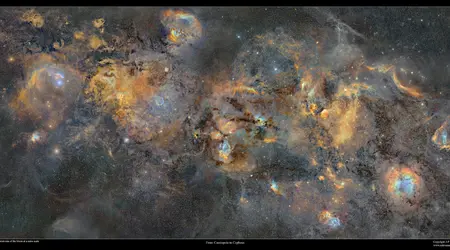
Why Do We Find Objects That Defy Our Classification Systems
Taxonomy in space is becoming increasingly difficult because the Universe Keeps Producing Anomalies that blur the lines between planets, stars, and black holes.
We are finding objects like “Jumbos” Jupiter-Mass Binary Objects floating freely in space without being tethered to any host star.
These entities challenge the traditional definition of a planet, which typically requires a star to form around.
Finding dozens of these pairs drifting in the Orion Nebula suggests that our theories of star and planet formation are missing a vital mechanism.
What are Jumbos and Why Do They Confuse Scientists?
Jumbos are gas giants that exist in pairs, orbiting each other in the void of interstellar space.
They are too small to be stars and too isolated to be traditional planets, leaving them in a scientific limbo that defies current classification.
Standard planetary formation theories cannot explain how so many planet-sized objects could be ejected from solar systems while remaining in binary pairs.
Their existence suggests that either planets can form directly from gas clouds like stars, or our ejection models are fundamentally flawed.
How Does the “Great Attractor” Influence Our Motion?
Our entire local group of galaxies is being pulled toward a mysterious region of space known as the Great Attractor.
Even as we study this pull, the Universe Keeps Producing Anomalies in the velocity of galaxies that don’t match the visible mass in that direction.
Hidden behind the “Zone of Avoidance” the dusty plane of our own Milky Way this gravitational anomaly continues to tug on us.
Despite our best mapping efforts, the sheer scale of the hidden mass suggests structures larger than any we have yet managed to catalog.
What is the Significance of the “Dark Flow” Phenomenon?
“Dark Flow” refers to a controversial observation that clusters of galaxies are all moving in a specific, uniform direction toward the edge of the visible universe.
This motion seems independent of the general expansion of space, suggesting a pull from something outside our observable horizon.
If this flow is real, it implies that the universe is much larger than we thought or that other “bubbles” exist.
It is another example of how the Universe Keeps Producing Anomalies that hint at a reality far beyond our current visual limits.
How Do Fast Radio Bursts (FRBs) Add to the Mystery?
Fast Radio Bursts are millisecond-long pulses of radio waves coming from distant galaxies with immense power.
While some repeat, others are one-off events, and we still lack a unified theory to explain what high-energy process creates them.
From magnetars to collapsing black holes, the theories are as varied as the bursts themselves.
These signals are the universe’s way of screaming that high-energy physics occurs in ways we have yet to replicate or fully comprehend in our laboratories.
Is Our Current Physics Sufficient to Explain the Cosmos?
We must ask ourselves: is our reliance on the Standard Model of Cosmology hindering our progress?
As the Universe Keeps Producing Anomalies, the gap between theory and observation suggests we might be at a “Copernican moment” where a total shift is required.
Just as Einstein refined Newton, we may need a new framework to unify the quantum world with the vast scales of the cosmos.
Without a “Theory of Everything,” we are essentially trying to solve a puzzle while missing half the pieces.
Why is the Search for New Physics Accelerating?
The persistent failures of our models to predict new observations are not setbacks; they are the breadcrumbs leading to a deeper reality.
Physicists are now looking at “early dark energy” or “quintessence” to bridge the gap in our expansion calculations.
These theories propose that the nature of space itself might change over time, acting differently in the young universe than it does today.
If dark energy is dynamic rather than constant, the anomalies we see are simply the signatures of a changing cosmic engine.
How Do Gravitational Waves Open a New Window?
Gravitational wave observatories like LIGO and Virgo allow us to “hear” the universe for the first time.
This new sense has already revealed black holes of masses that were previously thought to be impossible, further proving that the Universe Keeps Producing Anomalies.
By observing the ripples in spacetime caused by merging black holes, we can probe environments that are completely dark to traditional telescopes.
This new data stream is essential for testing the limits of General Relativity in the most extreme conditions imaginable.
What is the Most Significant Recent Research on This Topic?
A 2024 study published in the journal Nature by the JWST CEERS Collaboration provided definitive evidence of “Little Red Dots.”
These are ultra-compact, red galaxies in the early universe that appear to host supermassive black holes far larger than they should be.
This research indicates that black holes and their host galaxies grew in tandem much earlier than anticipated.
This “co-evolution” at such high speeds is a prime example of how the Universe Keeps Producing Anomalies that force a total rethink of galactic growth.
What is the Best Analogy for Our Current Understanding?
Imagine trying to understand the rules of a complex board game by only looking at a single, blurry photograph of the players.
We can see the pieces and guess some moves, but we don’t know the full rulebook or what happened before the photo was taken.
The anomalies we find are like seeing a piece move in a way we didn’t expect; it doesn’t mean the game is broken, but that our “rulebook” is missing chapters.
We are observers trying to infer the logic of a game that has been playing for 13.8 billion years.
Comparison of Cosmic Theories vs. Observed Anomalies
| Feature | Standard Model Prediction | Observed Anomaly | Potential Explanation |
| Galaxy Growth | Slow, hierarchical buildup | Massive, mature early galaxies | Efficient star formation / Early mass |
| Expansion Rate | Constant Hubble value (~67) | Divergent values (67 vs 73) | Dynamic Dark Energy / New Physics |
| Dark Matter | Uniform halos in all galaxies | Galaxies with zero dark matter | Modified Gravity (MOND) |
| Planet Formation | Requires host star system | Binary Jumbos in the void | Direct gas collapse / Ejection |
| Early Black Holes | Gradual mass accumulation | Supermassive black holes at Dawn | Direct collapse seeds / Rapid accretion |
The sheer volume of data suggests that the Universe Keeps Producing Anomalies not to frustrate us, but to guide us toward a more profound truth.
From the “impossible” galaxies of the cosmic dawn to the mysterious tug of the Great Attractor, the cosmos is signaling that our current models are mere approximations.
We are standing on the precipice of a scientific revolution that could redefine space, time, and gravity.
As we continue to look deeper into the void, we must remain humble enough to admit that the more we see, the less we truly know.
What do you think is the strangest mystery currently lurking in the deep cosmos? Share your thoughts and theories in the comments below!
Frequently Asked Questions
Why do scientists call some galaxies “impossible”?
They are called “impossible” because, based on the rate at which stars form and matter clusters, these galaxies are too massive for their age.
They appear fully grown at a time when they should still be small, disorganized groups of stars.
Does the existence of anomalies mean Einstein was wrong?
Not necessarily. Einstein’s theories are incredibly accurate for what they describe, but they may be “incomplete.”
Just as Newton’s laws work for slow-moving objects but fail at the speed of light, Einstein’s laws might need refinement at cosmic scales.
What is the James Webb Space Telescope’s role in this?
The JWST can see infrared light from the very first stars and galaxies.
By looking further back in time than ever before, it is finding objects that contradict the predictions made by telescopes that could only see more recent cosmic history.
Could the anomalies be just errors in the data?
While initial results are always checked for errors, multiple independent teams and different telescopes are now seeing the same strange patterns.
When different “eyes” see the same “impossible” thing, it usually means the theory needs to change, not the telescope.
Is there really a “Great Attractor” pulling our galaxy?
Yes. There is a massive gravitational concentration about 150-250 million light-years away that is pulling the Milky Way and thousands of other galaxies toward it.
We still don’t fully see what it is because the dust of our own galaxy blocks the view.
