
China’s Silent Space Rise: What the World Should Pay Attention To
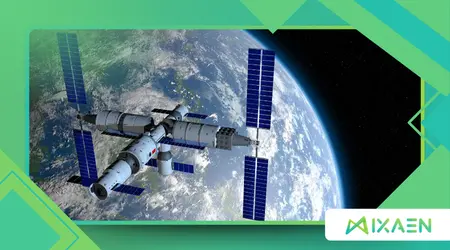
China’s Silent Space Rise has transitioned from a distant ambition to a formidable reality that is fundamentally reshaping the global astronomical order in 2026.
While Western headlines often fixate on the flamboyant launches of private commercial entities, Beijing has been methodically constructing a permanent presence above our atmosphere.
This calculated expansion signifies a shift toward a multipolar space era where the monopoly of traditional agencies is effectively over.
The world must now grapple with the strategic implications of a nation that views the lunar surface as its next sovereign frontier.
What is the Strategy Behind the Tiangong Station and Lunar Bases?
China’s Silent Space Rise finds its most visible anchor in the Tiangong Space Station, which now operates with a full, rotating crew of six taikonauts.
Unlike the aging ISS, Tiangong represents a modern, modular approach that serves as a permanent orbital laboratory for advanced materials and biotechnology.
Beijing is using this platform to forge international partnerships, offering research slots to nations that have historically been excluded from Western space initiatives.
This “orbital diplomacy” is a cornerstone of their long-term goal to become the primary hub for international space collaboration.
How Does the International Lunar Research Station (ILRS) Function?
The ILRS is not merely a landing site but a comprehensive infrastructure project planned in collaboration with Russia and several other partner nations.
It aims to establish a permanent, autonomous base at the lunar south pole by the early 2030s to mine resources.
Construction began in earnest following the success of the Chang’e missions, which proved China’s ability to land and operate in difficult lunar terrain.
This project positions China as a direct competitor to NASA’s Artemis program, creating a new race for the moon’s ice.
++ Why Interplanetary Law Is Becoming Urgently Necessary
Why is the Chang’e Series the Foundation of Their Success?
The Chang’e missions have consistently achieved milestones that other nations have struggled to replicate, such as the first landing on the lunar far side.
These missions demonstrated a level of autonomous precision and communication relay capability that shocked many global aerospace analysts.
By successfully returning lunar soil samples, China proved its end-to-end mission architecture is robust enough for human interplanetary travel.
These successes provide the technical confidence needed for the next phase of China’s Silent Space Rise, involving deep-space exploration.
Also read: How Space Exploration Has Transformed Everyday Technology
What Role Does Nuclear Propulsion Play in Their Plans?
Rumors and technical papers from 2025 suggest that China is aggressively pursuing nuclear-thermal propulsion systems to cut travel time to Mars significantly.
These systems would allow for larger payloads and faster transit, reducing the radiation exposure risk for human crews during long missions.
If successful, this technology would grant China a decisive advantage in the colonization of the red planet.
It represents the high-stakes technological leap that characterizes the current intensity of China’s Silent Space Rise in the 2020s.
Read more: Project Orion and the Bomb-Powered Spaceship That Almost Was
How is China Integrating AI into Orbital Maintenance?
Artificial Intelligence is being used to manage the complex logistics of Tiangong and the growing “G60 Starlink” constellation of Chinese satellites.
These AI systems can predict mechanical failures and coordinate autonomous docking procedures without constant intervention from ground control in Beijing.
By automating the mundane aspects of space flight, the CNSA can focus its human talent on creative problem-solving and strategic expansion.
This digital efficiency is a silent but potent multiplier of their overall space power and operational readiness.
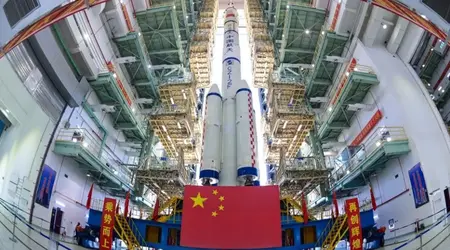
Why is the Commercial Sector Crucial to China’s Silent Space Rise?
A key driver of China’s Silent Space Rise is the rapid emergence of a domestic commercial space industry that mirrors Western private initiatives.
Companies like LandSpace and Deep Blue Aerospace are successfully testing reusable rockets, aiming to drastically lower the cost per kilogram to orbit.
The Chinese government has integrated these “private” players into the national strategy, ensuring they support state-led missions while competing for global satellite launch contracts.
This hybrid model combines state-funded stability with the agile innovation typically found in startup environments.
How Do Reusable Rockets Change the Cost Equation?
The push for reusability, exemplified by the Zhuque-3 and similar launch vehicles, is designed to break the cost barriers of traditional single-use rockets.
By landing boosters vertically, Chinese firms are nearing the price points of the world’s current market leaders.
Low-cost access to space allows for the deployment of massive satellite constellations that provide global internet and surveillance capabilities.
This commercial viability is the engine that will sustain China’s Silent Space Rise regardless of direct government budget fluctuations.
What is the Significance of the G60 Starlink Constellation?
The G60 Starlink project aims to launch over 12,000 satellites into low Earth orbit to compete directly with Western internet providers.
This constellation will provide China with a secure, sovereign global communications network that is independent of foreign-controlled cables or satellites.
It also serves a strategic purpose, ensuring that China can offer high-speed connectivity to Belt and Road Initiative partner countries.
This infrastructure is a primary example of how China’s Silent Space Rise translates into tangible geopolitical influence on Earth.
What Statistical Data Highlights the Scale of This Rise?
According to a 2025 report by the Space Foundation, China conducted a record 67 successful orbital launches in the previous year alone.
This puts them in a neck-and-neck competition with the United States for the highest number of annual launches.
This volume of activity is not just about quantity; it represents a diversified portfolio of communication, navigation, and deep-space science missions.
The sheer frequency of these launches is a constant reminder of the momentum behind China’s Silent Space Rise.
What is an Original Example of Chinese Space Commercialization?
Consider the “Space Mining” startups emerging in Shenzhen, which are developing robotic harvesters for near-Earth asteroids.
These companies are already testing grappling technologies in low-gravity simulators, preparing for a future where space minerals fuel the terrestrial economy.
This vision turns the “Final Frontier” into a commercial resource zone, much like the deep-sea mining initiatives of previous decades.
It shows that the commercial side of China’s Silent Space Rise is focused on the actual extraction of cosmic wealth.
How Does This Space Dominance Impact Global Geopolitics?
The implications of China’s Silent Space Rise extend far beyond the atmosphere, influencing defense treaties and economic alliances on the ground.
Space is now the “Ultimate High Ground,” and whoever controls orbital infrastructure controls the flow of global information and military intelligence.
Western nations are increasingly concerned about the dual-use nature of Chinese space technology, where a “satellite repair” robot could easily be used to disable a competitor’s hardware.
This ambiguity creates a delicate diplomatic dance where every scientific launch is scrutinized for hidden strategic intent.
Why is Space Diplomacy a New Tool of Influence?
China is positioning itself as the “benevolent partner” for developing nations that want to launch their first satellites or train their first astronauts.
By providing affordable access, Beijing is building a coalition of “space-aligned” countries that will support its orbital policies at the United Nations.
This soft power play is a fundamental component of China’s Silent Space Rise, as it creates a diplomatic shield against Western sanctions or criticisms.
It effectively splits the global space community into two distinct technological and political camps.
How Can We Use an Analogy to Describe This New Race?
Space exploration is like a high-stakes game of chess played on a board that is still being built. While the West has historically held the center of the board, China has been quietly developing the edges and the corners.
Now, as the board expands into the lunar surface and Mars, China is finding that its patient, long-term positioning is beginning to pay off.
They aren’t just playing for the next move; they are playing to own the board itself.
What Are the Risks of an Unregulated Space Race?
The rapid expansion of China’s Silent Space Rise highlights the lack of modern, enforceable international space laws.
As more debris clutters low Earth orbit and nations scramble for lunar territory, the risk of accidental collisions or territorial disputes grows exponentially.
Without a updated “Space Treaty” that reflects the 2026 reality, the possibility of a “Kessler Syndrome” event where debris makes space unusable becomes a genuine threat.
This shared risk is perhaps the only thing that could force the world’s space powers back to the negotiating table.
What is a Question for the Future of Global Space?
Will the lunar south pole become a site of international cooperation, or the location of the world’s first extra-planetary resource war?
The answer depends entirely on how the international community responds to the momentum of China’s Silent Space Rise in the coming five years.
Key Milestones in China’s Space Strategy (2020-2026)
| Milestone | Achievement Year | Significance | Strategic Impact |
| Tiangong Station Completion | 2022 | Permanent orbital habitation | Continuous human presence in LEO |
| Chang’e-6 Mission | 2024 | First sample return from Lunar Far Side | Demonstrated superior robotic autonomy |
| Zhuque-3 Success | 2025 | First Chinese stainless-steel reusable rocket | Slashed commercial launch costs |
| G60 Constellation Start | 2024-2026 | Deployment of 1,000+ satellites | Global sovereign internet coverage |
| Mars Sample Return Prep | 2026 | Technical rehearsals for Mars landing | Path to human Mars colonization |
In conclusion, China’s Silent Space Rise is the result of a multi-decade, state-driven commitment to technological self-reliance and geopolitical prestige.
By building a comprehensive ecosystem that spans from low-cost commercial rockets to permanent lunar bases, Beijing has secured its place as a top-tier space power.
The international community must move past surprise and into a phase of active, strategic engagement to ensure that the next frontier remains peaceful and productive for all of humanity.
The stars are no longer the exclusive domain of a few; they are now the stage for the next great chapter of human history.
Do you believe the rise of a new space power will lead to more innovation or more conflict? Share your experience in the comments!
Frequently Asked Questions
Is China a part of the International Space Station (ISS)?
No. Due to the Wolf Amendment passed by the U.S. Congress, NASA is largely prohibited from direct collaboration with Chinese space entities. This exclusion was a primary driver for China to build its own station, Tiangong.
Can anyone go to the Chinese space station?
China has expressed openness to hosting foreign astronauts on Tiangong.
Several nations, including members of the European Space Agency in the past, have participated in training exercises with China, though formal missions remain diplomatically complex.
Why is the lunar south pole so important?
The lunar south pole contains craters that are in permanent shadow, which scientists believe hold significant deposits of water ice.
This ice can be converted into drinking water, oxygen, and hydrogen fuel, making it the “gas station” for deep-space travel.
Does China’s Silent Space Rise threaten satellite safety?
There is no evidence of direct threats, but the rapid increase in satellites and the testing of “shuttles” and robotic arms raise concerns about space traffic management and the potential for dual-use military applications in orbit.
How does China fund its space program?
Most of the funding comes directly from the central government as a core national priority.
However, the 2026 landscape shows an increasing amount of private venture capital flowing into the hundreds of commercial space startups now operating in China.
