
Why Galaxy Rotation Curves Still Break Gravity Predictions Today
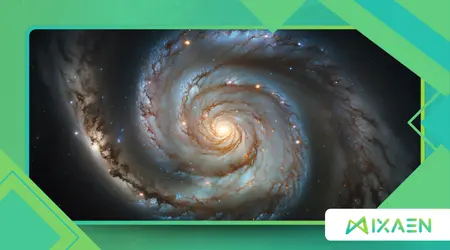
Galaxy Rotation Curves represent the ultimate cosmic headache for modern physicists, challenging our fundamental understanding of how gravity dictates the movement of stars.
When we look at spiral galaxies, the outer stars move much faster than the visible matter should allow under Newtonian laws.
This persistent anomaly suggests that either our math is wrong or a vast, invisible substance is tugging on every sun in the sky.
As we move deeper into 2026, the debate between dark matter and modified gravity has reached a fever pitch in the scientific community.
What are Galaxy Rotation Curves and why do they defy standard gravity?
Observations of Galaxy Rotation Curves show a flat line where we expected a sharp drop in velocity as distance from the center increases.
According to classical mechanics, stars at the edge should orbit slowly, much like Neptune orbits the Sun slower than Mercury does.
Instead, these peripheral stars race around the galactic center at nearly the same speed as those near the core, defying our visual mass estimates.
This “flatness” implies a massive amount of unseen matter provides the gravitational glue necessary to prevent the galaxy from flying apart entirely.
++ The Mystery of Objects That Appear Older Than the Universe
How did Vera Rubin discover this anomaly?
Vera Rubin provided the first robust evidence in the 1970s by measuring the orbital speeds of gas and stars in the Andromeda Galaxy.
Her data shocked the world because it showed that Galaxy Rotation Curves did not follow the expected Keplerian decline at all.
Her work proved that the “missing mass” was not a localized glitch but a universal feature of nearly every spiral galaxy observed.
This discovery forced cosmologists to propose the existence of Dark Matter to explain the invisible gravitational pull keeping stars in line.
Also read: Why the Universe Keeps Producing Anomalies We Can’t Classify
Why does the discrepancy remain unsolved in 2026?
Even with the James Webb Space Telescope’s recent data, the exact cause of these Galaxy Rotation Curves remains one of physics’ greatest “missing links.”
We can see the effects of gravity, but we still haven’t detected the particles responsible for the extra mass.
Some theorists argue that our understanding of gravity itself needs an upgrade, rather than adding invisible particles to the cosmic ledger.
This tension creates a fascinating divide between those who trust the particle model and those who suspect Einstein’s equations need a tweak.
How do Dark Matter and MOND explain these celestial movements?
The most popular explanation for stable Galaxy Rotation Curves involves a massive halo of Dark Matter surrounding every galaxy like an invisible cocoon.
This substance doesn’t emit light, making it impossible to see with telescopes, yet its gravitational signature is written across the entire universe.
Alternatively, Modified Newtonian Dynamics (MOND) suggests that gravity acts differently at extremely low accelerations, such as those found at the edges of galaxies.
This theory removes the need for invisible matter by changing the law of gravity itself when things get very slow.
Read more: How Can We Be Sure the Universe Is Only Four Dimensions?
What is the role of the Dark Matter Halo?
Proponents of Dark Matter argue that these halos account for about 85% of the total matter in the universe, providing essential structural stability.
Without this extra weight, the Galaxy Rotation Curves we observe would be physically impossible, and galaxies would have disintegrated eons ago.
Think of it like a cosmic merry-go-round; if the riders move too fast without holding on tight, they will eventually be thrown into space.
Dark Matter acts as the invisible hands gripping every star, ensuring they stay on the ride regardless of their incredible orbital speed.
How does Modified Newtonian Dynamics work?
MOND advocates suggest that at the vast distances where Galaxy Rotation Curves become flat, the force of gravity no longer follows the inverse-square law.
By adjusting the formula, researchers can predict the movement of stars perfectly using only the visible matter we can actually see.
This approach is elegant because it doesn’t require us to invent a mysterious, undetectable particle to balance the cosmic books.
However, it struggles to explain other phenomena, like the way light bends around massive galaxy clusters during gravitational lensing events.
Why is the debate over galactic speeds shifting today?
Recent 2026 studies on “ultra-diffuse” galaxies have added new fuel to the fire, as some of these objects appear to lack Dark Matter entirely.
If Galaxy Rotation Curves can sometimes follow Newtonian predictions, it suggests that Dark Matter is a physical substance that can be lost or stripped away.
This “all or nothing” evidence makes it harder for MOND to explain why some galaxies follow the new rules while others follow the old ones.
If gravity changed for everyone, we shouldn’t see such wild variations in how different galaxies behave across the deep reaches of space.
What do the latest 2026 observations show?
High-resolution mapping of the Milky Way’s own Galaxy Rotation Curves has revealed unexpected “wobbles” that suggest smaller dark matter clumps are passing through us.
These ripples provide a real-time laboratory for testing whether invisible particles are truly responsible for the gravitational anomalies we see.
Data from the Gaia mission indicates that our galactic outskirts are much more turbulent than previously thought, hinting at a complex history of mergers.
This complexity means that a single, simple law of gravity might not be enough to explain the chaotic dance of a billion stars.
Why is the Tully-Fisher relation significant?
The Tully-Fisher relation shows a remarkably strict correlation between a galaxy’s total visible mass and its constant rotation speed at the edges.
This relationship is a cornerstone for understanding Galaxy Rotation Curves, as it links the light we see to the gravity we feel.
Is it possible that the universe is telling us something fundamental about the connection between matter and space-time that we simply haven’t grasped yet?
This mathematical consistency across millions of light-years suggests a deep, underlying symmetry that remains the “holy grail” for modern-day astronomers.
Comparison of Gravity Models
| Feature | Newtonian/Einsteinian Gravity | Modified Newtonian Dynamics (MOND) | Dark Matter Theory |
| Edge Star Speed | Should slow down significantly | Stays constant (flat) | Stays constant (flat) |
| Matter Required | Only visible (baryonic) matter | Only visible (baryonic) matter | 85% invisible matter |
| Key Mechanism | Inverse-square law ($1/r^2$) | Modified law at low acceleration | Invisible “Halo” provides mass |
| Main Weakness | Fails to explain galaxy shapes | Fails at the scale of large clusters | Particles never seen in a lab |
In summary, Galaxy Rotation Curves continue to bridge the gap between what we see and what must exist to keep the universe together.
Whether the answer lies in an undiscovered particle or a fundamental rewrite of Einstein’s legacy, the mystery reminds us that we only see a tiny fraction of reality.
The flat curves of galactic rotation are the “smoking gun” of a cosmic secret that has eluded the greatest minds for over half a century.
As our sensors improve and our models evolve, we come closer to understanding the invisible architecture of our home in the stars.
What do you think is hiding in the dark is it a new particle or a new law of nature? Share your experience in the comments!
Frequently Asked Questions
What exactly is a galaxy rotation curve?
It is a plot of the orbital speeds of visible stars and gas in a galaxy versus their radial distance from that galaxy’s center.
Why does it prove dark matter exists?
Because stars at the edge move too fast to be held by visible gravity, scientists infer there must be invisible mass providing extra pull.
Could the math just be wrong?
Yes, that is what MOND suggests. It proposes that our gravitational formulas need adjustment for the very low accelerations found in deep space.
Has dark matter ever been seen?
No, it has never been directly observed. We only see its gravitational influence on the Galaxy Rotation Curves and the bending of distant light.
Are there galaxies without dark matter?
Yes, astronomers have discovered rare “transparent” galaxies that seem to obey standard gravity, which actually supports the idea that dark matter is a real, separable substance.
