
How Solar Observations Improved Space Forecasting
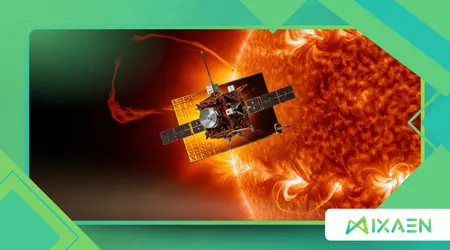
Solar Observations Improved Space Forecasting significantly in 2026, as our reliance on satellite constellations and global GPS networks makes the Earth more vulnerable to solar temperaments.
Scientific breakthroughs allow us to look deeper into the Sun’s convective layers, predicting massive flares hours before they reach our delicate magnetic shield.
The dance between solar winds and our atmosphere is no longer a mystery but a calculated risk managed by planetary defense agencies worldwide.
Sophisticated observatories now provide a digital “weather map” of the heliosphere, ensuring that our interconnected technology remains safe during periods of peak solar activity.
Highlights of Solar Progress
- Helioseismology Advances: How sound waves inside the Sun reveal hidden sunspots before they rotate toward Earth.
- Coronal Mass Ejection Tracking: Predicting the trajectory of plasma clouds with unprecedented precision using deep-space probes.
- Infrastructure Resilience: Protecting power grids and communication satellites from the destructive surge of geomagnetic storms.
- AI Integration: Using machine learning to process solar imagery faster than any human team could manage.
Why are new solar insights vital for global infrastructure?
Modern humanity lives within a fragile electronic bubble that reacts violently to the Sun’s high-energy outbursts and magnetic shifts.
Experts agree that Solar Observations Improved Space Forecasting by giving us the critical lead time needed to place satellites into “safe mode” during solar storms.
Without these alerts, a major Coronal Mass Ejection (CME) could plunge entire continents into darkness by frying high-voltage transformers on the ground.
Our current ability to monitor the Sun’s corona 24/7 acts as an early warning system for the entire modern world.
What are the risks of a solar maximum?
During the peak of the solar cycle, the Sun releases intense bursts of radiation that can interfere with high-frequency radio transmissions globally.
These events threaten aviation safety, as pilots over the poles lose contact with ground control due to ionized atmospheric interference.
Precise forecasting helps airlines reroute flights away from high-latitude regions when a significant proton event is detected by deep-space sensors.
This proactive management prevents potential disasters and keeps global logistics moving smoothly even when the Sun is at its most active.
++ How Solar Plasma Loops Defy Simple Physics
How do we protect our satellite constellations?
Satellites in Low Earth Orbit (LEO) experience increased atmospheric drag during solar flares because the upper atmosphere expands when heated by solar radiation.
If we do not predict these “puffs,” satellites can lose altitude and crash prematurely, causing billions in losses.
By using advanced solar data, operators can calculate precise thruster burns to maintain stable orbits despite the changing density of the thermosphere.
This application proves that Solar Observations Improved Space Forecasting is an essential economic tool for the burgeoning private space industry in 2026.
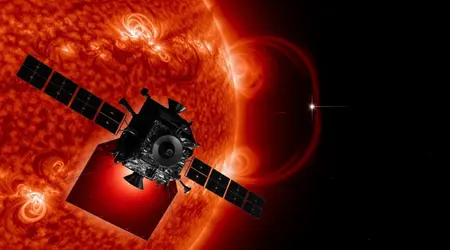
How do advanced observatories read the Sun’s internal rhythm?
Scientists now use the Sun’s own internal vibrations to “see” through to its far side, revealing hidden magnetic structures.
This technique, called helioseismology, ensures that Solar Observations Improved Space Forecasting provides a 360-degree view of our star’s volatile surface.
Knowing which sunspots are brewing on the far side allows us to prepare for their arrival days in advance.
This foresight is the difference between a sudden emergency and a well-managed technological adjustment for global telecommunication firms.
Also read: Is the Sun Actually White, Not Yellow? (And Why We See It Differently)
Why is the Parker Solar Probe a game-changer?
The Parker Solar Probe recently touched the Sun’s outer atmosphere, providing the first “in-situ” measurements of the solar wind’s acceleration zone.
These real-time data points have debunked old theories and replaced them with precise mathematical models of how solar particles behave.
Having a scout so close to the fire allows us to understand the “whiplash” effect of solar magnetic fields as they snap.
This knowledge is crucial for predicting the arrival time of solar particles with a margin of error of just minutes.
Read more: How Close Can We Get to the Sun Without Melting?
How does AI process the solar data flood?
Artificial intelligence now analyzes millions of high-resolution images from the Solar Dynamics Observatory (SDO) to spot the precursors of a flare.
These algorithms identify patterns in magnetic “reconnection” events that are too subtle for the human eye to detect on time.
The speed of AI ensures that alerts reach power grid operators within seconds of a flare’s initial flash on the solar disk.
Consequently, Solar Observations Improved Space Forecasting has become a high-speed digital defense system that operates at the speed of light.
Why is international cooperation essential for space weather?
No single nation can monitor the Sun alone, as its influence spans the entire solar system and affects every corner of Earth.
Global agencies now share data from a network of ground-based telescopes and space probes to create a unified forecasting model for everyone.
This collaborative approach ensures that developing nations with less satellite infrastructure still receive the warnings needed to protect their local power systems.
Space weather is a global challenge that requires a truly global solution to maintain our technological stability into the next decade.
What is the “Solar Analogy” for weather?
Think of a Coronal Mass Ejection like a hurricane in space; we cannot stop it, but we can track its path. Just as we use satellites to predict a hurricane’s landfall, we use solar probes to predict when a magnetic storm hits.
This comparison helps policymakers understand that space weather is not “science fiction” but a natural hazard that requires budget and planning.
Predicting a solar storm is now as routine and necessary as predicting a blizzard in the middle of winter.
What does the latest research show?
A 2025 study published in Space Weather Journal revealed that early warning systems have reduced satellite “glitch” rates by over 40% globally.
This statistic proves that Solar Observations Improved Space Forecasting delivers tangible benefits to every person using a smartphone or a GPS today.
Investment in solar science is an investment in the reliability of our modern lifestyle, from banking transactions to automated shipping.
The Sun is no longer just a light source; it is a variable factor in the global economy that we must monitor.
Solar Event Impact and Lead Times (2026)
| Event Type | Velocity | Earth Arrival Time | Primary Infrastructure Risk | Forecast Accuracy |
| Solar Flare (X-Ray) | Light Speed | 8 Minutes | Radio & GPS Signals | High |
| Solar Proton Event | ~1/3 Light Speed | 20-60 Minutes | Astronaut Health & Satellites | Moderate |
| Coronal Mass Ejection | 1-3 Million MPH | 15-72 Hours | Power Grids & Pipelines | High |
| Solar Wind Stream | 1 Million MPH | 2-4 Days | Minor Geomagnetic Storms | High |
| Magnetic Reconnection | Variable | Immediate | Local Satellite Electronics | Moderate |
Resilience Through Observation
We have entered an era where Solar Observations Improved Space Forecasting to the point of near-total planetary technological security.
The transition from reactive fear to proactive management marks a major milestone in our journey as a space-faring civilization.
By understanding the Sun’s internal clock and tracking its outbursts with AI, we have turned a cosmic threat into a manageable variable.
This constant vigilance ensures that the lights stay on, the planes keep flying, and our digital world remains connected.
The Sun may be a volatile giant, but our ability to read its signals has given us the shield we need to thrive.
Do you feel safer knowing that scientists are monitoring solar flares 24/7 to protect our global power grid? Share your thoughts in the comments!
Frequent Questions
Can a solar flare destroy my smartphone?
Normally, no. The Earth’s atmosphere and magnetic field protect small electronics on the ground from direct solar radiation.
The real danger to your phone is the potential collapse of the cellular network or power grid if a major storm hits the infrastructure.
How many solar flares happen every day?
During the solar maximum, the Sun can produce several flares a day, ranging from minor C-class events to powerful X-class eruptions.
Most are harmless, but the “Big Ones” are the reason why Solar Observations Improved Space Forecasting is so critical for our safety.
Is it safe to fly during a solar storm?
Airlines receive real-time space weather updates and will divert flights away from polar routes if radiation levels rise.
For passengers on standard mid-latitude flights, the radiation increase is negligible and poses no significant health risk according to current safety standards.
Does solar activity affect climate change?
While the Sun’s output varies slightly over its 11-year cycle, these changes are too small to explain the rapid global warming observed recently.
Solar forecasting focuses on short-term “weather” events rather than long-term “climate” shifts, which are driven by different atmospheric factors.
What is the Carrington Event of 1859?
This was the most powerful solar storm ever recorded, which caused telegraph wires to spark and set offices on fire.
If it happened today without modern forecasting, it would likely cause trillions of dollars in damage to our digital and electrical systems.
