
Why Solar Magnetic Reversals Still Puzzle Science
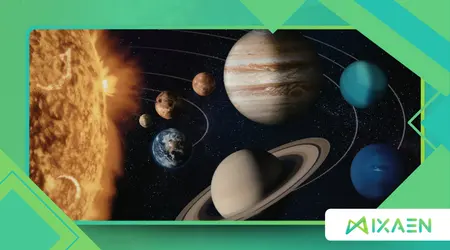
Solar Magnetic Reversals Still Puzzle Science as we witness the Sun approaching its peak activity in Solar Cycle 25, a chaotic dance of plasma.
This celestial flip happens every eleven years, yet the deep mechanics governing this reversal remain one of the most stubborn mysteries in modern astrophysics.
Space agencies worldwide are currently monitoring the solar poles, where the magnetic intensity has begun to weaken significantly before its inevitable total flip.
Understanding this process is vital for our satellite-dependent world, as the transition phase often triggers the most violent space weather events recorded.
Navigating the Solar Cycle
- Magnetic Flip: The process where the Sun’s north and south poles switch places at the peak of the solar maximum.
- Heliophysics Data: New insights from the Parker Solar Probe as it dives closer to the solar corona than ever before.
- Space Weather Impact: How magnetic instability affects Earth’s power grids, GPS systems, and the safety of astronauts in orbit.
- The Dynamo Theory: Debating whether internal fluid motions or surface phenomena primarily drive the timing of these magnetic reversals.
Why does the Sun flip its magnetic poles?
The phenomenon suggests that Solar Magnetic Reversals Still Puzzle Science because the internal solar dynamo behaves like an erratic engine that refuses to stay consistent.
As solar activity intensifies, magnetic field lines become tangled and twisted due to the Sun’s differential rotation at different latitudes.
Eventually, these twisted fields snap and reorganize, leading to a complete swap of the magnetic poles that marks the cycle’s midpoint.
This periodic reset is as regular as a heartbeat, yet the strength and timing of each flip vary wildly between centuries.
How do sunspots influence the reversal?
Sunspots are the visible manifestation of intense magnetic activity, acting as the primary agents that carry new magnetic polarity toward the solar poles.
Think of them as delivery trucks transporting magnetic energy from the deep interior to the visible surface of our star.
When these spots decay, their residual magnetic fields migrate toward the poles, gradually neutralizing the existing field before establishing a brand new polarity.
This slow migration is a key observation point for researchers trying to predict the exact moment of the magnetic flip.
++ How Solar Observations Improved Space Forecasting
What is the role of the solar dynamo?
Scientists believe a “conveyor belt” of plasma known as meridional flow moves magnetic flux from the equator to the polar regions.
This massive movement of charged gas acts as a planetary-scale generator, sustaining the Sun’s magnetic field over billions of years.
However, unexpected slowdowns in this plasma flow can delay a reversal or make it asymmetrical, with one pole flipping before the other.
This asymmetry is exactly why Solar Magnetic Reversals Still Puzzle Science, as our current models cannot yet explain these timing gaps.
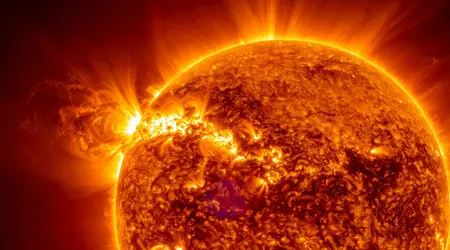
How do these reversals affect life on Earth?
Evidence indicates that Solar Magnetic Reversals Still Puzzle Science primarily because the transition phase coincides with the most dangerous solar flares.
During the flip, the Sun’s “shield” the heliosphere becomes disorganized, allowing more cosmic rays to penetrate the inner solar system and reach our planet.
For a civilization reliant on delicate electronics, this magnetic transition represents a period of high risk for the global power infrastructure.
A single massive coronal mass ejection during this phase could theoretically cause trillions of dollars in damage to orbital satellites.
Also read: Can the Sun Die Without Warning? What Science Says
Can solar flips change our climate?
While the magnetic reversal itself doesn’t directly heat the Earth, the accompanying changes in total solar irradiance can influence upper atmospheric chemistry.
Some researchers suggest that increased cosmic ray penetration during the flip could affect cloud formation and long-term weather patterns.
Data from the National Oceanic and Atmospheric Administration (NOAA) confirms that solar maximums involve a slight increase in energy output.
However, the connection between these magnetic cycles and Earth’s tropospheric climate remains a subject of intense scientific debate in 2026.
Read more: Is the Sun Actually White, Not Yellow? (And Why We See It Differently)
Why is satellite safety a major concern?
During a magnetic reversal, the solar wind becomes more turbulent, causing the Earth’s atmosphere to expand and increase drag on low-earth orbit satellites.
This can pull satellites out of their intended paths, requiring expensive maneuvers to avoid collisions or premature reentry.
The Solar Magnetic Reversals Still Puzzle Science because we cannot yet forecast the “peakiness” of the radiation environment during these transitions.
This uncertainty forces satellite operators to stay on high alert, ready to put multi-billion dollar assets into “safe mode” at any moment.
What are the latest breakthroughs in solar observation?
Recent missions have provided high-resolution imagery of the solar poles, revealing that the magnetic flip is far more chaotic than once thought.
We now know that the poles don’t just “switch”; they dissolve into a complex mess of smaller magnetic “islands” before reforming.
These findings highlight that Solar Magnetic Reversals Still Puzzle Science by showing that our traditional “dipole” model is far too simplistic.
The Sun behaves more like a boiling pot of magnetic soup than a simple bar magnet found in a classroom.
What has the Parker Solar Probe discovered?
The Parker Solar Probe has detected “switchbacks” rapid flips in the magnetic field direction that seem to originate from the solar surface.
These switchbacks might be the missing link in understanding how energy is transported from the interior to the outer atmosphere.
By flying through these structures, the probe is helping us understand why the corona is millions of degrees hotter than the surface.
This temperature anomaly is likely tied to the same magnetic stresses that eventually lead to the decadal pole reversal.
Why is the 2026 solar maximum unique?
Solar Cycle 25 has significantly outpaced the official predictions made by NASA and international panels, showing much higher sunspot numbers.
This unexpected vigor suggests that Solar Magnetic Reversals Still Puzzle Science because our “consensus” models are missing a fundamental variable.
If the Sun continues this trend, the upcoming reversal could be one of the most magnetically intense events of the space age.
Scientists are scrambling to update their simulations to account for this surprisingly active behavior from our local star.
Solar Cycle Comparison (Recent Observations)
| Feature | Solar Cycle 24 | Solar Cycle 25 (Current) | Scientific Impact |
| Peak Sunspot Number | ~116 (Weak) | ~180+ (Strong) | Higher risk of solar storms |
| Reversal Symmetry | Highly Asymmetrical | Tracking Asymmetrical | Challenges dynamo models |
| Space Weather Events | Moderate | High Frequency | Tests modern grid resilience |
| Observation Tech | SDO / SOHO | Parker / Solar Orbiter | Unprecedented data resolution |
| Predictability | High | Low (Underestimated) | Solar Magnetic Reversals Still Puzzle Science |
The Unsolved Rhythm of Our Star
The mystery of Solar Magnetic Reversals Still Puzzle Science serves as a humbling reminder of our limited grasp of the universe’s power.
We have explored how twisted magnetic fields drive this eleven-year flip and why the current cycle is defying all established models.
This cycle is like a giant clock where the hands move at different speeds, sometimes skipping a beat or rushing forward unexpectedly.
As we reach the peak of Cycle 25, the Sun remains a volatile laboratory that continues to challenge our brightest minds.
Understanding these magnetic shifts is not just an academic pursuit; it is a necessity for protecting our technological future in the cosmos.
Do you think we will ever be able to predict solar activity with the same accuracy as we predict our daily weather? Share your experience in the comments!
Frequent Questions
Is a solar magnetic reversal the same as a pole shift on Earth?
No, they are very different. The Sun’s poles flip every 11 years as a regular part of its cycle, while Earth’s magnetic poles take hundreds of thousands of years to swap.
The solar flip is a frequent, expected event, whereas an Earth flip is a rare geological phenomenon.
Can the solar flip cause a total blackout on Earth?
The flip itself doesn’t cause blackouts, but the high solar activity around the time of the flip can trigger geomagnetic storms.
These storms can induce currents in power lines, potentially damaging transformers if the grid is not properly shielded or managed.
Why did scientists underestimate Solar Cycle 25?
Most models are based on the strength of the previous cycle’s magnetic field at the poles, which was relatively weak.
The Sun’s internal “conveyor belt” likely moved faster than expected, proving that Solar Magnetic Reversals Still Puzzle Science even with our best modern computers.
Does the Sun’s magnetic flip affect human health?
There is no proven direct link between the solar magnetic flip and human physiology on the ground, as our atmosphere protects us.
However, astronauts in space face significantly higher radiation risks during this period, requiring them to use shielded “storm shelters” aboard the ISS.
Will the Sun ever stop flipping its poles?
As long as the Sun has a rotating, fluid interior of plasma, it will likely continue this cycle.
However, some historical periods like the “Maunder Minimum” saw almost no sunspot activity or flips for decades, showing that the Sun can occasionally go into a long “dormant” state.
