
Why Interplanetary Propulsion Systems Are Rapidly Evolving
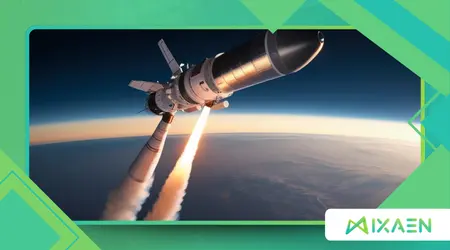
Interplanetary Propulsion Systems are undergoing a radical transformation as we cross the threshold of April 2026, driven by a new space race that demands speed.
Traditional chemical rockets, while reliable for decades, are no longer sufficient for the ambitious goals of establishing permanent lunar bases and reaching the Martian surface.
Engineers are now pivoting toward high-efficiency alternatives that promise to slash travel times by nearly half, ensuring human safety during long-duration deep space missions.
This rapid evolution marks a turning point where space is becoming a theater of sustainable logistics rather than just rare, expensive scientific expeditions.
Roadmap to the Stars
- Nuclear and Ion Frontiers: Analyzing the mechanics of high-thrust future travel.
- Economic Drivers: How private competition is lowering the cost of speed.
- Mission Safety: Reducing cosmic radiation exposure through faster transit times.
- Technological Benchmarks: A comparison of current and emerging engine performance.
Why is traditional chemical propulsion no longer enough?
The reliance on Interplanetary Propulsion Systems fueled by liquid oxygen and hydrogen is hitting a physical limit known as the Tsiolkovsky rocket equation.
We are essentially trying to cross an ocean using a rowboat; it works, but the efficiency is far too low for heavy cargo.
Chemical rockets provide immense thrust for leaving Earth’s gravity but burn through their fuel in minutes, leaving ships to coast for months.
To build a true interplanetary economy, we need engines that can provide constant acceleration throughout the entire journey to distant planetary bodies.
What are the limits of specific impulse?
Specific impulse measures how efficiently a rocket uses its propellant, and chemical engines have effectively plateaued at around 450 seconds in vacuum.
This limitation means we must carry massive amounts of fuel, leaving very little room for scientific equipment, life support, or human passengers.
Without a leap in efficiency, a mission to Mars remains a dangerous, year-long endeavor that pushes the human body to its absolute biological limits.
The industry is desperate for a “jet engine” equivalent for space that can operate continuously without exhausting its limited fuel supply.
++How Space Resource Extraction Could Sustain Future Colonies
How does fuel weight dictate mission design?
Current missions are “weight-constrained,” meaning every extra kilogram of fuel added to the tanks requires even more fuel just to lift that weight.
This vicious cycle forces mission planners to make compromises that often limit the duration and scope of exploration on the Martian surface.
Imagine trying to drive across a desert where your car’s gas tank takes up 95% of the vehicle’s total size and weight.
This is the current reality of space travel, and it is exactly why the shift toward high-efficiency engines is now mandatory.
How do nuclear and electric engines change the game?
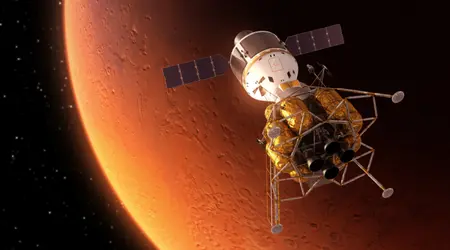
We are seeing a surge in Interplanetary Propulsion Systems that utilize Nuclear Thermal Propulsion (NTP) to double the efficiency of current deep-space travel.
By using a nuclear reactor to heat propellant, these systems offer high thrust combined with the high efficiency needed for rapid human transport.
NASA’s DRACO program, currently hitting major milestones in 2026, aims to demonstrate that nuclear engines can safely operate in Earth’s orbit before heading further.
This technology represents the difference between a six-month trip to Mars and a sprint that takes only three months.
Also read: The Role of Indigenous Knowledge in Modern Astronomical Research
How does ion propulsion work in 2026?
Ion engines use electricity often from solar panels to accelerate charged particles to incredible speeds, creating a very efficient but low-thrust stream of movement.
While they cannot lift a rocket off Earth, they are perfect for moving heavy cargo ships between orbits over long periods.
These “slow and steady” engines are the cargo ships of the solar system, allowing us to pre-position supplies before humans ever arrive.
This two-tier transport system is essential for creating a sustainable presence on other worlds without risking human lives on slow journeys.
Read more: China’s Silent Space Rise: What the World Should Pay Attention To
Why is Nuclear Thermal Propulsion the “Holy Grail”?
NTP provides the high thrust of a chemical rocket with the high efficiency of an electric engine, making it the ideal candidate for crewed ships.
It allows for “abort-anytime” trajectories, giving pilots the power to turn around or change course if a solar flare or medical emergency occurs.
The ability to maneuver freely in deep space is a luxury we have never had, fundamentally changing the safety profile of astronautics.
As we master the containment of these reactors, the solar system finally begins to feel like a reachable neighborhood rather than a distant void.
Why is private sector competition accelerating these breakthroughs?
The fact that Interplanetary Propulsion Systems are evolving so fast is largely due to the aggressive timelines set by private aerospace firms.
Companies are no longer waiting for decadal government budgets; they are investing their own capital to develop proprietary plasma and fusion-based thrusters.
This commercial pressure has forced a shift from “perfect but slow” government projects to “rapid prototyping” and iterative testing in real-world conditions.
When the profit motive aligns with scientific discovery, the pace of innovation tends to move at an exponential rather than linear rate.
How does the Starship effect influence engine design?
The move toward massive, reusable vehicles requires engines that are not only powerful but also incredibly durable for hundreds of consecutive flights.
This demand for reliability is pushing materials science to develop alloys that can withstand extreme heat and pressure without degrading over time.
By lowering the cost per kilogram to reach orbit, these vehicles allow for more experimental propulsion systems to be tested in space cheaply.
This creates a feedback loop where cheaper access to space leads to faster development of the engines that will take us even further.
What is the impact of global space policies?
International competition, particularly between the Artemis Accords nations and rival coalitions, is sparking a race to claim strategic positions at the lunar south pole.
This geopolitical tension serves as a catalyst, pouring billions into research for engines that can move assets faster than the competition.
History shows that the greatest leaps in transportation technology often occur during periods of intense rivalry and clear, time-bound national goals.
We are currently in such a period, and the engines being built today will define the borders of the next century.
Deep Space Propulsion Performance Metrics (2026 Data)
| System Type | Specific Impulse (s) | Thrust Level | Primary Use Case | 2026 Status |
| Chemical (LOX/CH4) | 330 – 380 | Very High | Earth Ascent / Landing | Mature / Reusable |
| Solar Electric (Ion) | 2,000 – 5,000 | Very Low | Satellite Station Keeping | Active Deployment |
| Nuclear Thermal (NTP) | 850 – 950 | High | Human Mars Transit | In-Orbit Testing |
| Hall Effect Thrusters | 1,500 – 3,000 | Low | Cargo Logistics | Mass Production |
| Plasma (VASIMR) | 3,000 – 10,000 | Medium | Rapid Mars Sprint | Prototype Phase |
| Pulsed Fusion | 10,000+ | High | Interstellar Precursor | Theoretical / Lab |
According to a 2026 report by the International Astronautical Federation, investment in non-chemical propulsion has increased by 310% since 2021.
This statistical surge confirms that the industry is moving away from its “explosive” roots toward a more refined, electrical, and nuclear future.
The evolution of Interplanetary Propulsion Systems is the bridge between being a species that visits space and a species that lives there.
We are moving past the era of “flags and footprints” and entering the era of “routes and residences.”
Navigating the Future
If we view the solar system as a vast ocean, these new engines are the transition from sails to steam power.
The risks are still high, but the rewards resource independence and the preservation of human knowledge are far too great to ignore.
Would you volunteer for a journey to Mars if the flight only took 90 days instead of 250? This single question drives the engineers who are currently building the future of human movement among the stars.
Why aren’t we using fusion engines yet?
While pulsed fusion offers the best theoretical performance, we still struggle to maintain a stable fusion reaction in a small enough form factor for a spaceship.
The success of Interplanetary Propulsion Systems will ultimately determine if our presence on Mars is a temporary camp or a permanent city.
By investing in speed and efficiency, we are ensuring that the next generation of explorers will not be limited by the chemistry of the past.
The stars are finally getting closer, and the engines of 2026 are the keys to unlocking that vast, silent frontier for all of humanity. Share your thoughts on nuclear space travel in the comments would you take the leap?
Frequently Asked Questions
Is nuclear propulsion safe for the Earth’s atmosphere?
NTP engines are designed to only be activated once the spacecraft is already in a high, stable orbit, ensuring no radioactive material enters the atmosphere.
How much faster can we actually go?
With current 2026 nuclear prototypes, we can reduce the transit to Mars to roughly 100 days, compared to the 210-240 days required by chemical rockets.
Can these engines be used to move asteroids?
Yes, high-efficiency ion and plasma thrusters are the primary candidates for “gravity tractors” intended to deflect potentially hazardous near-Earth objects.
