
Why Exoplanet Atmosphere Loss Challenges Life Sustainability Models
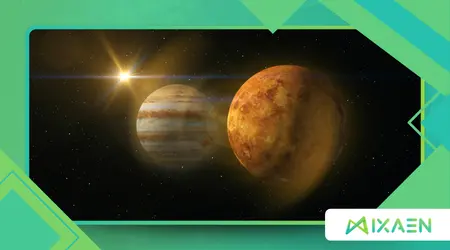
Exoplanet Atmosphere Loss serves as a critical filter in our 2026 search for habitable worlds. It forces us to rethink traditional biological models.
As telescopes like the JWST provide unprecedented spectral data, astronomers now confront a harsh reality. A planet’s proximity to its star often dictates its doom.
The preservation of a gaseous envelope is not a cosmic guarantee. It is a fragile balance between gravity and stellar fury.
Scientists must now determine if the most common planets in our galaxy are actually naked rocks disguised as promising, life-bearing oases.
Astrophysical Data Overview
- Stellar Winds: The impact of high-energy particles on the structural integrity of planetary shields.
- Magnetic Protection: The essential role of a molten core in preventing total atmospheric stripping.
- Red Dwarf Hazards: Why the most common stars might be the most hostile hosts for alien life.
- Future Detection: Technological advancements designed to identify secondary atmospheres on previously barren worlds.
How does stellar activity drive the disappearance of protective gases?
Severe Exoplanet Atmosphere Loss occurs when the intense radiation from a host star provides enough kinetic energy for gas molecules to escape.
This process, often called thermal escape, effectively sandpapers the sky away. It leaves the planetary surface exposed to the vacuum of space.
Young stars are notorious for their frequent and violent flares. M-dwarfs are particularly aggressive. They can strip a planet’s ozone layer in mere millennia.
Without this protective barrier, the surface becomes a sterilized wasteland. This happens regardless of whether the planet sits within the traditional “Goldilocks” zone.
What is the role of the magnetosphere?
A strong magnetic field acts like a planetary umbrella. It deflects the lethal stream of charged particles emitted by the host star.
Planets lacking a liquid metal core cannot generate this shield. They remain vulnerable to the relentless pressure of the solar wind.
Mars serves as our local example of this tragedy. It lost its thick atmosphere once its internal dynamo stopped spinning billions of years ago.
We see this same pattern repeated across the Milky Way. Potentially habitable worlds are rendered lifeless by their own internal cooling.
++ How Artificial Intelligence Is Accelerating the Search for Life
Why do red dwarfs pose a unique threat?
Red dwarfs are small and cool, but their habitable zones are deceptively dangerous. Planets must orbit so close that they become tidally locked and blasted by flares.
This proximity increases the rate of gas depletion. It makes it nearly impossible for a stable, long-term climate to ever take root.
Recent data from the TESS mission suggests a grim outlook. Many Earth-sized planets orbiting these stars may be completely devoid of water vapor.
Can life truly evolve if the very air it breathes is being stolen by its sun every single day? There is something unsettling about the idea that our galaxy’s most common stars might be cosmic traps.
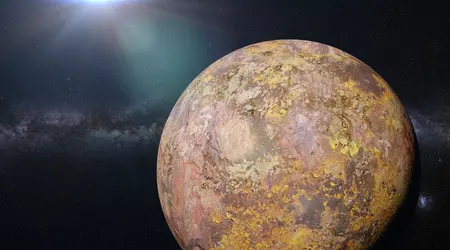
Why is it difficult to maintain life sustainability on smaller planets?
The phenomenon of Exoplanet Atmosphere Loss is especially devastating for low-mass planets. They lack the gravitational pull to hold onto lighter elements.
Hydrogen and helium escape first. Even heavier molecules like oxygen can eventually drift away if the planetary mass is too low.
Size truly matters on a cosmic scale. Larger “Super-Earths” have a much better chance of retaining their protective blankets. Smaller worlds might start with vast oceans.
They often end up as dry, airless husks before biological complexity can even begin.
Also read: How the Study of Extremophiles Is Helping the Search for ET
How does photoevaporation affect planetary evolution?
Photoevaporation happens when extreme ultraviolet light hits the upper atmosphere. It heats the gas until it expands and overflows into space.
This process often carves a “radius gap” in planetary populations. We see very few planets of a specific intermediate size because they either kept their gas or lost it all.
This gap provides a “crime scene” for astronomers. It shows exactly where atmospheres were successfully stripped away.
Understanding this threshold helps us narrow our search. We can focus on worlds that survived their star’s turbulent and aggressive teenage years.
Read more: Are We Ignoring Alien Life Because It’s Too Different?
What happens during a hydrodynamic escape?
Hydrodynamic escape is a massive, wind-like outflow. The entire upper atmosphere is dragged into space by a fast-moving flow of hydrogen.
This is like a cosmic leak. It drains a planet’s life-support system at an irreversible rate over geological timescales.
If a planet loses its hydrogen too quickly, it cannot form water. Water is necessary for the chemical reactions that characterize life as we know it.
We are finding that many planets in 2026 are simply too “leaky” to remain habitable for the long haul.
How do we adapt our search models for the future?
Witnessing Exoplanet Atmosphere Loss in real-time has forced a total pivot in our strategies. We no longer just look for “Earth-sized” worlds.
We look for “Earth-mass” worlds with evidence of active, ongoing volcanic outgassing.
Volcanoes act as a planetary refill station. They pump gases back into the sky to replace what the star has stolen.
A geologically active planet is a resilient planet. It can maintain its atmosphere despite the constant erosion from the surrounding space environment.
Are secondary atmospheres a viable hope?
A secondary atmosphere forms long after the original gases have been swept away. These planets release gases from their interior.
These “reborn” skies might contain specific chemical signatures like carbon dioxide or methane. We often associate these with biological activity.
The JWST has recently focused on the TRAPPIST-1 system. Astronomers want to see if these rocky worlds managed to grow secondary protective layers.
If they have, it proves that life can find a way. Even planets that were once stripped completely naked might have a second chance.
Why is the “Habitable Zone” concept being revised?
The traditional habitable zone only considers temperature. Modern 2026 models must now account for atmospheric retention and stellar activity levels.
A planet might be at the right temperature. If it has no air, it is effectively a cosmic oven or a freezer.
Astronomers are now developing the “Atmospheric Habitable Zone” metric. This prioritizes planets with the right combination of gravity and magnetic protection.
Think of it like a house. A good heater is useless if the building has no roof to hold the warmth.
Atmospheric Retention and Stellar Impact Comparison 2026
| Planet Type | Typical Host Star | Gravity Level | Magnetic Shield | Escape Risk |
| Terrestrial | G-Type (Sun-like) | Moderate | Variable | Low / Moderate |
| Sub-Earth | M-Dwarf | Low | Weak | Extremely High |
| Super-Earth | K-Dwarf | High | Strong | Very Low |
| Ocean World | G-Type | Moderate | Moderate | Moderate |
| Hot Jupiter | F-Type | Extreme | Strong | High (Thermal) |
| Mini-Neptune | M-Dwarf | Moderate | Strong | Low |
| Rocky Core | Red Dwarf | Moderate | None | Total Loss |
As of early 2026, research indicates that nearly 35% of surveyed M-dwarf planets show signs of significant Exoplanet Atmosphere Loss.
This statistic is a sobering reminder. The majority of planets in our galaxy might be hostile to life’s delicate requirements.
Our quest for another Earth is becoming a search for survivors. We want worlds that have weathered the storm of their star’s birth.
These rare gems are where the first signs of alien biology will likely be discovered. They are hidden within a thin, stubborn layer of gas.
The Survival of Worlds
We have learned that atmosphere loss is the ultimate gatekeeper for life. The balance between a planet’s internal heat and its star’s external radiation is everything.
It determines whether a world becomes a garden or a desert.
Understanding this struggle allows us to focus our limited resources. We can avoid years of fruitless observation on barren rocks.
The universe is a violent place. The mere existence of our own atmosphere is a miracle we often take for granted.
Share your thoughts on the most resilient planets we have discovered. Do you think we will find life on a world without a magnetic shield? Share your experience in the comments below!
Frequently Asked Questions
Can a planet ever regain its lost atmosphere?
Yes. Through intense volcanic activity or comet impacts, a planet can replenish its gases. This “secondary” atmosphere is chemically different from the original.
Does Earth lose its atmosphere to space?
Earth loses about 90 tonnes of gas every day. Our strong gravity and magnetic field keep this loss negligible over billions of years.
Why are red dwarf planets so vulnerable?
These stars are very active. Their planets must orbit very closely to stay warm. Consequently, they are hit by much stronger stellar winds.
How does JWST see exoplanet air?
It uses “transmission spectroscopy.” It analyzes the starlight that passes through the planet’s atmosphere during a transit. This identifies specific chemical fingerprints and gas densities.
The Invisible Shield: Ultimately, Exoplanet Atmosphere Loss reminds us that habitability is not just about location. It is about the invisible shields that protect a world’s most precious resources.
