
Why Eccentric Black Hole Mergers Break Formation Theories
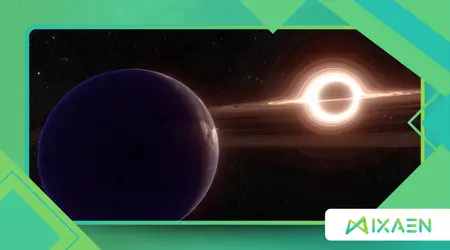
Eccentric Black Hole Mergers represent a groundbreaking shift in astrophysics as they challenge the long-held assumption that massive objects always follow perfect circles.
Until recently, scientists believed gravitational waves would smooth out any cosmic orbit into a uniform ring long before the final, violent collision.
Recent detections by laser interferometers reveal that some binary systems maintain wild, oval paths right up to the moment of their cosmic impact.
This observation suggests a chaotic history that standard evolutionary models of isolated star pairs simply cannot explain within our current understanding.
Astronomical Research Brief
- Orbital Eccentricity: Discover why non-circular paths indicate that black holes were forced together by outside influences rather than aging stars.
- Dense Environments: Explore how the crowded hearts of globular clusters and galactic nuclei act as cosmic “billiards” for massive gravity wells.
- Gravitational Wave Signatures: Learn how LIGO and Virgo detectors distinguish the unique, modulated chirps of eccentric pairings from standard circular events.
- The hierarchical Model: Analyze the theory that these black holes were born from previous mergers, growing larger through repeated, chaotic interactions.
How do these unusual orbits challenge existing models?
The discovery of Eccentric Black Hole Mergers forces researchers to rethink the “binary evolution” story where two sibling stars die and merge peacefully.
In that classic scenario, the emission of gravitational waves naturally acts as a stabilizer, rounding out the orbit over millions of years.
However, an eccentric path suggests the two black holes met much later in life, perhaps through a random encounter in a crowded neighborhood.
This “dynamic capture” indicates that the universe is far more interactive and crowded than our previous solitary models ever dared to suggest.
Why does gravity “circularize” most orbits?
General relativity dictates that as two masses dance, they shed energy in the form of waves, which pulls them closer while evening their path.
Think of it like a spinning top that eventually settles into a steady, predictable rhythm as it loses its initial erratic energy.
For a merger to remain eccentric, the objects must collide so quickly that gravity doesn’t have time to fix their chaotic, elliptical trajectory.
This implies a sudden, forceful introduction caused by the gravitational pull of a third, nearby object or a supermassive center.
++ The Mystery of Binary Asteroid Debris Exchange in Deep Space
What is the role of the “Three-Body Problem”?
When a third star or black hole enters the fray, it can kick one member of a binary system into a highly elongated orbit.
These gravitational “kicks” are the primary suspects in creating the strange signals we are now detecting with our sensitive terrestrial equipment.
These interactions are the cosmic equivalent of a chaotic mosh pit where participants are constantly pushed into new, unpredictable directions by their peers.
Without this external interference, the sleek, circular mergers predicted by Einstein’s early followers would likely be the only events we see.
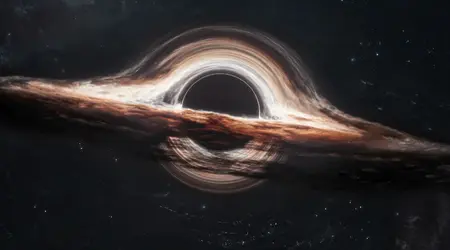
Why is environment the key to understanding chaos?
Evidence suggests Eccentric Black Hole Mergers occur most frequently in the dense, star-packed centers of galaxies where celestial traffic is incredibly heavy.
In these regions, black holes are not lonely survivors but active participants in a high-stakes game of gravitational musical chairs.
Active Galactic Nuclei (AGN) provide the perfect “gas disk” that can trap black holes, forcing them into frequent and highly eccentric encounters.
These environments act as massive traps that overcome the natural tendency of space to keep large objects separated by vast, empty distances.
Also read: Could Dark Energy Be Linked to a Force We Haven’t Discovered?
How do AGN disks facilitate these collisions?
The thick gas surrounding a supermassive black hole exerts a drag force on smaller black holes, migrating them toward a central “migration trap.”
Once huddled together, these objects interact so frequently that eccentric pairings become a statistical certainty rather than a rare cosmic fluke.
This environment acts like a thick syrup, slowing down objects and dragging them into a communal area where collisions are unavoidable.
It is a factory for the very events that were once thought to be theoretical impossibilities by traditional astronomers.
Read more: Why the Universe Keeps Producing Anomalies We Can’t Classify
What do globular clusters tell us about history?
Globular clusters are ancient, tightly packed groups of stars that serve as the perfect laboratories for watching how gravity handles multiple massive bodies.
Here, the “hierarchical merger” theory gains ground, as black holes frequently swap partners and collide in rapid, non-circular succession.
A black hole in a cluster might merge several times, with each new “generation” carrying the orbital scars of its violent, crowded past.
These multi-generational mergers provide a clear explanation for why some detected black holes are far heavier than a single star should allow.
Why are gravitational waves our best window into this mystery?
Detecting Eccentric Black Hole Mergers is only possible because we can now “hear” the subtle modulations in the fabric of space-time itself.
An eccentric merger produces a “chirp” that is not a smooth rise in pitch but a stuttering, complex signal.
This complexity allows scientists to reconstruct the final moments of the binary system with incredible precision, revealing the true shape of the dance.
Every wobble in the signal is a clue about the mass, spin, and history of the objects involved in the event.
How does the LIGO-Virgo-KAGRA network help?
By using multiple detectors across the globe, researchers can triangulate the source of these waves and verify the strange shapes of the orbits.
In 2026, our sensitivity has reached a point where we can detect eccentricity that would have been “invisible” noise just a decade ago.
Each new detection provides a data point that slowly rebuilds our maps of the most violent and hidden parts of the universe.
We are no longer guessing at what happens in the dark; we are listening to the echoes of the chaos.
What is the future of “LISA” in space?
The upcoming Laser Interferometer Space Antenna (LISA) will detect lower-frequency waves, capturing eccentric binaries years before they actually merge together in a flash.
This early warning system will allow us to watch the entire evolution of an oval orbit as it slowly tightens.
LISA will act as a cosmic telescope that sees the “pre-game” of these mergers, providing the missing links in our formation theories.
It will finally confirm if these eccentric paths are the rule or the exception in the deeper parts of our galaxy.
Cosmic Merger Theory Comparison Matrix
| Feature | Isolated Binary Model | Dynamic Capture Model | AGN Disk Model | Hierarchical Model |
| Primary Origin | Sibling Star Death | Random Encounter | Gas Disk Trap | Multiple Mergers |
| Orbit Shape | Circular | Highly Eccentric | Moderately Eccentric | Variable |
| Location | Galactic Suburbs | Star Clusters | Galactic Centers | Variable |
| Typical Mass | 5 to 30 Solar Masses | Variable | 20 to 100+ Solar Masses | Massive (Gen 2+) |
| Formation Speed | Billions of Years | Fast (Dynamic) | Accelerated by Gas | Cumulative |
| Wave Signature | Smooth Chirp | Modulated/Broken | Stable but High Spin | High Mass Chirp |
| Occurrence Rate | High (Predicted) | Low to Moderate | Moderate | High in Clusters |
| Theory Status | Standard | Growing Evidence | Leading Theory | Verified (GW190521) |
The study of Eccentric Black Hole Mergers is essential because it bridges the gap between pure mathematics and observable reality.
According to a 2024 study published in Nature Astronomy, up to 25% of observed mergers in dense environments could possess significant eccentricity.
Think of a standard merger as a smooth waltz, while an eccentric merger is a frantic, jagged tango performed on a moving floor.
This analogy helps us visualize the immense energy required to keep such massive objects from settling into a simple circle.
Are we witnessing a total rewrite of how we perceive the growth of the universe’s most mysterious and powerful objects?
This question remains the central focus for every major observatory operating in the high-energy frontier of 2026.
As our technology improves, we find that the universe is less like a clock and more like a stormy, unpredictable ocean.
The “broken” theories of the past are simply becoming the more complex, beautiful truths of our present-day scientific journey.
The final collision is just the end of a very long and noisy story that we are finally learning how to read properly.
Every eccentric pulse is a victory for human curiosity over the vast, silent reaches of the deep cosmos.
Do you think the universe is fundamentally more chaotic or more organized than our current scientific laws suggest? Share your experience in the comments!
The Eccentric Future
The phenomenon of Eccentric Black Hole Mergers proves that whenever we think we have mastered a cosmic rule, the universe provides an exception.
These oval orbits are not failures of physics but signposts pointing us toward a deeper, more interconnected understanding of gravity and time.
Frequently Asked Questions
What is the difference between a circular and an eccentric orbit?
A circular orbit maintains a constant distance between objects, while an eccentric orbit is elliptical, meaning the objects move closer and further apart.
Why do scientists find eccentric mergers so surprising?
Standard theories predicted that gravitational waves would “wash out” eccentricity long before a merger happened, making these recent detections highly unexpected anomalies.
Can we see these mergers with a normal telescope?
No, black holes do not emit light; we can only detect them through gravitational waves or by observing their effects on nearby gas and stars.
How many eccentric mergers have been confirmed?
While most mergers appear circular, events like GW190521 have provided strong evidence for non-circular paths, with more candidates emerging in 2026 data.
