
What the Solar Minimum Means for Earth Right Now
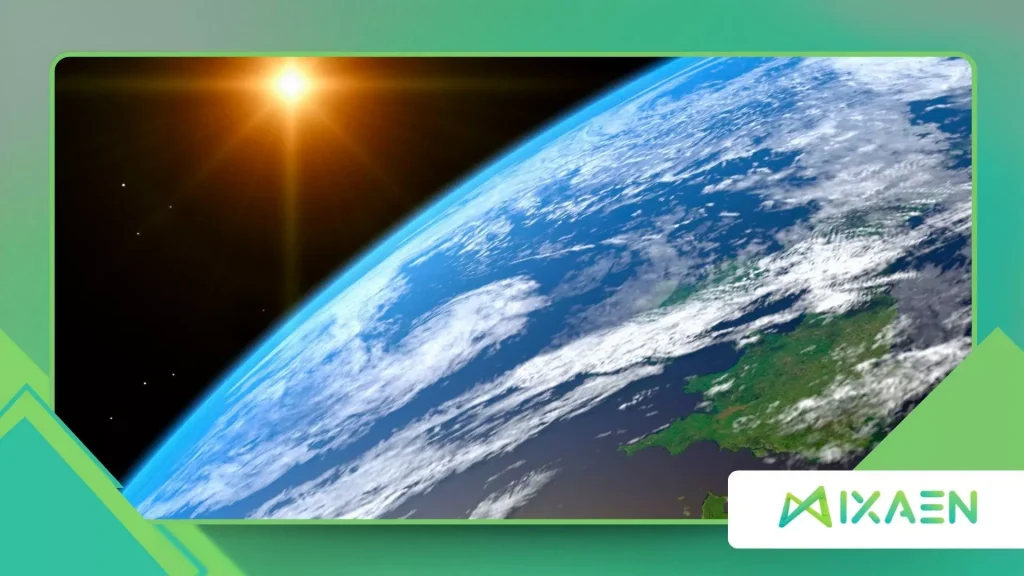
Understanding solar minimum means for earth a shift in space weather that directly impacts our modern technological infrastructure and global communications.
While many individuals associate solar activity exclusively with scorching solar flares, the period of tranquility in the sun’s 11-year cycle carries its own unique set of cosmic challenges.
This phase does not signify a dead sun, but rather a quiet transformation that alters the protective bubble surrounding our planet.
As journalists observing these celestial shifts in 2026, we must evaluate how these changes manifest in our daily lives. From satellite orbits to grid stability, the implications are subtle yet profound.
We will dissect the mechanisms behind this phase, analyze its historical precedents, and examine the precise operational risks that global infrastructure faces right now.
Key Highlights of this Analysis
- Core Concepts: Demystifying the mechanics of solar cycles and magnetic field deflation.
- Atmospheric Impact: Exploring thermospheric contraction and the dangerous rise of galactic cosmic rays.
- Technological Risks: Evaluating satellite drag reduction, GPS degradation, and grid vulnerabilities.
- Data & Frameworks: A comprehensive analytical review of active space weather parameters in 2026.
What Is the Low Point of the Solar Cycle?
The sun operates on a periodic heartbeat known as the Schwabe cycle, where magnetic activity waxes and wanes over roughly eleven years.
During the trough of this cycle, sunspots disappear almost entirely, and the total solar irradiance drops by a fraction of a percent.
This transition fundamentally modifies the solar wind, creating a more uniform but structurally different stream of charged particles heading toward our atmosphere.
Understanding what the solar minimum means for earth requires looking past the lack of dramatic surface explosions on the sun.
This quietude causes the heliosphere the vast magnetic shield generated by the sun to weaken significantly, allowing external deep-space radiation to penetrate deeper into our solar system.
Consequently, the planet faces a different set of cosmic variables than it does during solar maximums.
Why Do Sunspots Disappear Entirely?
Sunspots are tangible manifestations of intense, tangled magnetic fields breaking through the solar surface, preventing convection and creating cooler, darker zones.
When the solar dynamo resets, these localized magnetic knots untangle and dissipate, leaving a pristine, unblemished solar disk.
This blank facade indicates that the internal magnetic engine is shifting gears, altering the energy output across the ultraviolet spectrum.
++ Why the Sun’s Corona Is Hotter Than Its Surface (And Why That’s Weird)
How Long Does This Quiet Phase Last?
This period of low activity typically spans several years, transitioning gradually from the declining phase of one cycle into the nascent stages of the next.
It represents an essential thermodynamic reset for the star, allowing magnetic fields to reorganize at the solar poles before migrating back toward the equator.
During this multi-year window, the terrestrial environment experiences prolonged exposure to steady-state cosmic conditions rather than erratic solar storms.
Also read: How the Sun’s Magnetic Field Shapes the Entire Solar System
Where Can We Observe These Changes?
Scientists track these subtle shifts using advanced space-based observatories like the Joint ESA/NASA Solar and Heliophysic Observatory and the Solar Dynamics Observatory.
On the ground, high-latitude neutron monitors register the secondary particles created when cosmic radiation collides with our upper atmosphere.
These combined observation methods offer a real-time, comprehensive view of the changing interplanetary medium surrounding our planet.
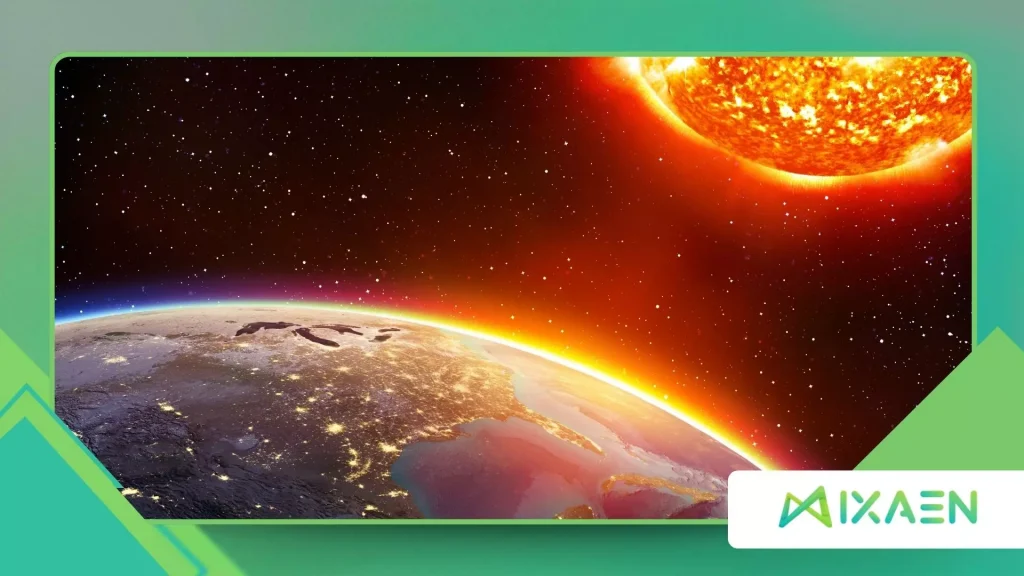
How Does This Phase Directly Impact Our Atmosphere?
When solar ultraviolet radiation drops during this quiet phase, the topmost layer of our atmosphere, the thermosphere, cools and contracts significantly.
Imagine the atmosphere as a balloon that expands when heated and shrinks when cooled; during this period, the upper layers deflate toward the surface.
This structural collapse alters the operational dynamics for thousands of low-Earth orbit satellites by radically reducing atmospheric drag.
The reduction in drag keeps space debris in orbit far longer than usual, creating an orbital traffic jam that increases collision risks.
Concurrently, knowing what the solar minimum means for earth helps us understand the alarming surge in galactic cosmic rays entering our atmosphere.
Without a robust solar wind to deflect them, these high-energy particles from distant supernovas bombard our planet with much greater intensity.
Read more: Solar Tornadoes: What They Are and Why They Matter
Why Do Cosmic Rays Increase Intensively?
The heliosphere acts as a giant magnetic umbrella, deflecting highly energetic particles originating from deep interstellar space away from the solar system.
When the solar wind loses its speed and density during the cycle’s low point, this protective umbrella collapses inward, opening the floodgates for cosmic rays.
These atomic nuclei travel at near-light speed, easily penetrating deep into the terrestrial atmosphere and creating secondary particle showers.
How Does Thermospheric Contraction Affect Satellite Lifespans?
With less extreme ultraviolet radiation heating the upper atmosphere, the density of the air at altitudes of 300 to 500 kilometers drops exponentially.
Satellites experiencing less resistance require less fuel to maintain their orbits, effectively extending their operational lifespans under normal conditions.
However, this lack of natural “cleansing” means dead satellites and small debris pieces remain aloft for decades longer, escalating space junk hazards.
What Regions Face the Highest Radiation Exposure?
Polar regions experience the highest concentration of cosmic ray penetration because Earth’s magnetic field lines funnel charged particles down toward the magnetic poles.
Commercial flight paths routing over the Arctic circle must monitor these radiation levels carefully to protect crew members and sensitive avionics from cumulative exposure.
At lower latitudes, the dense geomagnetic field still provides excellent protection, shielding general populations from these deep-space energetic particles.
What Are the Risks to Modern Technology?
Modern society relies heavily on a complex web of interconnected orbital assets, communication networks, and localized power grids.
During periods of low solar activity, the ionosphere becomes less predictable and highly stratified, causing subtle timing errors in Global Positioning System (GPS) signals.
These disruptions can degrade the accuracy of precision agricultural machinery, autonomous shipping vessels, and synchronized international banking systems.
Furthermore, analyzing what the solar minimum means for earth reveals surprising vulnerabilities within high-voltage electrical transmission systems.
While massive coronal mass ejections are rare now, long-lived coronal holes continually stream high-speed solar wind toward us, triggering prolonged, low-level geomagnetic disturbances.
These sustained currents can silently degrade transformer cores over time, leading to unexpected equipment failures during peak demand periods.
Why Do GPS Signals Experience Delays?
The ionosphere depends on steady solar ultraviolet radiation to maintain a consistent, predictable density of free electrons used for signal calibration.
When this radiation drops, the ionosphere becomes irregular and patchy, forcing GPS radio waves to travel through fluctuating mediums that delay transit times.
These microscopic delays translate into positioning errors on the ground, affecting industries that require absolute, millimeter-level navigational precision.
How Do High-Speed Streams From Coronal Holes Behave?
Coronal holes are vast regions where the sun’s magnetic field opens directly into space, allowing high-speed solar wind to escape like steam from a pressure cooker.
Even during the quietest years, these stable structures persist for months, raking across Earth’s magnetic field with predictable regularity.
The resulting geomagnetic activity is less explosive than a solar flare but can last for days, causing sustained environmental stress on satellite electronics.
What Vulnerabilities Exist in Power Transmission Grids?
Long-duration, low-intensity geomagnetic storms induce continuous, low-frequency electrical currents directly into long-distance power lines and metallic oil pipelines.
These geomagnetically induced currents saturate transformer cores, causing localized overheating, harmonic distortions, and a reduction in system voltage stability.
Grid operators must constantly adjust power routing to prevent these subtle, compounding currents from causing permanent hardware damage to vital infrastructure.
Comparative Data Analysis of Solar Phases
To put these environmental shifts into perspective, we must examine real-world measurements that contrast the two extremes of the solar cycle.
The following table leverages data compiled from historical observations and active 2026 space weather monitoring systems, highlighting the stark differences in cosmic metrics.
| Environmental Metric | Solar Maximum Conditions | Solar Minimum Conditions (Current Phase) | Direct Operational Impact on Earth |
| Sunspot Count (Average) | 150 – 250+ spots | 0 – 15 spots | Reduced solar flare probability; calmer space weather baseline. |
| Galactic Cosmic Ray Intensity | Minimum levels | Maximum levels (+20% increase) | Increased radiation dose for aviation; higher satellite bit-flip risks. |
| Thermospheric Temperature | Up to1,200°C | Down to 600°C | Atmospheric contraction; significantly reduced satellite orbital drag. |
| Dominant Solar Phenomenon | Coronal Mass Ejections (CMEs) | Persistent Coronal Holes | Sustained, low-level geomagnetic disturbances over consecutive days. |
Adapting to a Quieter Cosmic Environment
The current solar phase serves as a reminder that space weather is a continuous spectrum, requiring adaptive management strategies.
While we are spared from catastrophic solar flares, we must remain vigilant against the invisible threat of increased deep-space radiation.
By using advanced predictive modeling and hardening our infrastructure, humanity can easily navigate these cyclical lulls without disrupting our highly digitized way of life.
Ultimately, recognizing what the solar minimum means for earth empowers industries to schedule critical orbital maneuvers, calibrate global navigation systems, and perform vital grid maintenance safely.
This quiet period is not a cause for alarm, but an opportunity to understand our planet’s intricate relationship with its host star.
Have you noticed any subtle shifts in your local communication networks recently? Share your experiences and thoughts in the comments section below!
Frequently Asked Questions
Does a solar minimum cause a mini ice age on Earth?
No, the minor drop in total solar irradiance during this phase is far too small to trigger a mini ice age.
Global planetary temperatures continue to be dominated by complex atmospheric dynamics and greenhouse gas concentrations, making any solar-induced cooling trend negligible on a global scale.
How does this phase affect aurora displays at the poles?
While the spectacular, low-latitude auroras driven by massive solar flares disappear, beautiful auroral displays still occur regularly near the poles.
These displays are fueled by the steady high-speed solar wind streams emanating from persistent coronal holes rather than explosive solar eruptions.
Are astronauts in space at higher risk during this quiet period?
Yes, astronauts working outside the protection of Earth’s magnetosphere face significantly higher radiation risks during this period.
The weaker solar wind allows a much higher flux of high-energy galactic cosmic rays to traverse the solar system, requiring enhanced shielding inside spacecraft.
