
Are the Laws of Physics Descriptive, Prescriptive, or Merely Statistical?
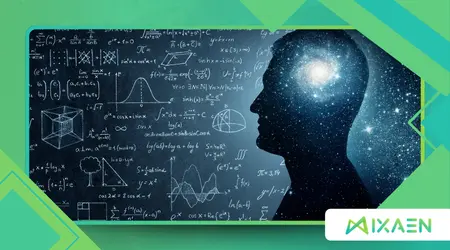
Are the Laws of Physics Descriptive or prescriptive? This question defines the frontier of modern cosmology and philosophy as we navigate the complex reality of 2026.
Scientists often debate whether the universe follows strict internal commands or if we simply summarize observed patterns using elegant mathematical language to make sense of chaos.
Understanding this distinction alters how we perceive every discovery, from the Amaterasu particle to the boundary layers of the sun’s atmosphere.
If these laws are merely human summaries, our entire scientific framework might be a beautiful map that describes the territory without actually being the land itself.
Essential Ontological Perspectives
- Descriptivism: The view that laws are efficient summaries of past events.
- Prescriptivism: The belief that laws act as the universe’s internal code.
- Statistical Realism: How quantum probability challenges traditional certainties.
- Modern Consensus: Why 2026 research favors a hybrid understanding.
Why is the distinction between descriptive and prescriptive laws vital?
Philosophers of science ask: Are the Laws of Physics Descriptive because the answer determines the limits of human knowledge and technological potential.
If laws are prescriptive, they function like the source code of a computer simulation, dictating exactly what every atom must do at every moment.
Conversely, if laws are descriptive, they are more like the “laws” of grammar; they describe how we use language but don’t physically prevent a typo.
This implies that the universe might behave in ways we haven’t summarized yet, leaving room for anomalies that current science cannot explain or predict.
How do prescriptive laws govern the universe?
Prescriptive laws suggest an inherent necessity in nature, where the gravitational constant acts as a fundamental constraint that matter simply cannot ignore.
This view aligns with Platonism, suggesting that mathematical truths exist independently of the physical world and impose their structure upon the void of the cosmos.
Imagine a train on tracks; the tracks are the prescriptive laws that define the path, and the train has no choice but to follow.
Under this framework, every event in the universe is a calculated outcome of pre-existing rules that were set during the initial moments of the Big Bang.
++ Does the Universe Allow Genuine Novelty—or Only Rearrangement?
What are the arguments for a descriptive framework?
A descriptive approach, often called “Humeanism,” argues that what we call “laws” are just regularities we have noticed over billions of repeated observations.
We see the sun rise daily and describe it as a law, but there is no logical “must” that forces it to happen tomorrow.
This perspective allows for more flexibility in scientific thought, as it treats our formulas as evolving tools rather than eternal, unbreakable commandments.
If we accept that Are the Laws of Physics Descriptive is the correct starting point, we remain humble enough to rewrite our textbooks when new data emerges.
Why does quantum mechanics suggest a statistical nature?
Modern experiments in 2026 continue to show that at the smallest scales, the universe operates on a “maybe” rather than a “must.” This leads many to wonder:
Are the Laws of Physics Descriptive summaries of a fundamentally random system that only appears stable when viewed from a distance?
Statistical laws mean that while we can predict the behavior of a crowd of atoms, we cannot say exactly what one single atom will do.
This randomness suggests that the “laws” we see are actually emergent properties of large numbers, similar to how insurance companies predict life expectancy without knowing an individual’s fate.
Also read: Could Time Be a Psychological Artifact Instead of a Physical Dimension?
How do statistical probabilities manifest in reality?
Quantum tunneling is a prime example where an electron “breaks” a classical law simply because the statistical probability allows it to exist elsewhere.
In our 2026 labs, we utilize this uncertainty to power next-generation sensors, proving that the universe’s fundamental “rules” are often just high-probability gambles.
This suggests that the “solid” reality we touch is a macroscopic illusion built upon a microscopic foundation of rolling dice and fluctuating energy fields.
If the universe is statistical, then our laws are just the average result of an astronomical number of tiny, random events happening simultaneously.
Read more: Is Consciousness a Fundamental Component of Spacetime?
Can we trust laws that are only probably true?
Even if laws are statistical, the odds of the floor beneath you suddenly vanishing are so low that they are effectively zero over billions of years.
We rely on these high probabilities to build bridges and launch rockets, even if the underlying physics admits a tiny margin for error.
The transition from a deterministic universe to a probabilistic one represents the greatest shift in scientific history, moving us from certainty to estimation.
Does it bother you to know that the very foundations of your world are built on a cosmic game of chance and mathematical averages?
Why is 2026 a turning point for these theories?
Recent data from the James Webb Space Telescope regarding the early universe has challenged several established “laws” regarding the speed of galaxy formation.
This ongoing crisis in cosmology forces us to revisit the question: Are the Laws of Physics Descriptive or are the “rules” of the universe actually changing over eons of time?
Some physicists now propose “Evolving Laws,” suggesting that the universe learns and adapts its behavior as it grows colder and more complex over time.
This would mean that a law we measure today might not have been a law shortly after the birth of time itself.
How does the Amaterasu particle challenge current laws?
The discovery of ultra-high-energy cosmic rays, like the Amaterasu particle, shows energy levels that seem to ignore the theoretical GZK limit of space.
This anomaly suggests that our “laws” of energy propagation might be incomplete descriptions of a much more complex and hidden physical reality.
When we see a particle exceed its “legal” speed limit, we must decide if the law was wrong or if the particle found a loophole.
Such moments are the fuel for scientific progress, pushing us to refine our descriptions until they match the wild reality of the actual universe.
What is the role of human observation in defining laws?
The “Observer Effect” reminds us that the way we measure the universe often dictates the results we get, blurring the line between fact and perception.
In 2026, we are more aware than ever that our instruments are part of the system we are trying to describe so objectively.
If the laws depend on how we look at them, they become a dialogue between the mind and the cosmos rather than a one-way dictation.
This interactive nature of reality suggests that the Are the Laws of Physics Descriptive debate is central to understanding our own place within the cosmic web.
Analysis of Scientific Law Frameworks 2026
| Feature | Descriptive (Humean) | Prescriptive (Platonic) | Statistical (Quantum) |
| Origin | Human Summary | External Reality | Probability Waves |
| Flexibility | High (Updates with data) | Low (Eternal) | Fixed Odds |
| Certainty | Relative | Absolute | Probabilistic |
| Key Example | Kepler’s Orbit | General Relativity | Electron Position |
| Primary Goal | Communication | Governance | Prediction |
| 2026 Status | Growing Support | Traditional Baseline | Core of Micro-Physics |
| Analogy | Grammar Rules | Train Tracks | Insurance Actuary |
| Implication | Nature is Free | Nature is Bound | Nature is a Casino |
A 2025 survey by the International Physics Union found that 62% of theoretical physicists now view laws as “effective descriptions” rather than “fundamental prescriptions.”
This shift underscores the growing realization that our math is an approximation of a reality that might be more fluid than we once dared to imagine.
Ultimately, we must accept that our quest for knowledge is an ongoing translation of a silent universe into a language we can understand.
Whether the universe obeys a code or simply exists in patterns, our duty is to keep observing and refining our collective story of the stars.
The laws of physics are the poetry of the universe, written in the ink of mathematics and the paper of space-time.
By questioning their nature, we engage in the highest form of human curiosity, seeking the truth behind the veil of the visible world.
As we look toward the next decade of discovery, we should remain open to the idea that the universe still has many secrets it has yet to describe.
The beauty of science lies not in having all the answers, but in the relentless pursuit of better and more accurate questions.
How would your view of life change if you knew the laws of gravity were just a “habit” the universe could one day break? Share your experience in the comments!
Frequently Asked Questions
Are the laws of physics the same everywhere in the universe?
Most evidence suggests they are, but some 2026 theories regarding “Dark Flow” suggest slight variations in the laws across massive cosmic distances.
Can a law of physics be “broken”?
In a descriptive sense, yes; if we see an event that contradicts a law, it means our description was incomplete or wrong, not that the universe “cheated.”
What is the difference between a theory and a law?
A law describes “what” happens (e.g., gravity pulls), while a theory explains the “why” and “how” (e.g., General Relativity explains gravity as curvature).
Why does math work so well to describe the universe?
This remains one of the great mysteries; some believe math is the language of the universe, while others think we just use the most convenient tool available.
