
Can the Sun Die Without Warning? What Science Says
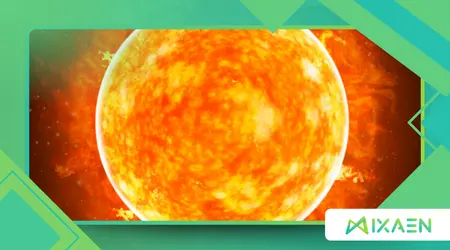
Can the Sun Die Without Warning is a question that has haunted human imagination since we first looked up at the golden disc above.
Anúncios
In 2026, with solar cycle 25 reaching its peak, public interest in our star’s stability is higher than ever before in history.
Fortunately, modern astrophysics provides a definitive answer rooted in the predictable laws of nuclear physics and stellar evolution.
While the Sun is a dynamic, churning ball of plasma, its ultimate fate is written in the very atoms it burns.
How Does the Sun Produce Energy and Stability?
Solar stability relies on a delicate tug-of-war between the crushing force of gravity and the outward pressure of nuclear fusion.
In the core, hydrogen atoms fuse into helium, releasing the immense energy that sustains all life on our small blue planet.
This process is so consistent that the Sun has maintained its current state for nearly 4.6 billion years.
It acts like a massive, self-regulating furnace that adjusts its output based on the density and temperature of its internal core.
++ Is the Sun Actually White, Not Yellow? (And Why We See It Differently)
Why is Sudden Solar Extinction Physically Impossible?
The sheer mass of the Sun provides a gravitational “thermal inertia” that prevents any instantaneous shutdown of its nuclear reactions.
Even if fusion stopped today, the stored energy would take over 100,000 years to reach the surface.
Our star is not a lightbulb that can simply be switched off by a cosmic hand. It is a massive gravitational engine that requires billions of years to exhaust its primary fuel source, hydrogen.
Also read: How Close Can We Get to the Sun Without Melting?
What are the Warning Signs of a Dying Star?
Science shows that stars do not die quietly; they expand and change color as they transition into their final evolutionary stages.
We would see the Sun grow larger and redder over millions of years, not minutes or hours.
Astronomers monitor thousands of similar stars across the Milky Way to verify these evolutionary patterns.
We know exactly what a “dying” star looks like, and the Sun currently shows zero symptoms of terminal decline.
Read more: How Scientists Photograph the Sun Without Blinding Themselves
How Does Helioseismology Track the Sun’s Internal Health?
We use sound waves traveling through the Sun a field called helioseismology to map its interior with incredible precision. These “solar quakes” allow scientists to “see” inside the core and verify the state of its fusion.
Think of it as a constant ultrasound for our star that runs every second of every day. In 2026, our data confirms the core is as healthy and stable as it was a millennium ago.
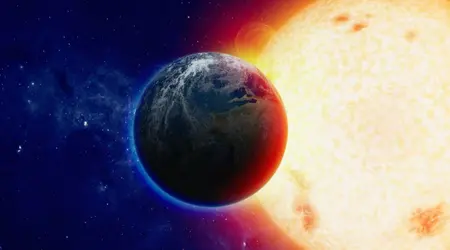
What Real Threats Should We Actually Monitor?
While the question Can the Sun Die Without Warning leads to a “no,” the Sun still poses real-time risks. Solar flares and Coronal Mass Ejections (CMEs) can disrupt our modern digital world within mere minutes or hours.
A massive CME, like the 1859 Carrington Event, could fry satellites and power grids globally if it struck today. This is the “real” solar danger not the Sun dying, but the Sun having a violent “burp.”
How Fast Do Solar Storms Reach Earth?
Light from a solar flare reaches us in just eight minutes, while the actual plasma cloud takes one to three days. This gives us a small but vital window to put satellites into “safe mode” and protect power grids.
Our early warning systems, like the DSCOVR satellite, act as our cosmic buoys in the solar wind. They provide the critical data needed to prevent a global technological blackout during peak solar activity.
Why Do People Worry About a Solar Minimum?
Some fear a “Grand Solar Minimum” could lead to a mini-ice age, similar to the Maunder Minimum of the 17th century.
However, recent NASA studies show that even a prolonged minimum would only slightly offset current global warming trends.
The Sun’s total irradiance varies by only about 0.1% during its normal eleven-year cycle. This tiny fluctuation is not enough to freeze the oceans or end civilization, despite what internet myths might claim.
What Statistic Defines the Sun’s Longevity?
According to ESA’s Gaia mission data, the Sun is roughly halfway through its 10-billion-year life cycle. This means we have about 5 billion years before it even begins the transition into a red giant.
When you realize the Sun has 5,000,000,000 years of fuel left, the fear of it “randomly dying” fades. That is a timeframe so vast that human history represents less than a microscopic blink in comparison.
What is the Best Analogy for Solar Stability?
Imagine a campfire the size of a mountain that has been burning for a week and has enough wood for another week. It is impossible for that fire to simply vanish in a second; the heat alone would linger for days.
The Sun is that mountain of fire, and gravity is the hand that keeps the wood packed tightly together. It cannot “go out” any more than the mountain itself could suddenly cease to exist.
Can External Cosmic Events “Kill” the Sun?
If the Sun itself is stable, Can the Sun Die Without Warning due to an outside influence? While space is full of hazards like black holes or rogue stars, the vast distances between objects protect us.
The chances of a rogue object entering our system and disrupting the Sun’s gravitational balance are infinitesimally small.
Our solar system is a very quiet neighborhood in a relatively empty part of the galactic suburbs.
Why Won’t a Nearby Supernova Destroy the Sun?
A supernova within 30 light-years could damage our atmosphere, but it wouldn’t “kill” the Sun itself. Our star’s mass is too great to be blown away by the light of a distant stellar explosion.
We have mapped all potential supernova candidates in our local vicinity, and none are close enough to pose a threat. The Sun remains the undisputed king of its local domain, unchallenged by its stellar neighbors.
How Do Rogue Planets Interact with Solar Stability?
Even if a planet-sized object crashed into the Sun, it would be like a grain of sand hitting a bonfire. The Sun would simply consume the extra mass and continue its fusion process without missing a beat.
It takes an object of near-stellar mass to truly disturb a G-type main-sequence star. Since no such objects are heading our way, the Sun’s schedule for the next few billion years remains clear.
What is an Original Example of Solar Resilience?
In 2011, a massive comet (Lovejoy) flew directly through the Sun’s corona the outer atmosphere and emerged on the other side.
Despite the extreme heat and gravity, the Sun didn’t even “notice” the intrusion, illustrating its incredible power.
This event showed the world that even “direct hits” from smaller cosmic bodies are insignificant to solar health. The Sun is a robust, self-sustaining plasma laboratory that shrugs off local disturbances with ease.
Can We Predict the Sun’s Final Moments?
How can we be so sure of a future five billion years away? We use the “Hertzsprung-Russell diagram” to categorize millions of stars at different stages of their lives, creating a complete roadmap of stellar death.
We see our future in the stars around us every single night through our telescopes. It is a predictable, well-documented journey that leaves no room for the Sun to “die without warning.”
Solar Stability vs. Mythical Threats (2026 Scientific Consensus)
| Threat Type | Potential for Sudden Occurrence | Scientific Probability | Estimated Warning Time |
| Nuclear Shutdown | Zero (Physics Constraint) | 0% | 100,000+ Years |
| Fuel Exhaustion | Impossible (Mid-Life) | 0% | 5 Billion Years |
| Solar Flare/CME | High (Solar Peak 2026) | 100% | 8 Minutes to 3 Days |
| Black Hole Encounter | None (Local Survey) | <0.000001% | Centuries |
| Red Giant Phase | Guaranteed (Natural) | 100% | Millions of Years |
In conclusion, the scientific answer to Can the Sun Die Without Warning is a resounding no. Our star is a remarkably stable, long-lived engine governed by the immutable laws of physics and the massive inertia of its own gravity.
While we must remain vigilant against the temporary disruptions of solar storms and CMEs in our tech-dependent era, the Sun’s actual “death” is a slow, predictable process billions of years away.
We are fortunate to live in a time when science has replaced ancient solar fears with a deep, data-driven understanding of our place in the cosmos.
Does the vastness of the Sun’s 5-billion-year lifespan make our daily worries feel smaller? Share your experience in the comments!
Frequently Asked Questions
If the Sun died, how long would it take for Earth to get dark?
If the Sun magically vanished, it would take exactly 8 minutes and 20 seconds for the last bit of light to reach Earth. We would also feel the loss of gravity at that same moment, causing the planet to fly off into space.
Is the Sun getting hotter as it ages?
Yes, the Sun gradually increases its luminosity by about 10% every billion years. This is a very slow process that will eventually make Earth too hot for liquid water, but not for another billion years.
Can a solar flare “blow away” our atmosphere?
A single flare cannot, but over billions of years, solar wind can strip an atmosphere if a planet lacks a magnetic field (like Mars). Earth’s magnetic field acts as a shield, keeping our air safely tucked around us.
What is the most dangerous thing the Sun can do right now?
The most immediate threat is a “Carrington-class” CME. While it wouldn’t hurt humans physically, it could destroy the global power grid and satellite networks, causing trillions of dollars in damage and years of recovery.
Why is the Sun white if it looks yellow?
The Sun emits all colors of light, which combines to appear white in space. It only looks yellow or orange to us because Earth’s atmosphere scatters the shorter blue wavelengths of light away.
