
How Radiation Exposure Limits Long-Term Space Travel
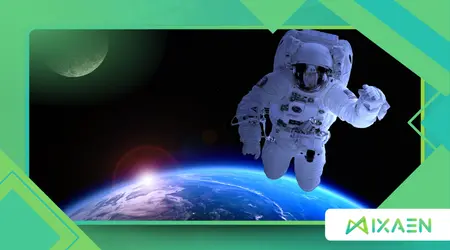
Radiation Exposure remains the most formidable obstacle preventing humanity from establishing a permanent presence on Mars or venturing further into our solar system.
Anúncios
While we have mastered the art of building powerful rockets and life-support systems, the invisible rain of high-energy particles represents a biological wall.
Earth’s magnetic field acts like a protective shield, but once astronauts leave this bubble, they face a bombardment that compromises human DNA.
Modern aerospace engineering can solve fuel and oxygen problems, yet protecting the fragile human body from Galactic Cosmic Rays (GCR) is vastly more complex.
Every month spent in deep space accumulates damage that increases cancer risks and neurological decline.
We are currently at a crossroads where our ambition to explore conflicts directly with the limitations of our current shielding technology and biological resilience.
Key Discussion Points
- The Invisible Threat: Understanding GCR and Solar Particle Events.
- Biological Impact: How deep space travel alters human cellular structures.
- Shielding Challenges: The physical limits of lead and water protection.
- Mission Strategy: Real-time data on Mars mission duration constraints.
What is the primary cause of astronaut health risks?
Deep space is far from empty; it is saturated with high-speed nuclei that travel at nearly the speed of light through the vacuum.
These particles, known as Galactic Cosmic Rays, originate from distant supernova explosions and possess enough energy to shatter the molecules inside human cells.
Unlike the radiation found on Earth, these heavy ions are extremely difficult to block with standard aluminum spacecraft hulls.
Space agencies are currently monitoring Solar Particle Events (SPE), which are sudden bursts of protons released by the sun during intense solar flares.
While SPEs are shorter in duration, they can be lethal if an astronaut is caught during an Extravehicular Activity (EVA) without protection.
The cumulative effect of these two types of Radiation Exposure dictates exactly how many days a human can safely stay in orbit.
How do solar flares impact mission timing?
Mission planners must synchronize deep space travel with the solar cycle to minimize the intensity of dangerous proton bursts during the journey.
During solar maximum, the sun’s magnetic field actually helps deflect some cosmic rays, but it increases the frequency of unpredictable and violent solar flares.
This delicate balance requires real-time monitoring of space weather to ensure crews can retreat to specialized “storm shelters” inside their ships.
We are seeing a shift in how NASA and SpaceX calculate launch windows based on these energetic solar outbursts.
By using predictive AI models in 2026, scientists can now estimate flare risks with much higher accuracy than a decade ago.
This data is vital because a single major solar event could deliver a year’s worth of dose in just a few hours.
++ Space Archaeology: What Debris in Orbit Says About Our Culture
Why are Galactic Cosmic Rays so difficult to stop?
Galactic Cosmic Rays are like “microscopic cannonballs” that punch through traditional shielding materials, creating secondary radiation showers that can be even more harmful.
When these heavy ions hit a metal wall, they break apart, releasing neutrons and other particles that scatter throughout the cabin.
Consequently, simply thickening a spacecraft’s lead or aluminum walls often makes the interior environment more dangerous for the crew.
Researchers are experimenting with hydrogen-rich materials, such as polyethylene and even tanks of water, to better absorb these relentless high-energy particles.
Since hydrogen atoms have similar mass to the incoming protons, they are much more effective at stopping the energy transfer.
However, the weight of these materials adds massive costs to the fuel requirements for any long-term mission to the Red Planet.
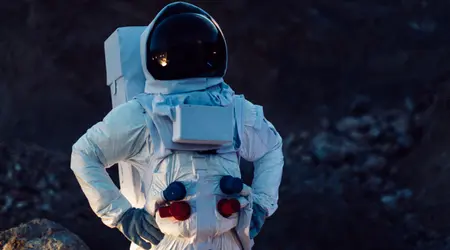
How does the human body react to prolonged space radiation?
The biological response to Radiation Exposure is not merely a long-term cancer risk; it involves immediate and significant changes to the central nervous system.
Studies on the International Space Station have shown that astronauts experience shifts in cognitive function and fine motor skills after only six months.
In deep space, where the dose is significantly higher, these effects could jeopardize the success of a complex landing on Mars.
Beyond the brain, the cardiovascular system suffers from accelerated “aging” as high-energy particles damage the delicate lining of the blood vessels and heart.
This cellular degradation is a silent process that doesn’t show symptoms until the damage is nearly irreversible for the traveler.
How can we expect a crew to perform emergency repairs if their cognitive processing speed is compromised by cosmic interference?
Also read: The Role of Espionage Satellites in the Early Space Age
What are the specific risks to DNA and cells?
When a high-energy ion passes through a cell, it creates a path of ionization that can cause “double-strand breaks” in the DNA.
These specific types of breaks are much harder for the body’s natural repair mechanisms to fix correctly compared to Earth-based radiation.
This leads to mutations that can trigger aggressive tumors or cause cellular death in vital organs like the liver and lungs.
A relevant study by the NASA Space Radiation Laboratory indicates that deep space radiation is approximately 2.8 times more effective at causing cell damage.
This statistic forces us to rethink the duration of human stays on the Martian surface, where the atmosphere is too thin to provide protection.
Astronauts on Mars would likely need to live in underground lava tubes to avoid the constant barrage from above.
Read more: Could We Have Gone to Mars Instead of the Moon in the 1960s?
Can medical countermeasures mitigate the damage?
Scientists are currently investigating pharmaceutical “radioprotectors” that could help the body repair DNA damage in real-time during a long-distance space voyage.
These drugs aim to boost the production of antioxidants and repair enzymes, providing a secondary layer of defense alongside physical shielding.
While promising, many of these treatments are still in the early stages of human clinical trials to ensure safety.
Dietary changes are also being tested, focusing on nutrient-dense foods that can help combat the oxidative stress caused by cosmic rays.
Think of it as a biological “software update” to help our ancient cells survive an environment they were never designed to inhabit.
However, no pill can currently replace the need for massive physical barriers or shorter transit times to reduce the total dose.
Why is shielding the biggest engineering hurdle for Mars?
If we imagine a spacecraft as a car, current Radiation Exposure levels mean we are driving through a hailstone storm with a glass roof.
To reach Mars safely, we need the equivalent of an armored tank, but every extra pound of armor requires more rocket fuel.
This weight-to-protection ratio is the primary reason why we haven’t seen a human footprint on Mars despite having the technology.
Engineers are looking at “active shielding” concepts that involve generating an artificial magnetic field around the spacecraft to deflect incoming charged particles.
While this sounds like science fiction, the power requirements to maintain such a field are immense, currently exceeding what modern solar panels can provide.
We are essentially waiting for a breakthrough in portable nuclear fusion or advanced battery storage to make this a reality.
How does lunar soil provide a potential solution?
The moon serves as a testing ground for Mars, and its soil, or regolith, has shown great promise as a natural radiation shield.
By covering lunar habitats with several meters of local dirt, we can block the majority of solar and cosmic rays without bringing weight.
This strategy will be essential for the Artemis missions as we build the first permanent base at the lunar south pole.
Using robotic 3D printers to turn regolith into bricks allows us to create thick-walled structures before the humans even arrive on the surface.
This “live off the land” approach reduces the initial launch mass while providing a level of safety that metal ships cannot offer.
It is the most practical way to extend the time humans can safely spend on a world with no natural magnetic field.
What role does transit speed play in safety?
The most effective way to reduce Radiation Exposure is simply to spend less time in the “line of fire” between the planets.
Advanced propulsion systems, such as nuclear thermal rockets, could potentially cut the travel time to Mars from nine months down to just three.
Reducing the journey duration by 60% would significantly lower the cumulative dose of radiation, making the mission much more viable for human crews.
Current chemical rockets are at their physical limit, meaning the “slow boat” to Mars is our only current option for heavy cargo.
However, for human transport, the risks of a long journey are becoming unacceptable according to modern safety standards and ethical guidelines.
We must prioritize speed to ensure that our explorers arrive at their destination with their health and cognitive abilities fully intact.
Comparison of Radiation Environments
| Environment | Typical Daily Dose (mSv) | Annual Equivalent | Protective Shielding |
| Earth (Sea Level) | 0.01 | 3.6 mSv | Atmosphere/Magnetosphere |
| ISS (Low Earth Orbit) | 0.5 – 1.0 | 300 mSv | Magnetosphere/Hull |
| Deep Space (Mars Transit) | 1.8 – 2.5 | 700+ mSv | Minimal (Propulsion Only) |
| Mars Surface | 0.6 – 0.7 | 230 mSv | Thin Atmosphere (CO2) |
Understanding the limitations imposed by Radiation Exposure is the key to unlocking the next chapter of our journey into the stars.
We have the maps and the vehicles, but we are still learning how to protect the most important cargo: the human spirit.
If we can solve the riddle of the cosmic ray, Mars will no longer be a distant red dot, but a second home for our species.
Our survival depends on our ability to adapt our biology to the harsh reality of the void, using every tool from regolith bricks to genetic medicine.
What do you think is the most promising technology to shield our future astronauts? Share your experience and thoughts in the comments below!
Frequently Asked Questions
Does lead work best for space shielding?
Surprisingly, no. Lead is very heavy and, when hit by cosmic rays, it produces high levels of secondary radiation that can be more harmful than the original rays.
Hydrogen-rich materials like water or specialized plastics are much more effective and lighter for space travel.
Can we stay on Mars forever?
Currently, Radiation Exposure on the surface would limit a person’s lifetime to a few years before hitting safety limits.
To stay permanently, humans would need to live in underground shelters or utilize heavy shielding to mimic Earth’s protective environment.
Is radiation the only thing stopping us from going to Mars?
It is one of the “big three” challenges, along with the psychological effects of isolation and the physiological damage caused by long-term microgravity.
However, radiation is considered the most difficult to solve because it requires fundamental changes in spacecraft design or propulsion.
How does NASA monitor radiation in real-time?
Astronauts wear dosimeters that track their cumulative dose, while the spacecraft has sensors that alert the crew to sudden spikes from solar flares.
This allows the crew to move to the most shielded part of the ship during dangerous periods.
Can we genetically modify humans for radiation resistance?
This is a topic of intense ethical debate and scientific research. Some suggest using CRISPR to enhance DNA repair genes found in tardigrades, but we are many decades away from such a radical and controversial solution.
