
How Scientists Photograph the Sun Without Blinding Themselves
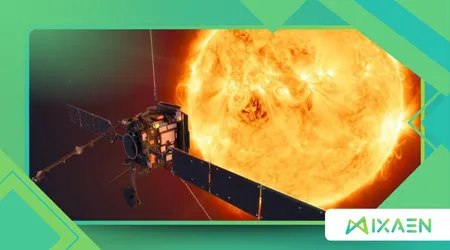
Scientists Photograph the Sun Without Blinding Themselves by employing ingenious, multi-layered technological defenses.
Anúncios
Observing our nearest star is crucial for space weather prediction and physics research. However, the Sun’s immense luminosity and heat pose an existential threat to unprotected instruments and human vision.
Solar observatories, both ground-based and space-borne, utilize specialized filtering, reflection, and cooling systems.
These systems manage the sheer energy load while isolating specific wavelengths of light. This precision allows us to study phenomena invisible to the naked eye.
What are the Primary Methods for Blocking the Sun’s Extreme Light?
The foundational principle for how Scientists Photograph the Sun Without Blinding Themselves is massive light reduction.
The Sun is approximately 400,000 times brighter than the full moon. This light must be attenuated by a factor of 100,000 or more.
The primary methods involve a cascade of highly reflective surfaces and absorptive filters. No single piece of equipment can safely handle the unfiltered energy load from a large telescope aperture.
++ Could a Sudden Solar Shift Disrupt Earth’s Climate?
Why is Simple Filtration Not Enough for Solar Observation?
Simple, dark neutral density filters, while effective for basic photography, are insufficient for professional solar telescopes.
These filters absorb energy, which quickly generates intense heat. This heat can crack lenses or damage sensitive digital sensors.
Instead, the solution involves reflection and rejection. The energy must be diverted before it can reach and damage the primary instruments. This is achieved using specialized mirrors and prisms.
Also read: Why the Sun Sometimes “Goes Quiet” and What That Means
How Do Solar Telescopes Use Reflection to Reduce Energy?
Professional solar telescopes, unlike night-time astronomical telescopes, often use a coelostat or a heliostat.
These are mirror systems that track the Sun and reflect a narrow beam of sunlight horizontally into a fixed, climate-controlled laboratory.
Even before the light enters the main optics, the mirrors themselves are often front-surface coated to reflect most of the incoming infrared and visible light, allowing only a small fraction to pass through for study.
Read more: Can the Sun Influence Human Behavior or Mental Health?
What Role Do Energy Rejection Filters Play in Protecting Instruments?
A critical protective component is the Energy Rejection Filter (ERF). This filter is usually placed early in the optical path. It is designed to reflect the vast majority of unwanted heat and light energy.
The ERF often uses highly specialized dichroic coatings that precisely reflect infrared light (heat) and allow only the desired visible wavelengths to continue toward the focal plane. This prevents heat buildup.
What is the Analogous Concept for Understanding Solar Filtering?
Consider the solar telescope filtering system using the analogy of a dam and spillway system. The total power of the Sun is the massive, uncontrolled river (the incoming water).
The primary mirrors and ERFs act as the dam, diverting the overwhelming majority of the water away.
Only a small, regulated amount of water (the desired light and heat) is allowed to pass through the spillway into the inner workings of the power station (the camera and detectors).
This prevents the power station from being flooded and destroyed.
How Do Scientists Isolate Specific Wavelengths for Detailed Study?
The real science of how Scientists Photograph the Sun Without Blinding Themselves lies in isolating light into specific, monochromatic wavelengths.
The Sun emits a full spectrum, but features like solar flares or prominences only become visible when looking at a single color.
This precision is achieved using two main specialized instruments: Coronagraphs and Narrowband Filters. These devices allow scientists to peer deep into the Sun’s atmosphere and surface features.
How Do Coronagraphs Capture the Sun’s Faint Outer Atmosphere?
A Coronagraph is a specialized telescope that artificially creates a total solar eclipse. It uses a precisely positioned occulting disk to block the blinding light from the Sun’s brilliant photosphere (visible surface).
This blocking allows researchers to safely observe the extremely faint corona (the Sun’s outer atmosphere) and study solar wind origins. The resulting images reveal structures that are usually completely obscured by glare.
What is the Function of Narrowband Filters in Solar Imaging?
Narrowband filters are essential for seeing specific surface and atmospheric features. They allow only a tiny sliver of the light spectrum to pass, often just 0.5 Angstroms wide or less.
For example, a Hydrogen-Alpha () filter isolates the red light emitted by hydrogen. This lets scientists clearly see prominences, solar flares, and filament eruptions, which are otherwise hidden by continuous white light.
How Do Scientists Capture Details of the Sun’s Magnetic Fields?
Studying the Sun’s magnetic fields is crucial for predicting space weather. This involves a technique called spectropolarimetry, which measures the polarization of light. Strong magnetic fields split spectral lines (the Zeeman Effect).
Instruments like the Daniel K. Inouye Solar Telescope (DKIST) use these measurements to map the magnetic field lines. This is critical because sunspots and flares are fundamentally magnetic phenomena.
What Example Illustrates the Power of Monochromatic Imaging?
Imagine looking at a complex, chaotic battlefield photograph taken in full color it’s overwhelming.
Now, apply a filter that only shows the light emitted by exploding shells. Suddenly, the most critical, energetic events stand out with perfect clarity.
This is the power of narrowband imaging. It allows scientists to ignore the overwhelming noise of the white-light photosphere and focus only on the energetic features of the chromosphere and corona.
How Do Space-Based Telescopes Enhance Solar Observation Safety?
Observing the Sun from Earth is always hampered by atmospheric turbulence and absorption.
Space-based telescopes circumvent these limitations, offering continuous, unfiltered views of the Sun across the entire electromagnetic spectrum.
The removal of the atmosphere allows these spacecraft to study extreme ultraviolet (EUV) and X-ray emissions, which are completely blocked before reaching the ground. These are crucial for observing solar flares.
Why Do Space Telescopes Still Need Protection Like Ground Telescopes?
Even in the vacuum of space, far from the atmosphere, space telescopes must still protect their instruments. The energy load is unchanged, and sensors are extremely sensitive to heat and radiation.
Instruments like those on the Solar Dynamics Observatory (SDO) use deployable shutters and complex thermal control systems.
This ensures the sensitive optics and electronics remain within operational temperature limits despite constant solar exposure.
What Are Current Real-Time Satellite Missions Studying the Sun?
As of 2025, several missions are providing critical, real-time data on how Scientists Photograph the Sun Without Blinding Themselves. The Parker Solar Probe is flying closer to the Sun than any craft before.
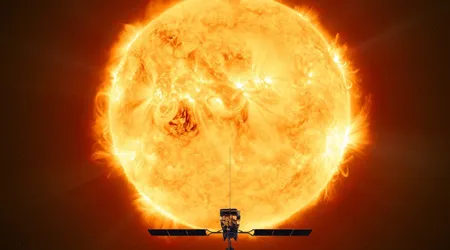
Additionally, the Solar Orbiter (ESA/NASA) is taking unprecedented close-up images of the Sun’s polar regions. This collaborative effort provides a 360-degree view of the Sun’s complex activity, improving space weather forecasting.
What is the Key Statistic Regarding Solar Flare Detection?
The ability to safely observe the Sun is paramount for safety here on Earth. NOAA and NASA data confirm that the combined network of space-based solar observatories (GOES, SDO, STEREO) achieves a 99.7% detection rate for X-class solar flares.
This high detection rate, enabled by the robust filtering and sensing technologies, gives Earth-based power grids and satellite operators vital warning time, minimizing infrastructure damage.
What is the Process of Remote Observation and Data Handling?
All modern professional solar observation is conducted remotely. Scientists do not look through eyepieces; they manage complex digital workflows. Light is converted into electrical signals by CCD detectors, digitized, and then transmitted to Earth.
This digital stream is then processed to correct for optical distortions and calibrated against known standards. The resulting images and data cubes are the final products used for analysis and modeling.
Key Technologies for Solar Observation Safety and Science
| Technology/Instrument | Primary Function | Spectrum Observed | Location (Example) |
| Energy Rejection Filter (ERF) | Reflects unwanted heat and light (Infrared) | Broad Spectrum Rejection | Ground-Based (DKIST) |
Hydrogen-Alpha  Filter Filter | Isolates light from excited Hydrogen atoms | Narrowband Visible (656.3 nm) | Ground-Based/Amateur |
| Coronagraph | Artificially blocks the brilliant photosphere | Visible, sometimes Near-IR | Space-Based (SOHO, LASCO) |
| Spectropolarimeter | Measures magnetic fields via polarized light | Specific Spectral Lines | Ground-Based (DKIST) / Space |
The sophisticated methods utilized for how Scientists Photograph the Sun Without Blinding Themselves are a testament to human ingenuity.
They involve a strategic, multi-layered defense against immense power from reflective coatings to sophisticated remote Coronagraphs.
This precision engineering allows researchers to peel back the Sun’s intense brightness and study the subtle, yet powerful, magnetic and atmospheric forces that govern space weather.
The continuous, high-resolution data stream is critical for protecting our increasingly dependent technology infrastructure.
This ongoing observation is vital for understanding not just our own star, but stellar physics across the universe.
Do we fully appreciate how vulnerable our technological world remains to the Sun’s unfiltered power?
We invite you to share your thoughts on the most impressive technology used in solar research today in the comments below!
Frequently Asked Questions
Why do scientists need to photograph the Sun in X-ray and UV light?
The Sun’s extremely hot outer atmosphere (the corona) emits most of its energy in X-ray and Extreme Ultraviolet (EUV) wavelengths.
Observing in these specific spectra is the only way to visualize solar flares, coronal holes, and the highly dynamic magnetic loops.
Is it ever safe to look directly at the Sun with commercial eclipse glasses?
You can only look at the Sun during the brief phase of totality during a total solar eclipse, when the Moon completely blocks the photosphere.
Using standard, certified eclipse glasses is safe only for viewing the partially eclipsed Sun. Never use them with cameras or telescopes.
What is the most powerful solar telescope operating today?
The Daniel K. Inouye Solar Telescope (DKIST), located in Hawaii, is currently the most powerful solar telescope.
Its massive 4-meter mirror allows it to resolve details as small as 20 kilometers on the solar surface.
What is the difference between solar flares and CMEs?
A solar flare is a sudden, intense flash of radiation emanating from a sunspot region, visible in X-rays and UV. A Coronal Mass Ejection (CME) is a massive bubble of plasma and magnetic field that erupts from the Sun, traveling outward into the solar system, posing a greater space weather threat.
How do space telescopes send so much data back to Earth?
Space telescopes like the Solar Dynamics Observatory (SDO) generate massive amounts of data sometimes over 1.5 terabytes per day.
They utilize specialized high-gain antennas and dedicated ground stations (like NASA’s Deep Space Network) for continuous, high-speed data transmission.
