
How Space Exploration Has Transformed Everyday Technology
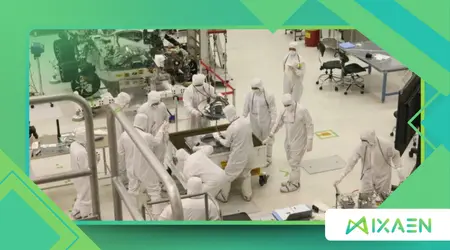
Space exploration has transformed everyday technology by acting as the ultimate catalyst for human ingenuity and engineering breakthroughs.
Anúncios
Many people view NASA missions as distant cosmic journeys, yet the fingerprints of Apollo and Artemis touch our morning routines.
The relentless demands of the vacuum of space require materials that are lighter, stronger, and smarter.
These radical innovations eventually filter down from launchpads to our pockets, hospitals, and homes, changing life on Earth forever.
How does orbital research impact your health and safety?
Medical imaging owes its crystalline clarity to the digital signal processing once used to map the lunar surface. This high-stakes environment forces engineers to create diagnostic tools that operate with zero room for error.
Furthermore, the need for portable, lightweight medical devices for astronauts led directly to the miniaturization of heart pumps.
Modern healthcare is essentially a terrestrial application of survival technology developed for the stars.
++ Project Orion and the Bomb-Powered Spaceship That Almost Was
What is the link between NASA and LASIK eye surgery?
Precision is vital when docking spacecraft. The eye-tracking technology developed to help automated vehicles navigate in orbit now guides the high-speed lasers used in corrective eye surgery.
This ensures the laser stays perfectly centered on the cornea, even if the patient’s eye moves slightly. Millions now enjoy clearer vision thanks to this sophisticated spatial navigation software.
Also read: What We’ve Learned from Landing Rovers on Other Planets
How did the search for clean water in space help Earth?
Recycling every drop of moisture is a necessity on the International Space Station. This led to the creation of advanced microbial check valves and nanofiltration systems.
Today, these same silver-ion technologies provide safe drinking water to remote villages and disaster zones globally. Water scarcity solutions often begin with the closed-loop systems designed for long-term lunar habitation.
Read more: Reimagining the Hubble: How It Changed the Way We See Space
Why are modern fire-fighting suits so effective?
Space suits must withstand extreme thermal fluctuations and radiation. NASA partnered with industry leaders to develop PBI (Polybenzimidazole) fibers, which are virtually fireproof and heat-resistant.
Firefighters now wear suits based on this astronautic textile. This material doesn’t ignite or melt, providing life-saving protection in the most intense terrestrial blazes.

Why is your smartphone a direct descendant of the Space Race?
Space exploration has transformed everyday technology most visibly through the CMOS image sensors found in every modern smartphone camera. Originally, NASA needed tiny, efficient cameras for interplanetary probes.
This demand for miniaturization replaced bulky film with silicon chips. Now, we carry more photographic power in our pockets than the entire Apollo program possessed during its height.
How did satellite navigation change global logistics?
GPS was born from the military’s need to track satellites and provide precise timing for orbital maneuvers. This network of atomic clocks now synchronizes our entire global financial system.
From food delivery apps to international shipping lanes, our economy runs on orbital signals. Without this space-based infrastructure, modern life would essentially grind to a confused, localized halt.
What is the origin of the cordless tools in your garage?
Drilling into the lunar crust required portable, high-torque power sources. NASA collaborated with Black & Decker to develop specialized battery-operated tools for the Apollo missions.
This research refined motor efficiency and battery longevity. Your cordless vacuum and handheld drill are direct descendants of the tools used to collect moon rocks in 1969.
How does space-age insulation keep your home efficient?
Metals coated with reflective materials, known as radiant barriers, were designed to protect satellites from solar heat. This “space blanket” technology is now standard in home construction.
It reflects up to 97% of radiant heat. This drastically reduces energy bills and makes modern buildings more sustainable by mimicking the thermal protection used on the James Webb Telescope.
How do cosmic materials improve our sports and recreation?
Space exploration has transformed everyday technology in the athletic world through the use of “memory foam.” NASA created this temper foam to improve crash protection for pilots and astronauts.
Now, this pressure-relieving material is found in mattresses, football helmets, and high-performance running shoes. It adapts to the human body, providing comfort that was once reserved for high-G maneuvers.
What makes modern sneakers so bouncy?
Engineers used “rubber suit” molding techniques from space suits to create the soles of athletic shoes. This process, called blow-rubber molding, allows for intricate, air-filled cushioning structures.
Athletes now experience better shock absorption and energy return. This cosmic manufacturing process ensures that your morning jog feels lighter and more responsive than ever before.
How has satellite data improved global weather forecasting?
Observation satellites provide real-time data on atmospheric pressure, moisture, and temperature. This allows meteorologists to predict life-threatening hurricanes with unprecedented accuracy and lead time.
Beyond safety, this data helps farmers optimize crop yields and water usage. Is it possible to imagine modern agriculture or disaster management without the “eye in the sky”?
What is the “Spin-off” effect in modern economics?
The term “Spin-off” refers to NASA technology that finds a commercial home. Since 1976, NASA has documented over 2,000 such technologies that create jobs and boost the economy.
A 2023 report from the NASA Socioeconomic Impact Study revealed that for every $1 of NASA’s budget, the agency generates more than $3.50 in total economic output.
How does the Artemis program continue this legacy?
As we head back to the Moon, new challenges in 3D printing and autonomous robotics are surfacing. These will likely revolutionize automated construction and remote surgery back on Earth.
Space exploration has transformed everyday technology by setting impossible goals that force us to innovate. Each lunar landing is a step toward a more technologically advanced and resilient human civilization.
Key Space Technologies in Daily Use
| NASA Original Tech | Modern Terrestrial Use | Primary Benefit |
| CMOS Sensors | Smartphone Cameras | Compact, high-res imaging |
| Memory Foam | Mattresses & Helmets | Impact protection and comfort |
| Water Filtration | Survival Filters | Safe water in remote areas |
| Scratch-Resistant Lens | Prescription Eyeglasses | Durability and clarity |
| Aerogel | Industrial Insulation | Extreme thermal efficiency |
In conclusion, space exploration has transformed everyday technology by turning the impossible into the essential.
From the sensors in your phone to the safety of modern surgery, our quality of life is tethered to the stars.
The investment in space is not a “waste of money” but a seed planted in the fertile ground of human curiosity that yields a harvest for everyone.
As we look toward Mars, we aren’t just leaving Earth; we are building the tools to save it.
How has space-derived technology changed your specific profession or hobby lately?
Frequently Asked Questions
Is Teflon a NASA invention?
Contrary to popular belief, Teflon was invented by DuPont in 1938. However, NASA popularized its use by applying it to space suits and heat shields due to its extreme durability.
Does space research really help the economy?
Yes. Aside from direct job creation, the “spinoff” technologies create entirely new industries, such as the multi-billion dollar satellite imaging and GPS navigation markets.
Are there any space technologies in my kitchen?
Indeed. Space exploration has transformed everyday technology through the development of freeze-drying. This was perfected to provide astronauts with lightweight, nutritious meals that stay fresh without refrigeration.
Why do we still invest in space if we have problems on Earth?
Space research solves Earth’s problems. For example, satellite data is our most powerful tool for monitoring climate change and optimizing global food production to fight hunger.
Will the Mars mission create more inventions?
Absolutely. The need for oxygen generation, radiation shielding, and sustainable habitats on Mars will likely lead to breakthroughs in clean energy and advanced medicine for Earth.
