
How Space Probes Explore Places Humans Cannot Reach
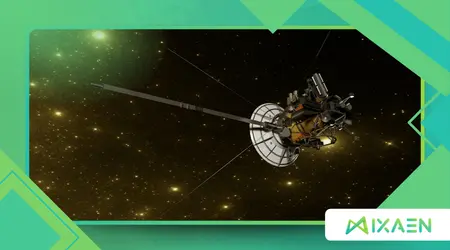
Space Probes represent the ultimate extension of human curiosity, acting as our eyes and ears in environments that would instantly vaporize or freeze a person.
Anúncios
While astronauts prepare for the moon, these robotic pioneers are already crossing the heliopause and diving into the sulfuric clouds of distant planets.
The sheer scale of our solar system makes human travel to the outer planets currently impossible due to radiation and life-support limitations.
These machines bridge that gap, enduring decades of isolation to beam back data that redefines our understanding of existence in the vast dark.
Exploration Highlights
- Deep Space Resilience: How robots survive extreme radiation and absolute zero.
- Autonomous Intelligence: The transition from remote control to AI-driven decision making.
- Extreme Destinations: Missions to the sun’s corona and icy Jovian moons.
- Scientific Returns: The impact of high-resolution imaging and atmospheric sampling.
How do robots survive where biology fails?
Engineering a vessel like the Parker Solar Probe requires materials that can withstand temperatures reaching nearly 1,400°C without melting its sensitive internal electronics.
Space Probes use advanced carbon-carbon composite shields to stay cool while flying through the sun’s outer atmosphere, a feat no human could survive.
Vacuum and pressure also present lethal challenges that biological bodies cannot handle, whereas titanium hulls and pressurized compartments protect robotic sensors.
These machines act like deep-sea divers of the cosmos, venturing into gravity wells that would crush a human frame into a molecular pulp.
Why is radiation the biggest hurdle?
High-energy particles from the sun and cosmic rays can shred human DNA in days, causing fatal sickness during long interplanetary voyages.
Robots utilize “radiation hardening,” where silicon chips are replaced with sapphire or gallium arsenide to maintain functionality in toxic environments.
We can shield a circuit board much more effectively than we can shield a living lung or brain.
This allows machines to orbit Jupiter, where the radiation belts are millions of times stronger than those surrounding our own home planet.
++ Why Lunar Base Development Is Accelerating Global Space Race
What is the “Hibernation” strategy?
To save power during decade-long journeys to the Kuiper Belt, these machines enter a deep electronic sleep, waking only for scheduled check-ins.
A human crew would require constant air, food, and heat, making the logistics of long-term deep space travel currently unfeasible.
By minimizing energy consumption, a probe can wait years for a precise orbital alignment.
This patience ensures we reach the farthest edges of our system without the massive weight of a life-support system.

What technologies allow for independent discovery?
As these scouts travel further from Earth, the “speed of light” delay makes real-time steering impossible, requiring a move toward onboard artificial intelligence.
Space Probes now possess the capability to identify interesting geological features and adjust their own flight paths to capture better data without waiting for instructions.
This autonomy acts like a biological instinct, allowing the machine to protect itself from unexpected debris or solar flares.
It transforms the craft from a passive camera into an active scientist that can react to discoveries in real time.
Also read: Project Orion and the Bomb-Powered Spaceship That Almost Was
How does autonomous navigation work?
Modern craft use “optical navigation,” comparing star charts and planetary horizons to calculate their position with centimeter-scale precision.
They do not rely on GPS, which is unavailable in the deep void, making them the ultimate independent navigators.
This allows for high-risk maneuvers, such as flying through the plumes of Enceladus or landing on a moving comet.
These tasks require split-second adjustments that a human operator on Earth, dealing with a four-hour signal delay, could never manage.
Read more: What We’ve Learned from Landing Rovers on Other Planets
Why is remote sensing so powerful?
Spectrometers and radar can “see” through thick clouds of methane or ice, revealing hidden oceans that would be invisible to the human eye.
We don’t need to land to know what is inside a planet, as our sensors can taste the atmosphere from miles away.
These tools allow us to map the gravitational anomalies of a world, providing clues about its core composition.
By using infrared and ultraviolet light, we uncover secrets that our limited human vision would simply ignore.
Why are these missions essential for Earth’s future?
Every successful mission provides data that helps us predict solar storms and understand the atmospheric collapse of other worlds like Mars.
Space Probes serve as a planetary defense system, identifying asteroids that could pose a threat to our civilization long before they arrive.
NASA statistics show that for every dollar spent on space exploration, several dollars are returned to the economy through technological spin-offs.
We are not just exploring the stars; we are perfecting the sensors and materials used in modern medicine and telecommunications.
What are the risks of mission failure?
Losing a multi-billion dollar craft to a single software glitch is a constant threat that keeps engineers awake at night.
Without a human on board to perform “jury-rigged” repairs, a stuck valve or a frozen antenna can end a decade of work in seconds.
However, the loss of a machine is a tragedy of capital, whereas the loss of a crew is a tragedy of humanity.
This ethical calculation makes robotic scouts the preferred choice for the “Frontier of the Unknown” where risks are highest.
How does the 2026 data change our view?
Recent samples from the Hera mission are providing the first real-time look at how we can deflect celestial bodies.
This is not science fiction; it is a practical application of robotic technology to ensure the long-term survival of our species.
By studying the history of water on other planets, we gain a clearer picture of Earth’s own climate future.
These cold, distant machines are providing the warmest insights into the fragility of our own blue marble.
Comparison of Deep Space Mission Constraints
| Mission Type | Human Limit | Robotic Capability | Resulting Discovery |
| Solar Corona | Instant death (heat) | 1,400°C resistance | Solar wind origins |
| Jovian Orbit | Fatal radiation | Hardened electronics | Subsurface oceans |
| Asteroid Landing | Gravity/Life Support | 100% Autonomous | Planetary defense data |
| Outer Planets | Life support weight | Multi-decade sleep | Dark matter clues |
The Silent Guardians of the Frontier
The future of our species depends on the metal explorers we send into the abyss.
By utilizing Space Probes, we have mapped the invisible and touched the untouchable, expanding our reach without risking a single life.
These machines are the bridge between our small planet and the infinite possibilities of the galaxy.
They endure the radiation, the heat, and the crushing pressures so that one day, perhaps, our descendants can follow.
Until then, these silent guardians continue to whisper back secrets from the dark, proving that our intellect can travel where our bodies cannot.
We are a species of explorers, and through our robotic surrogates, the entire solar system is within our grasp.
Which planet or moon do you believe holds the most important secret for our future? Share your thoughts in the comments below!
Frequently Asked Questions
Why don’t we just send humans to Mars instead of more robots?
Humans require massive amounts of food, water, and oxygen, which makes the spacecraft too heavy for current propulsion.
Robots can stay on Mars for years without needing a return trip, providing much more data for less cost.
How do space probes send pictures back to Earth?
They use high-gain antennas to beam data as radio waves. This data is then collected by the Deep Space Network, a series of massive dishes around the world that can pick up even the weakest signals.
Can a space probe be repaired once it leaves Earth?
Physical repairs are impossible, but engineers can send “software patches” to fix bugs or repurpose broken sensors. This digital creativity has saved many missions from total failure.
How long does it take to build a deep space probe?
Typically, it takes 10 to 15 years from the initial design to the actual launch. This includes rigorous testing to ensure every component can survive the extreme vibrations of a rocket launch and the vacuum of space.
What happens to probes when their mission ends?
Most are crashed into planets to prevent biological contamination, while others are sent into “graveyard orbits” or simply drift out of the solar system forever.
