
How the Study of Extremophiles Is Helping the Search for ET

the Study of Extremophiles Is Helping the Search for ET by redefining what we once considered “inhabitable.” In 2025, astrobiology thrives on the edge of the impossible.
Anúncios
Researchers now look at Earth’s harshest cracks to understand distant worlds. These resilient organisms prove that life doesn’t need a temperate, Earth-like cradle to survive.
Exploring acidic vats and frozen wastes expands our cosmic target list. We no longer search only for “Earth 2.0,” but for any niche where chemistry permits.
Every deep-sea vent discovery sharpens our telescopic focus on the stars. This terrestrial research acts as a roadmap for missions to icy moons and scorched planets.
What are Extremophiles and How Do They Expand Our Biological Limits?
Extremophiles are organisms that thrive in conditions that would instantly kill most life forms. They survive extreme pressure, radiation, heat, or salinity.
Understanding their biochemistry is vital because the Study of Extremophiles Is Helping the Search for ET by broadening the “habitable zone” definition. We now know life is incredibly stubborn.
++ Are We Ignoring Alien Life Because It’s Too Different?
Which Earth Environments Serve as Space Proxies?
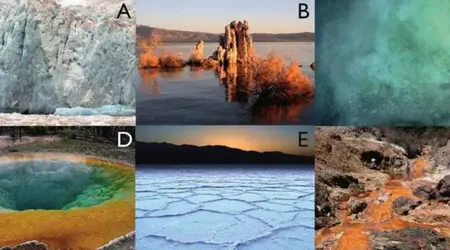
The Danakil Depression in Ethiopia offers a glimpse into Martian-like acidity and heat. Its hydrothermal pools test the absolute limits of cellular protein stability.
Antarctica’s subglacial lakes, like Lake Vostok, mirror the dark, pressurized oceans of Europa. These sites prove life can exist without a single ray of sunlight.
Atacama Desert soils are so dry they resemble the Martian regolith. Finding microbes here helps us design better life-detection sensors for future rover missions.
Hydrothermal vents at the bottom of the Atlantic show life fueled by chemicals. This “chemosynthesis” suggests that moons far from the Sun could still host vast biospheres.
Also read: Could a Silicon-Based Lifeform Really Exist?
How Does Cellular Resilience Guide Life Detection?
Microbes like Deinococcus radiodurans can survive radiation doses thousands of times higher than humans. This suggests life could endure the harsh lunar or Martian surface.
Their unique DNA repair mechanisms provide clues on what biological signatures to look for. We search for specific proteins that indicate a history of survival.
Thermophiles use heat-stable enzymes to prevent their “biological machinery” from melting. This chemical trick could be common on planets closer to their parent stars.
Halophiles, which love salt, survive in brines that remain liquid at sub-zero temperatures. This expands the search to “salty” worlds previously dismissed as too cold.
Why Is This Research Essential for Exploring Icy Moons and Mars?
the Study of Extremophiles Is Helping the Search for ET by shifting our focus to moons like Enceladus. These bodies possess liquid oceans beneath miles of ice.
Earth’s deep-sea life suggests these dark oceans are not barren wastelands. They might be rich hydrothermal hubs teeming with alien microscopic life.
Read more: Could a Planet Be Alive in a Biological Sense?
How Do Ocean Worlds Compare to Earth’s Abyssal Zones?
Jupiter’s moon Europa likely has a rocky core in contact with an ocean. This setup allows for mineral exchange, a key ingredient for life’s origin.
Earth’s “black smokers” support entire ecosystems without oxygen or light. If it happens here, why wouldn’t it happen in the depths of Enceladus?
The pressure at the bottom of the Mariana Trench is immense. Yet, life persists, proving that gravity and water depth aren’t barriers to biological evolution.
Saturn’s moon Titan has methane lakes, a strange environment indeed. Some Earth microbes can metabolize methane, suggesting Titan might host a “weird” biochemistry.
What Specific Microbes Change Our View of Mars?
Perchlorate-reducing bacteria on Earth survive in salts found all over Mars. This specific adaptation makes the Martian soil look much more “friendly” than before.
the Study of Extremophiles Is Helping the Search for ET by showing that Martian “brines” could be viable habitats. We are learning to follow the salt.
Anaerobic microbes, which breathe minerals instead of oxygen, are prime candidates for Martian life. They could live deep underground, shielded from deadly surface UV rays.
Some fungi found in the ruins of Chernobyl actually thrive on radiation. This “radiotrophy” suggests life could utilize energy sources we previously considered purely destructive.
How Does Modern Technology Translate Extremophile Data into Space Missions?
NASA and ESA use extremophile data to calibrate spectrometers on the James Webb Space Telescope. We are looking for “biosignatures” these organisms release into atmospheres.
If an exoplanet’s atmosphere shows methane and oxygen together, it’s a red flag. On Earth, extremophiles contribute heavily to these detectable gas mixtures.
How Do We Identify Alien Biosignatures From Afar?
the Study of Extremophiles Is Helping the Search for ET by defining what “gaseous waste” looks like. We model how extreme biospheres alter a planet’s air.
Certain pigments used by extremophiles to absorb light leave a distinct “red edge” reflection. We look for these spectral fingerprints on distant exoplanets.
The presence of phosphine or dimethyl sulfide is often linked to specialized microbes. Detecting these molecules elsewhere would be a “smoking gun” for alien life.
We even look for “technosignatures,” but the microscopic “biosignature” remains our most likely first contact. Microbes are simply more common than civilizations.
What Statistical Data Connects Earth Life to the Cosmos?
A landmark 2023 study published in Nature Communications examined 500 extreme Earth sites. It found that 98% of surveyed “unlivable” locations actually hosted active microbial life.
This incredible statistic suggests that life is a default setting for chemistry. If Earth is this saturated, the statistical probability of a barren universe drops significantly.
This data emboldens astronomers to investigate planets once thought too hostile. It proves that our previous “Goldilocks” constraints were far too narrow.
the Study of Extremophiles Is Helping the Search for ET by proving that biology is as hardy as physics. If there is an energy source, life finds a way.
Extremophile Types and Their Planetary Proxies
| Type | Earth Environment | Planetary Proxy | Key Survival Mechanism |
| Thermophiles | Hydrothermal Vents | Venusian Clouds / Io | Heat-stable proteins and membranes |
| Psychrophiles | Arctic Ice / Permafrost | Europa / Enceladus | Anti-freeze proteins in cells |
| Acidophiles | Acid Mine Drainage | Mars (Early) / Venus | Active pH-pumping out of cells |
| Piezophiles | Mariana Trench | Deep Icy Moon Oceans | Pressure-resistant cell structures |
| Radio-resistant | Chernobyl / High Altitude | Mars Surface / Space | Ultra-fast DNA repair systems |
The tireless resilience of Earth’s smallest inhabitants offers our greatest hope for finding neighbors. the Study of Extremophiles Is Helping the Search for ET by showing that the “impossible” is just another habitat.
By studying life in volcanoes and ice, we have moved from asking “if” life exists to asking “where” we will find it first.
Biology isn’t a fragile spark; it is a roaring flame capable of burning in the cold dark of the void.
Are we prepared for the reality that the universe might be much “messier” and more crowded than we ever dared to imagine?
What do you think is the most likely place we’ll find these cosmic cousins? Share your experience in the comments below!
Frequently Asked Questions
Does “ET” always mean little green men?
Not at all. In astrobiology, “ET” most likely refers to microscopic life. While less cinematic, finding alien microbes would be the most significant discovery in human history.
Why is the Study of Extremophiles Is Helping the Search for ET better than just looking for Earth-like planets?
Because Earth-like planets are rare. By understanding extremophiles, we can search the “less-than-perfect” planets which are far more numerous in our galaxy.
Can these microbes travel between planets?
The theory of Panspermia suggests they can. Some extremophiles can survive the vacuum of space for years, potentially hitching a ride on meteorites.
Is there any evidence of life on Mars yet?
We have found organic molecules and seasonal methane spikes. While not definitive proof of life, these are “hints” that extremophiles past or present might be responsible.
How do scientists prevent Earth microbes from “infecting” other planets?
This is called Planetary Protection. NASA uses extreme sterilization techniques on rovers to ensure that if we find life, it’s truly alien and not just a “stowaway” from Earth.
