
The Hidden Physics Behind Solar Magnetic Fields
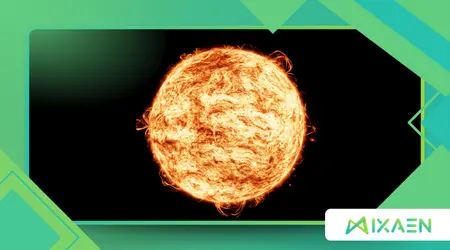
Hidden Physics Behind Solar Magnetic Fields dictate the rhythmic pulse of our star, driving every flare and sunspot we observe from Earth in 2026.
Anúncios
As we enter the peak of Solar Cycle 25, understanding these deep invisible structures becomes vital for protecting our global satellite networks and power grids.
The Sun acts like a massive, churning laboratory where plasma and magnetism dance in a chaotic yet mathematical embrace.
Recent data from the Parker Solar Probe have revealed that what we once thought were simple loops are actually complex, twisted braids of energy.
Solar Mechanics Roadmap
- The Dynamo Effect: How internal rotation generates the star’s immense magnetic power.
- Reconnection Events: The explosive process that fuels solar flares and coronal mass ejections.
- Helioseismology Insights: Using sound waves to map the magnetic structures deep within the solar interior.
- Space Weather Impacts: Why these magnetic fields matter for our modern technological civilization.
How does the solar dynamo create such massive power?
The Sun does not rotate like a solid ball of rock; its equator spins faster than its poles, creating a shearing effect.
This differential rotation stretches and twists the internal lines, unveiling the Hidden Physics Behind Solar Magnetic Fields that power the entire heliosphere.
Imagine the Sun as a giant cosmic rubber band being wound up until it snaps. This tension stores incredible amounts of potential energy within the plasma, waiting for a moment of instability to release its fury.
Deep inside the convection zone, massive plumes of hot gas rise and fall like boiling water in a pot.
These movements carry electric currents that reinforce the magnetic structure, ensuring the star’s field remains vibrant over its eleven-year cycle.
Scientists now use the Daniel K. Inouye Solar Telescope to see magnetic features as small as 20 kilometers wide. These tiny observations help verify our complex computer models of how energy moves from the core to the surface.
++ What Solar Storm Forecasting Still Gets Wrong
What is the tachocline’s role in magnetism?
The tachocline is a thin transition layer where the uniform rotation of the interior meets the chaotic rotation of the outer layers.
This specific region acts as the primary engine for the solar dynamo, generating the bulk of the star’s magnetic strength.
Magnetic buoyancy then forces these concentrated tubes of flux to rise through the solar plasma. When they finally break through the visible surface, we see them as dark, cooler regions known as sunspots.
Also read: How Scientists Photograph the Sun Without Blinding Themselves
How do sound waves reveal magnetic secrets?
Helioseismology allows researchers to “listen” to the Sun’s internal vibrations to map its magnetic density.
These sound waves bounce off the magnetic structures, giving us a 3D view of the Hidden Physics Behind Solar Magnetic Fields without seeing them directly.
By analyzing these frequencies, we can predict where sunspots will emerge weeks before they appear on the surface.
This foresight is critical for preparing for potential solar storms that could impact communications on Earth.
Why do magnetic lines suddenly snap and explode?
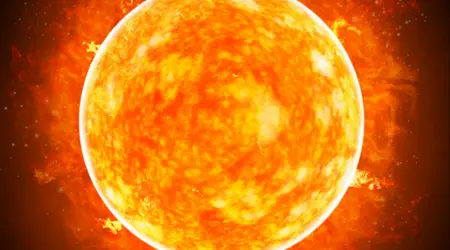
Solar flares occur when magnetic field lines become too tangled to hold their shape and suddenly rearrange themselves.
This process, called magnetic reconnection, is a cornerstone of the Hidden Physics Behind Solar Magnetic Fields that researchers are still trying to master.
During these events, the plasma is heated to millions of degrees in just a few seconds.
The resulting radiation spans the entire electromagnetic spectrum, hitting our atmosphere with a sudden burst of X-rays and ultraviolet light.
Nature seeks the lowest energy state, so when twisted fields snap, they release the “excess” energy into space. This is not just a local flash; it can launch billions of tons of matter toward our planet.
Could we ever truly tame this power or at least predict it with 100% accuracy?
The current research suggests that small-scale “nanoflares” are constantly occurring, keeping the solar corona much hotter than the surface below.
Read more: Could a Sudden Solar Shift Disrupt Earth’s Climate?
What causes a Coronal Mass Ejection (CME)?
A CME happens when a huge bubble of magnetic flux and plasma is ejected from the Sun’s atmosphere. These events are often triggered by the collapse of a magnetic filament that has become too heavy to stay balanced.
If a CME hits Earth, it interacts with our own magnetic shield, creating beautiful auroras but also threatening electronic systems.
Understanding the Hidden Physics Behind Solar Magnetic Fields helps us build better shielding for our modern infrastructure.
How does magnetic flux move across the surface?
The solar surface is a sea of moving granules that constantly push magnetic fields toward the edges of convection cells.
This “supergranulation” creates a network of magnetic intensity that defines the structure of the solar wind.
Over time, these small magnetic patches migrate toward the poles, eventually flipping the Sun’s entire magnetic orientation.
This flip marks the halfway point of the solar cycle, a massive reset for our star’s behavior.
How does space weather affect our daily lives in 2026?
Our world is more connected than ever, making us increasingly vulnerable to the Hidden Physics Behind Solar Magnetic Fields.
A single large flare can disrupt the GPS signals that everything from airplanes to food delivery apps rely on daily.
In early 2026, the European Space Agency (ESA) reported that solar activity had increased by 30% compared to previous cycles.
This surge highlights the urgent need for better magnetic forecasting to protect our orbital assets and ground-based grids.
Without these magnetic fields, the solar wind would have stripped away Earth’s atmosphere billions of years ago.
We owe our very existence to the complex interplay between the Sun’s magnetism and our own planetary shield.
Protecting our power grids requires knowing exactly when a geomagnetic storm will arrive.
Engineers now use “solar guardians” in orbit to provide a 30-minute warning before a magnetic shockwave reaches our electrical transformers.
Why are satellites so sensitive to magnetism?
High-energy particles from the Sun can penetrate satellite shielding and flip bits in their computer memory.
This “single-event upset” can cause a satellite to lose control or stop communicating with ground stations entirely.
Satellites also face increased drag as the Sun’s magnetic activity heats and expands the Earth’s upper atmosphere.
This expansion can cause low-orbit satellites to lose altitude and burn up prematurely if not managed carefully.
Can we simulate solar fields on Earth?
Laboratories now use liquid sodium spheres to try and replicate the dynamo effect found in stars.
These experiments help us grasp the Hidden Physics Behind Solar Magnetic Fields by showing how moving fluids create magnetic energy.
While these models are much smaller than the Sun, they confirm the basic laws of magnetohydrodynamics.
These insights are essential for developing fusion energy, where we try to bottle the Sun’s power here on Earth.
Solar Magnetic Activity and Earth Impacts (2026 Data)
| Activity Type | Physical Cause | Earth Impact Level | Detection Method |
| Solar Flare | Magnetic Reconnection | Radio Blackout (High) | X-ray Sensors (GOES) |
| CME | Filament Eruption | Power Grid Stress (Extreme) | Coronagraphs (SOHO) |
| Sunspot | Flux Tube Buoyancy | Minimal / Long-term | Optical Telescopes |
| Solar Wind | Open Field Lines | Persistent / Auroras | In-situ Plasma Probes |
Deciphering the Hidden Physics Behind Solar Magnetic Fields is a journey into the heart of the engine that sustains all life.
By studying the twisting loops and explosive snaps of solar plasma, we learn to live in harmony with our restless star.
The magnetic secrets we uncover today provide the shield we need for the technological world of tomorrow.
As we look toward the future, the Sun remains a constant reminder of the raw power and intricate balance of the universe.
Understanding this magnetism is not just about science; it is about our survival as a spacefaring civilization.
The star above us is not just a light in the sky, but a complex magnetic machine that we are finally beginning to understand.
How do you think our society would change if a massive solar storm took the internet offline for a week? Share your experience in the comments!
Frequently Asked Questions
Is the Sun’s magnetic field getting stronger in 2026?
Current observations show that Solar Cycle 25 is more active than predicted, meaning the magnetic fields are currently at their peak strength for this decade.
Do sunspots directly cause Earth’s weather to change?
While sunspots track solar activity, their direct impact on daily weather is small compared to atmospheric factors; however, they do influence the long-term climate.
How often does the Sun’s magnetic field flip?
The Sun’s magnetic poles flip approximately every 11 years at the peak of the solar cycle, a process that is currently unfolding in 2026.
Can we predict a solar flare before it happens?
We can identify “active regions” with high magnetic tension, but predicting the exact second a flare will snap remains one of the biggest challenges in heliophysics.
What is the “Parker Spiral”?
It is the shape the solar magnetic field takes as it is carried into space by the solar wind, twisting into a spiral due to the Sun’s rotation.
