
Why Earth-Sized Exoplanets Around M-Dwarfs Are Capturing Focus

Earth-Sized Exoplanets located within the habitable zones of M-dwarf stars have become the primary targets for astronomers seeking signs of life beyond our solar system.
Anúncios
These small, cool stars represent nearly 75% of the stellar population in our galaxy, providing a vast laboratory for discovering rocky worlds that mirror our own.
Modern telescopes like James Webb (JWST) now prioritize these systems because their compact geometry makes atmospheric detection significantly easier than around larger, Sun-like stars.
As we navigate the discoveries of 2026, the focus has shifted from merely finding these planets to analyzing their potential for liquid water and stable atmospheres.
Core Scientific Themes
- Stellar Abundance: Why M-dwarfs offer the most statistically likely chance to find a twin for Earth.
- Observation Advantages: The “transit depth” factor that allows telescopes to peer through thin, alien atmospheres.
- Stellar Flares: Examining the harsh radiation environments that challenge the long-term habitability of rocky celestial bodies.
- Trappist-1 Update: Latest real-time insights from the most famous planetary system currently under infrared scrutiny.
Why are red dwarfs the best places to look?
M-dwarfs, or red dwarfs, provide a unique opportunity to study Earth-Sized Exoplanets because their small radius creates a larger relative signal during a transit.
When a planet passes in front of a dim star, it blocks a greater percentage of light, revealing its chemical secrets.
Searching for life around a Sun-like star is like looking for a firefly next to a lighthouse.
Red dwarfs are more like candles, allowing us to see the faint glimmer of a planet’s silhouette with much higher precision and frequency.
How does the habitable zone differ?
The habitable zone around a red dwarf is much closer to the star due to its lower temperature and energy output.
This proximity means planets complete orbits in days rather than years, allowing astronomers to observe multiple transits in a short period.
However, being so close often leads to tidal locking, where one side of the planet permanently faces the star.
This creates extreme temperature gradients, challenging our traditional understanding of how a planet might distribute heat to remain habitable.
++ Why Habitable Zone Limits Are Being Rewritten by New Data
What makes their longevity so important?
Red dwarfs burn their fuel so slowly that they can live for trillions of years, far outlasting stars like our own Sun.
This immense stability provides a vast timeframe for life to potentially emerge and evolve without the threat of a stellar death.
While the Sun will expand and consume Earth in a few billion years, an M-dwarf provides a permanent anchor for its planets.
Could this long-term stability be the key to discovering civilizations far older and more advanced than our own?
What are the biggest challenges for habitability?
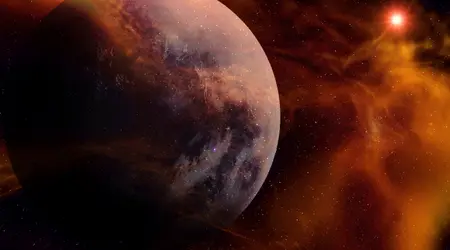
The radiation environment around young M-dwarfs is notoriously violent, often hitting nearby Earth-Sized Exoplanets with intense ultraviolet and X-ray flares.
These outbursts can strip away a planet’s atmosphere entirely, leaving behind a barren, airless rock exposed to the vacuum of space.
Current research published in The Astronomical Journal indicates that the magnetic field strength of the planet is the deciding factor in its survival.
Without a robust “magnetic shield,” even the most promising world could become a sterilized wasteland within its first billion years.
Also read: The Debate Around Technosignatures: Searching for Alien Technology
Do these planets have atmospheres?
Atmospheric loss is a major concern, yet recent data from 2026 suggests that secondary atmospheres may form through volcanic outgassing.
Even if the primary hydrogen layer is lost, geologically active worlds might replenish their air with carbon dioxide and water vapor.
If we detect oxygen or methane on these worlds, it wouldn’t just be a chemical discovery; it would be a revolution.
We are currently hunting for “biosignatures,” which are specific chemical combinations that only occur when biological processes are actively altering the environment.
Read more: Could We Create Life on Exoplanets Using Terraforming?
How does tidal locking affect the climate?
A tidally locked planet has a “day side” of eternal sun and a “night side” of permanent darkness.
Standard climate models once predicted these worlds would freeze, but thick atmospheres could move heat through powerful global wind systems.
Imagine a world where the sun never sets, hanging motionless in the sky while massive hurricanes distribute warmth to the frozen dark side.
This “eyeball” planet configuration is one of the most intriguing possibilities for hosting life in our local galactic neighborhood.
How do we currently detect these worlds?
We utilize the transit method, where we measure the minute dip in starlight as Earth-Sized Exoplanets cross their host star’s face.
By analyzing the light filtering through the planet’s edge, we can identify the specific molecules present in its thin air.
This process, known as transmission spectroscopy, has become the “gold standard” for exoplanet research in the mid-2020s.
It allows us to distinguish between a rocky world like Venus and a potential water world teeming with alien life.
Why is the TRAPPIST-1 system so vital?
TRAPPIST-1 remains the most significant target because it hosts seven rocky planets, several of which sit perfectly within the habitable zone.
It is the most densely packed laboratory for terrestrial planet evolution currently known to humanity.
Every new observation of this system brings us closer to confirming if rocky worlds around M-dwarfs can truly hold onto their water.
If TRAPPIST-1e is found to have an ocean, it would suggest that life is common throughout the entire Milky Way.
What is the role of next-gen telescopes?
Beyond JWST, the Extremely Large Telescopes (ELTs) currently under construction on Earth will provide even deeper insights into these nearby systems.
They will allow us to directly image some of these worlds, separating the planet’s light from the star’s glare.
The search for Earth-Sized Exoplanets is transitioning from a quest of discovery to one of detailed characterization and chemical mapping.
We are no longer asking if they exist, but rather what they are made of and if anyone is there.
Comparison of Key Habitable Zone Targets (2026 Data)
| Planet Name | Star Type | Distance (LY) | Earth Similarity Index | Atmospheric Status |
| Earth | G-Type (Sun) | 0 | 1.00 | Nitrogen/Oxygen |
| TRAPPIST-1e | M-Dwarf | 40 | 0.85 | CO2 Detected |
| Proxima b | M-Dwarf | 4.2 | 0.87 | Unknown |
| LHS 1140 b | M-Dwarf | 48 | 0.82 | Potential Water World |
| Speculoos-2c | M-Dwarf | 105 | 0.79 | Thick Atmosphere |
The study of Earth-Sized Exoplanets around red dwarfs represents our most realistic path to finding biological activity in the cosmos.
We have explored how the abundance and longevity of M-dwarfs make them ideal hosts, while acknowledging the severe radiation challenges these worlds must overcome.
Analyzing these planets is like reading a ancient book where some pages have been burned by flares, yet the core story of life remains hidden in the chemical ink of their atmospheres.
As our technology reaches new heights in 2026, the possibility of a definitive discovery has never been closer.
We must continue to invest in these observations, for the answer to our loneliness may be orbiting a small, red star just a few light-years away.
If we find evidence of life on a planet orbiting a red dwarf, how would that change your perspective on Earth’s place in the universe? Share your thoughts in the comments!
Frequently Asked Questions
Why are Earth-Sized Exoplanets so hard to find around Sun-like stars?
Sun-like stars are very bright and large, making the tiny dip in light caused by an Earth-Sized Exoplanets almost impossible to detect with current technology.
Red dwarfs are smaller and dimmer, which makes the relative signal of a transiting planet much easier for our telescopes to capture.
Can life survive the radiation of an M-dwarf star?
It is possible if the planet has a strong magnetic field and a thick atmosphere to deflect the solar wind.
Additionally, life might thrive in the oceans, where water acts as a natural shield against the intense ultraviolet radiation from the host star.
Is Proxima b habitable?
Proxima b is the closest exoplanet to our solar system, but its habitability is still debated.
While it sits in the habitable zone, its host star is very active, meaning the planet likely faces extreme radiation levels that could prevent life on the surface.
How long does it take to reach these planets?
With current chemical rockets, it would take tens of thousands of years to reach even the closest exoplanet.
However, projects like Breakthrough Starshot aim to use laser-powered sails to reach Proxima Centauri in just 20 years by traveling at a fraction of the speed of light.
What is a biosignature?
A biosignature is a substance such as an element, isotope, or molecule that provides scientific evidence of past or present life.
In exoplanet research, we look for combinations like oxygen and methane together, which shouldn’t exist in equilibrium without biological intervention.
