
Why Exoplanets Atmosphere Maps Are Key to Life Potential Study
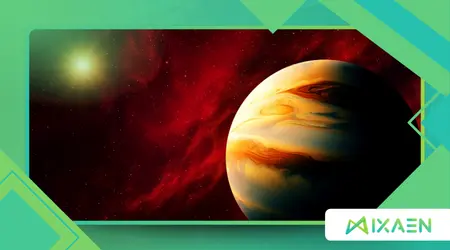
Exoplanets Atmosphere Maps represent the ultimate frontier in our quest to understand whether Earth is a lonely biological fluke in a vast, silent cosmos.
Anúncios
Scientists in 2026 no longer settle for merely finding rocky worlds; they now strive to peel back the chemical layers of alien skies.
Deciphering these gaseous envelopes allows us to visualize weather patterns and temperature gradients on planets trillions of miles away.
This technological leap transforms tiny dots of light into dynamic, living worlds with the potential to harbor oceans or even complex life.
Exploration Highlights
- Mapping Mechanics: How we observe gases across light-years.
- Biosignature Detection: Identifying oxygen, methane, and carbon dioxide.
- Climate Profiles: Understanding the habitability of Tidally Locked worlds.
- Future Missions: The role of the Habitable Worlds Observatory.
What makes Exoplanets Atmosphere Maps vital for biology?
Scanning the heavens for life requires more than just finding a planet in the “Goldilocks Zone” where water might stay liquid on the surface.
We must analyze the air because atmospheres act as a protective blanket, regulating the climate and shielding the surface from lethal stellar radiation.
Through the creation of Exoplanets Atmosphere Maps, researchers can identify phase curves that reveal how heat circulates from a planet’s day side to its night side.
This circulation is critical; without it, a planet might be a half-frozen, half-scorched wasteland incapable of supporting any biological organism.
How do we detect chemical biosignatures?
Chemical imbalances provide the strongest evidence for life, as organisms constantly breathe, consume, and expel gases that alter their environment in detectable ways.
If we find oxygen and methane together, it suggests a replenishing source, as these gases react and disappear quickly without life.
Specialized telescopes use transmission spectroscopy to filter starlight through the planet’s fringe, capturing the unique “fingerprints” of molecules like water vapor and ozone.
These Exoplanets Atmosphere Maps act as a chemical ledger, recording the presence of elements that shouldn’t exist in equilibrium.
++ What Nearby Exoplanet Targets Mean for Future Life Detection
Why does temperature distribution matter?
A planet with a uniform temperature suggests a thick, efficient atmosphere that could sustain global ecosystems rather than isolated, fragile pockets of survival.
High-resolution maps allow astronomers to see “hot spots” shifted by powerful jet streams, indicating complex weather systems similar to our own.
By studying these thermal gradients, we can determine if a world suffers from a runaway greenhouse effect like Venus.
Mapping ensures we don’t waste decades studying “Earth-twins” that are actually acidic hellscapes disguised by a deceptive, rocky exterior.
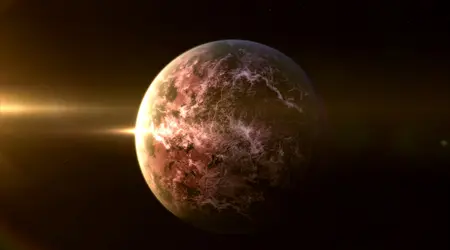
How does the James Webb Space Telescope create these maps?
The James Webb Space Telescope (JWST) serves as our premier tool for peering into the infrared spectrum where most atmospheric molecules glow brightly.
It observes the planet at different points in its orbit, allowing scientists to reconstruct a three-dimensional model of the alien sky.
Generating Exoplanets Atmosphere Maps involves measuring the tiny dip in infrared light as the planet rotates, revealing cloud cover and molecular opacity.
This process is like trying to map the texture of a marble from a hundred miles away using only a flashlight.
Also read: Could a Planet Be Alive in a Biological Sense?
What is the role of secondary eclipses?
When a planet passes behind its star, the total light from the system drops, allowing us to isolate the planet’s own thermal emission.
This “secondary eclipse” data is the gold standard for measuring the true temperature of the planet’s day-side atmosphere.
Analyzing this light reveals the vertical structure of the atmosphere, showing us how temperature changes with altitude.
These Exoplanets Atmosphere Maps help us understand if a planet has a stratosphere, which is often a sign of light-absorbing molecules.
Read more: Why the Absence of Evidence Isn’t the Evidence of Absence
How do clouds interfere with our data?
High-altitude hazes or “zombie clouds” often block our view of the lower atmosphere, hiding the most interesting chemical signals from our sensors.
Modern mapping techniques now focus on identifying the composition of these clouds, whether they are made of water, salt, or even liquid iron.
Detailed Exoplanets Atmosphere Maps allow us to distinguish between a truly “flat” spectrum and one hidden by clouds.
Understanding cloud physics is essential because clouds reflect sunlight, significantly impacting the overall energy balance of the potential habitat.
Why is 2026 a turning point for exoplanetary science?
This year marks a shift from broad surveys to high-fidelity “deep dives” into specific planetary systems like TRAPPIST-1, located 40 light-years away.
Recent data from the 2025-2026 observation cycle has provided the first clear maps of carbon-rich atmospheres on several “super-Earth” candidates.
Advanced algorithms now combine data from multiple observatories to refine Exoplanets Atmosphere Maps with unprecedented precision.
We are no longer guessing; we are seeing the actual weather patterns on worlds orbiting red dwarf stars across our galactic neighborhood.
What did the TRAPPIST-1 study reveal?
Research led by the Max Planck Institute in late 2025 confirmed that even planets orbiting volatile stars can retain significant, protective atmospheres.
This discovery was monumental because it expanded the list of potentially habitable worlds by nearly 300% in a single year.
These Exoplanets Atmosphere Maps showed that heat redistribution on TRAPPIST-1e is remarkably efficient, suggesting it could support liquid water.
Isn’t it fascinating to think that the first evidence of alien life might be found in a weather report from another sun?
What is the Habitable Worlds Observatory?
Looking forward, the Habitable Worlds Observatory (HWO) is being designed specifically to map Earth-like planets around Sun-like stars with direct imaging.
Unlike JWST, which mostly looks at giants, HWO will see the “pale blue dots” themselves, searching for land-sea contrasts.
This mission will refine our Exoplanets Atmosphere Maps to the point where we can see seasonal changes in vegetation or ocean coverage.
It represents the transition from planetary astronomy to true “exogeography,” where we map the surfaces of other worlds.
Comparison of Mapping Capabilities
| Feature | JWST (Current) | HWO (Future Concept) | Ground-Based (ELT) |
| Primary Spectrum | Infrared | Optical / UV | Optical / Infrared |
| Target Type | Gas Giants / Super-Earths | Earth-sized Planets | Close rocky worlds |
| Mapping Method | Transit / Phase Curves | Direct Imaging | High-res Spectroscopy |
| Life Markers | Methane, CO2, Water | Oxygen, Ozone, Chlorophyll | Oxygen, Isotopes |
The journey to find life beyond our solar system has moved from the realm of philosophy to rigorous, data-driven mapping.
By focusing on the gases that surround distant worlds, we are effectively checking the “pulse” of the universe.
These atmospheric studies prove that we are living in the golden age of discovery, where the next big headline could be the confirmation of a second Earth.
As we continue to refine our tools and techniques, every map brings us closer to answering the most profound question in human history.
The stars are no longer just distant lights; they are destinations with climates, clouds, and perhaps, residents.
Share your thoughts on these cosmic discoveries in the comments below, and let us know which exoplanet you find most intriguing!
Frequently Asked Questions
Can we see cities on these maps?
No, current technology only allows us to see the chemical composition and temperature of the air. We are searching for “atmospheric signatures” of life, not direct visual evidence of structures or civilizations.
Why is methane so important?
Methane is a “short-lived” gas; it breaks down quickly under starlight. Finding it in an atmosphere map suggests a constant source, which on Earth is usually biological, such as microbes or geological activity.
Is oxygen a guarantee of life?
Oxygen is a strong indicator, but it can be produced abiotically by sunlight breaking down water. Scientists look for oxygen in combination with other gases to confirm a biological origin.
How long does it take to map one planet?
It can take dozens of hours of telescope time spread over months to collect enough light for a reliable map. Precision is key, as the signal we are looking for is incredibly faint.
