
Why Hycean Exoplanets Are Emerging as Top Life Candidates
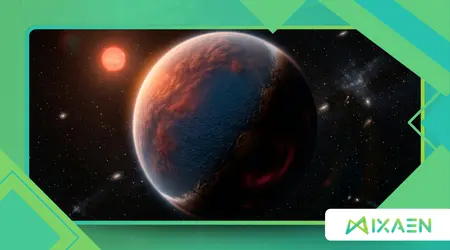
Hycean Exoplanets Are Emerging as the most promising frontier in our search for extraterrestrial biology, fundamentally shifting our focus away from strictly Earth-like worlds.
These massive, water-shrouded orbs, characterized by hydrogen-rich atmospheres and vast global oceans, offer a larger “habitable zone” than we ever previously dared to imagine.
As we stand in 2026, data from the James Webb Space Telescope (JWST) continues to dismantle the old “Earth-twin” requirement for habitability.
Astrophysicists now argue that these worlds might sustain life under conditions far more extreme than those found on our own rocky blue marble.
Key Discoveries for 2026
- Expansion of Habitability: Why hydrogen atmospheres provide better insulation for distant oceans.
- Biosignature Detection: The hunt for dimethyl sulfide and other gases in watery atmospheres.
- The Size Advantage: Why “Super-Earths” are easier to observe and characterize than smaller planets.
- Oceanic Depth: Understanding the pressure and chemistry of global, planet-wide seas.
What define Hycean worlds and why are they vital now?
The concept of “Hycean” worlds a portmanteau of Hydrogen and Ocean describes planets up to 2.6 times the size of Earth with immense liquid water reservoirs.
Unlike our planet, these worlds possess a thick hydrogen envelope that traps heat effectively, allowing them to remain warm even far from their stars.
This atmospheric blanket acts like a heavy winter coat, preserving liquid water in regions where a planet like Earth would surely freeze solid.
Scientific interest has skyrocketed because these planets are significantly more numerous in the galaxy than rocky, oxygen-rich worlds similar to our own.
How do they maintain liquid water?
The high pressure exerted by a dense hydrogen atmosphere prevents global oceans from boiling away or freezing into useless, desolate sheets of ice.
This greenhouse effect is far more potent than the carbon-dioxide-driven warmth we see on Earth, extending the life-supporting potential of many solar systems.
++ Why Exoplanet Population Studies May Reveal Hidden Life Patterns
Why is their size important for 2026 telescopes?
Larger planets with extended atmospheres are much easier to study through transmission spectroscopy, which allows us to “read” the chemicals in their air.
By observing light passing through the hydrogen haze, we can identify water vapor, methane, and potential biological waste products with unprecedented clarity.
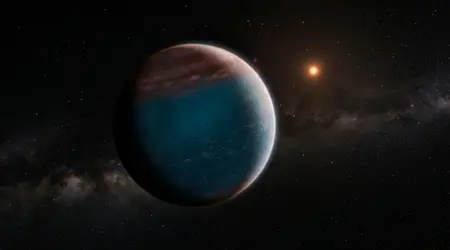
Why Hycean Exoplanets Are Emerging as superior life candidates?
Traditional astrobiology focused on “Earth 2.0,” but these water worlds offer much larger surface areas for potential microbial ecosystems to develop and thrive.
The sheer volume of liquid water provides a stable environment that can buffer against the violent flares of red dwarf stars common in our galaxy.
If life began in Earth’s oceans, why wouldn’t it flourish in an ocean that spans an entire planet and reaches depths of hundreds of kilometers?
Hydrogen-rich environments were once considered hostile, but we now know many terrestrial microorganisms can metabolize hydrogen to produce energy and sustain growth.
Also read: How the Study of Extremophiles Is Helping the Search for ET
What are the chemical markers of life?
Research published in The Astrophysical Journal Letters highlights the detection of carbon-bearing molecules on K2-18b, a prime candidate for a Hycean world.
The presence of methane and carbon dioxide, alongside a lack of ammonia, strongly suggests the existence of a liquid ocean beneath its atmosphere.
Read more: Are We Ignoring Alien Life Because It’s Too Different?
Can we find proof of alien metabolism?
One specific molecule, dimethyl sulfide (DMS), is primarily produced by phytoplankton on Earth; finding it elsewhere would be a massive breakthrough for humanity.
Current 2026 observations are focused on confirming if these traces are biological or the result of complex, non-living chemical reactions within the planet’s core.
How does the 2026 data compare to previous theories?
For decades, we assumed that only a narrow range of temperatures and pressures could support life, but the Hycean Exoplanets Are Emerging data challenges this.
Aqueous environments under hydrogen-rich skies might actually be more stable over billions of years than the volatile, thin atmospheres of rocky planets.
The following table summarizes the key physical differences between traditional habitable candidates and the newly prioritized Hycean worlds according to 2026 consensus.
Comparison: Earth-Like vs. Hycean Habitability (2026)
| Feature | Earth-Like (Rocky) | Hycean World |
| Atmosphere | Nitrogen / Oxygen | Hydrogen-Rich |
| Ocean Coverage | ~70% (Fragmented) | 100% (Global) |
| Average Size | 1.0 Earth Radius | 1.5 – 2.6 Earth Radii |
| Potential Biosignatures | Oxygen, Ozone, Methane | Methane, DMS, Methyl Chloride |
| Habitable Zone | Narrow / Restricted | Extremely Broad |
What is the “Cold Hycean” possibility?
Some of these worlds orbit far from their stars, yet remain warm enough for life due to the incredible insulation provided by their hydrogen.
This expands our “neighborhood” of potential life-bearing planets by nearly 50%, moving us closer to an answer regarding our place in the universe.
Are these oceans too deep for life?
While the pressure at the bottom of a Hycean ocean would be immense, life on Earth thrives in the Mariana Trench under similar extremes.
Nature rarely leaves a vacuum; where there is liquid water and an energy source, biology almost always finds a way to take hold.
Why Hycean Exoplanets Are Emerging as the best targets for JWST?
The James Webb Space Telescope was designed to peer into the deep past, but its greatest legacy may be analyzing these specific planetary filters.
Because hydrogen is the lightest element, it makes the atmosphere “puff out,” creating a larger target for our sensors to analyze from light-years away.
Attempting to see the thin atmosphere of a rocky planet is like trying to spot a mosquito against a searchlight from several miles away.
In contrast, analyzing a Hycean atmosphere is like looking at a bright neon sign; the signals are loud, clear, and difficult for scientists to ignore.
What is a practical example of a Hycean candidate?
K2-18b is the superstar of this category, located 120 light-years away and possessing all the hallmarks of a deep, global, life-sustaining ocean.
Its mass is roughly 8.6 times that of Earth, making it a “Sub-Neptune” that has successfully traded ice for liquid water through atmospheric warming.
Could life be different there?
Imagine a world where life never touches land, where every creature spends its entire existence in an endless, sun-drenched, nutrient-rich marine environment.
Evolution on such a world would produce radically different forms than what we see on Earth, perhaps favoring massive, floating bioluminescent organisms.
How can we distinguish between life and mere chemistry?
The difficulty lies in “false positives,” where geological processes mimic the gases we usually associate with breathing, growing, and reproducing biological entities.
To solve this, 2026 protocols require the simultaneous detection of at least three distinct biosignatures before any claim of life is officially made to the public.
Methane alone isn’t enough, but methane paired with carbon dioxide and a lack of carbon monoxide creates a strong argument for a biological source.
Is it possible that we have already seen signs of life but simply lacked the courage to interpret the data correctly until now?
Why avoid clichéd “Little Green Men”?
The reality of discovering life on a Hycean world will likely involve spectral lines on a graph rather than a radio greeting or a flying saucer.
However, the scientific weight of confirming a single microbe in a distant ocean would change the course of human history, philosophy, and religion forever.
What is the next step for exploration?
Future missions are being designed to use “coronagraphs” to block out the light of the parent star, allowing us to see the planet itself.
This will permit us to analyze the glint of sunlight reflecting off the waves of an alien ocean—a sight that was once considered pure science fiction.
A New Liquid Horizon in the Stars
Hycean Exoplanets Are Emerging as the definitive answer to where we should look next, proving that life is likely far more adaptable than we suspected.
We are moving away from the “Rare Earth” hypothesis and toward a “Teeming Universe” model where water is the common currency of the cosmos.
As our technology catches up with our curiosity, the dark spaces between the stars are starting to look much more like home for someone or something.
The journey from dreaming about Martians to analyzing the chemistry of Sub-Neptunes represents the greatest intellectual leap of the 21st century so far.
Could it be that we are finally on the verge of proving that we were never actually alone in this vast, watery, and wonderful universe?
What do you think life would look like on a world with no land? Share your thoughts and theories in the comments below!
Frequently Asked Questions
Can humans live on a Hycean planet?
Likely not. The high gravity and the lack of a solid surface or breathable oxygen make these worlds ideal for native life, but not for us.
What does “Hycean” actually mean?
It is a combination of the words “Hydrogen” and “Ocean,” representing the two key components that make these planets habitable candidates.
Is K2-18b the only one?
No, researchers have identified dozens of candidates, including planets like TOI-270 d and LHS 1140 b, which are currently being studied in 2026.
Why is hydrogen better than oxygen for heat?
Hydrogen is a powerful greenhouse gas at high pressures, allowing a planet to trap heat from its star much more efficiently than Earth’s atmosphere does.
