
Why Lunar Base Development Is Accelerating Global Space Race
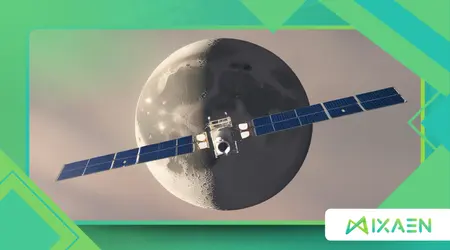
Lunar Base Development stands today as the undisputed catalyst for a new era of geopolitical and commercial competition stretching far beyond our atmosphere.
Anúncios
While the original Apollo missions were fleeting visits to a desolate neighbor, the current initiatives in 2026 focus on permanent, sustainable habitation.
The Moon has transitioned from a distant symbol of wonder into a strategic eighth continent, rich with resources and potential for future deep-space voyages.
Nations and private corporations now recognize that establishing a foothold on the lunar surface is the ultimate prerequisite for long-term orbital dominance.
Key Points of the Lunar Race
- The Artemis Accord Impact: How international partnerships are shaping the legal framework for resource extraction.
- Economic Incentives: The push for Helium-3 and water ice mining to fuel the next industrial revolution.
- Technological Milestones: The role of 3D printing and autonomous robotics in building outposts.
- Strategic Security: Why the lunar south pole has become the most contested territory in the solar system.
Why is the lunar south pole the new global frontline?
The race for the lunar south pole is driven by the hunt for water ice hidden within permanently shadowed craters like Shackleton.
This frozen resource is essentially the “oil of the space age,” providing life support and fuel for hydrogen-powered rockets.
Because these landing sites are limited, the first nation to establish infrastructure will likely dictate the rules of the region.
This scarcity transforms a scientific endeavor into a high-stakes chess game where geography defines future economic power.
++ How Radiation Exposure Limits Long-Term Space Travel
What is the role of the Artemis program?
NASA’s Artemis program seeks to return humans to the surface through a collaborative network of international allies and private contractors like SpaceX.
By sharing the astronomical costs, the United States aims to build a sustainable presence that outlasts previous political cycles.
This coalition creates a unified standard for technology and docking, ensuring that American-led systems remain the global benchmark for space travel.
It is a strategic move to solidify leadership before rival nations establish their own separate standards.
Also read: What We’ve Learned from Landing Rovers on Other Planets
How does the China-Russia partnership compete?
The International Lunar Research Station (ILRS), led by China and Russia, represents a direct alternative to Western-led space governance.
Their goal is to build an automated base that eventually supports a permanent crew, challenging the Artemis hegemony.
This rivalry forces rapid innovation, as both blocs rush to prove their technical superiority and safety records.
The result is an environment where aerospace breakthroughs happen in months rather than decades, fueled by intense national pride.
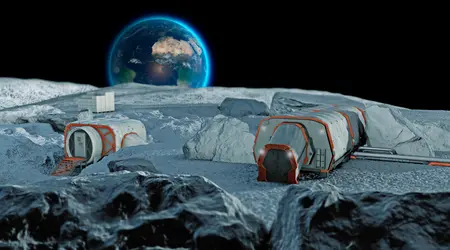
How does resource extraction fuel the space economy?
The moon is not a barren rock; it is a warehouse of materials like Titanium, Aluminum, and the rare isotope Helium-3.
Commercial entities believe that Lunar Base Development will eventually pay for itself through the creation of an off-world manufacturing hub.
Mining the Moon reduces the need to launch heavy materials from Earth’s deep gravity well, which currently costs thousands of dollars per kilogram.
Processing lunar regolith into building materials is the only way to make long-term space colonization financially viable.
Read more: Reimagining the Hubble: How It Changed the Way We See Space
Can we mine Helium-3 for fusion energy?
Helium-3 is incredibly rare on Earth but abundant in the lunar soil, deposited there by solar winds over billions of years.
Many scientists argue this isotope could provide clean, safe nuclear fusion energy for our planet for centuries.
If a company successfully extracts and returns Helium-3 to Earth, it could disrupt the entire global energy market.
This potential for trillions of dollars in revenue attracts venture capital into the space race like never before.
Why is water ice considered “Space Gold”?
Water can be split into hydrogen and oxygen through electrolysis, creating a refueling station in the middle of the solar system.
A ship that doesn’t have to carry all its fuel from Earth can travel much farther and faster.
This capability is the bridge to Mars and the asteroid belt, making the Moon a vital port of call.
Controlling the water means controlling the flow of traffic to the rest of the planets.
Which technologies are enabling permanent habitation?
Living on the Moon requires shielding against extreme radiation and temperature swings that can reach hundreds of degrees.
Innovative companies are now testing 3D printers that use lunar dust to create thick, protective shells for living modules.
Automation is the backbone of this progress, as robots can work through the 14-day lunar nights without the need for life support.
These machines prepare the ground for humans, ensuring that the first residents find a functional home.
How does autonomous robotics change the game?
Swarms of small, specialized robots are currently being designed to scout for caves and level landing pads.
These machines operate with minimal human interference, reducing the risk of fatal errors during the initial construction phases.
Their success proves that Lunar Base Development no longer depends solely on the physical presence of astronauts. We are essentially sending a robotic vanguard to build our cities before we ever step off the lander.
What is the future of lunar energy grids?
Lunar outposts require massive amounts of power, especially to survive the long, dark lunar nights.
Engineers are developing vertical solar towers at the “peaks of eternal light” and small modular nuclear reactors for constant energy.
A reliable power grid is the difference between a temporary camp and a thriving colony. Once the energy problem is solved, the scale of lunar industrialization will likely explode, supporting thousands of people.
Comparative Lunar Exploration Data (2026 Forecast)
The following table summarizes the key metrics for the major players currently active in lunar expansion.
| Agency/Group | Primary Mission | Expected Presence | Core Technology |
| NASA (Artemis) | Human Landing | Sustained Outpost | Gateway Space Station |
| CNSA (ILRS) | Robotic Research | Automated Base | Regolith Bricks |
| SpaceX/Blue Origin | Commercial Cargo | Logistics Hub | Heavy Lift Starships |
| ESA/JAXA | Science/Habitat | European Large Lander | Precision Navigation |
The acceleration of Lunar Base Development marks a fundamental shift in how humanity views its place in the cosmos.
We are no longer content with observation; we are moving toward occupation. The Moon is effectively the “New World” of the 21st century, offering a blank canvas for our greatest technological ambitions.
Establishing a base is the ultimate test of international cooperation and technical endurance. It serves as an essential laboratory for the life-support systems we will one day use on Mars.
Like the first sailors who crossed the Atlantic, we are stepping into an environment that is hostile, yet filled with the promise of a better future.
Ultimately, the lunar race is about more than just flags or scientific samples; it is about securing the resources that will sustain human civilization for the next thousand years.
If we can conquer the challenges of the Moon, the rest of the solar system becomes our neighborhood.
What do you think is the most exciting aspect of living on the Moon? Share your experience or your favorite space concept in the comments below, and let’s discuss the future of our lunar frontier together!
Frequently Asked Questions
Is it legal to own land on the Moon?
Current international treaties, such as the 1967 Outer Space Treaty, forbid national sovereignty over lunar territory.
However, the Artemis Accords allow for the extraction and ownership of resources by the entity that mines them.
How long does it take to get to the Moon?
With current rocket technology, the journey takes between three and five days depending on the trajectory. Future propulsion systems could reduce this time to less than 48 hours for emergency cargo.
Can humans survive the lunar radiation long-term?
Yes, but only by living underground or behind thick layers of lunar regolith. Just two meters of soil provides the same protection as Earth’s atmosphere against harmful cosmic rays.
How much does lunar development cost?
Estimates suggest the Artemis program will cost over $93 billion by the end of 2026. Commercial partnerships are significantly lowering the per-launch cost, making it more sustainable than the Apollo era.
Why haven’t we built a base sooner?
High costs and a lack of clear economic incentives stalled progress for decades. Today, the discovery of water ice and the rise of private space companies have made the Moon a viable destination.
