
Why Solar Eruptions Don’t Always Hit Earth
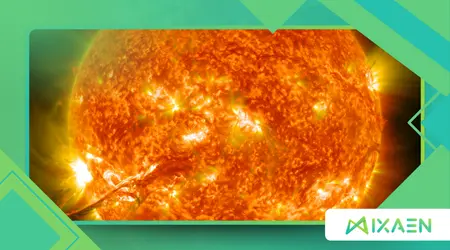
Why Solar Eruptions Don’t Always Hit Earth is a question that fascinates both scientists and stargazers, especially as we navigate the peak of Solar Cycle 25.
Anúncios
Every time the Sun releases a massive Coronal Mass Ejection (CME), headlines often suggest a looming technological apocalypse.
Yet, most of these temperamental outbursts from our star vanish into the void of space without ever touching our atmosphere.
Understanding this celestial “miss” is vital for accurate space weather forecasting and global infrastructure protection.
The Sun acts like a garden sprinkler rotating in a vast field, spraying particles in every direction but only occasionally drenching the gardener.
This cosmic geometry means that for a flare to impact us, the alignment must be nearly perfect across millions of miles.
While the Sun’s activity remains high in 2026, Earth’s relatively small size and distance serve as a natural shield against the majority of solar fury.
We are effectively a tiny target moving in a massive, three-dimensional shooting range.
Essential Guide to Solar Navigation
- Geometric Probability: Why space is mostly empty and Earth is a difficult target.
- Magnetic Deflection: How the Parker Spiral and interplanetary magnetic fields steer particles.
- The Velocity Factor: How speed and direction determine the “impact zone.”
- Protective Barriers: The role of our magnetosphere in mitigating grazing blows.
How does celestial geometry prevent a direct hit?
Space is unimaginably vast, and Earth is a speck within that darkness, making a direct hit statistically unlikely for most random flares.
When the Sun erupts, it releases energy in a specific direction based on the location of active sunspot regions at that moment.
If the eruption occurs on the solar “limb” or the far side, the plasma clouds simply travel away from our orbital path.
Even when an eruption happens on the Earth-facing side, the cone of the explosion must widen sufficiently to catch our planet.
Think of it like a sniper trying to hit a moving marble from across a football stadium; the margins for error are microscopic.
Most solar events are narrow enough that they sail north, south, or behind us in our yearly trek around the star.
++ Why the Sun Sometimes “Goes Quiet” and What That Means
Why does the Sun’s rotation matter?
The Sun rotates every 27 days, constantly shifting the “launchpad” for any potential magnetic explosion that might occur on its surface.
This rotation creates the Parker Spiral, a curved magnetic field structure that influences how charged particles move through the solar system’s inner regions.
Particles don’t travel in straight lines; they follow these curved magnetic highways, often veering away from a straight path toward Earth.
Imagine a spinning lawn sprinkler where the water curves outward as it moves; the rotation dictates where the “wetness” eventually lands on the grass.
An eruption that looks aimed at us might actually curve behind Earth due to this magnetic dragging effect as it travels.
This complexity makes predicting the final destination of a solar storm one of the most difficult challenges in modern astrophysics.
Also read: The Hidden Physics Behind Solar Magnetic Fields
What role does the distance play?
Earth sits 93 million miles away, providing a massive buffer zone where solar winds and interplanetary magnetic fields can interfere with a flare’s path.
During the days it takes for a CME to travel this distance, its magnetic orientation can shift or its velocity can drop significantly.
Interplanetary shocks can deflect the plasma cloud, pushing it into a different orbital plane where it misses our magnetosphere entirely.
The sheer scale of the inner solar system means that even a slight 2-degree deviation at the Sun results in a million-mile miss.
We benefit from the inverse square law and the simple reality that most solar material spreads out and thins as it travels.
By the time the energy reaches 1 AU, it is often too diffused or too far off-course to cause significant damage.
Furthermore, Earth possesses its own magnetic envelope, the magnetosphere, which acts as a sophisticated deflector shield for the particles that do reach us.
This magnetic bubble funnel most incoming energy toward the poles, creating auroras but sparing the power grids in mid-latitudes.
Without this invisible barrier, even small solar breezes would strip away our atmosphere over geological timescales, making life impossible.
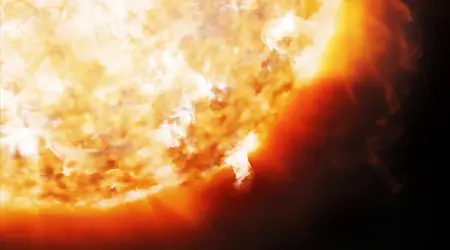
Why do magnetic fields act as a cosmic steering wheel?
The Sun’s magnetic field doesn’t end at its surface; it extends into the solar system as the Interplanetary Magnetic Field (IMF).
Why Solar Eruptions Don’t Always Hit Earth is largely explained by how these magnetic lines interact with the ejected solar plasma.
If the IMF is oriented in a way that repels the incoming storm, the particles get pushed aside like magnets with the same poles.
Read more: Why the Sun Sometimes “Goes Quiet” and What That Means
How does magnetic reconnection change the outcome?
Magnetic reconnection is the process where magnetic field lines snap and realign, releasing the massive energy that powers a solar eruption.
If this realignment happens in a way that directs the energy away from the ecliptic plane, the storm misses us completely.
This “magnetic kick” can send billions of tons of plasma into the deep “up” or “down” of the solar system.
In 2026, NASA’s Heliophysics System Observatory has recorded several “failed” eruptions where the magnetic tension pulled the plasma back toward the Sun.
These events, known as failed filaments, show that even a powerful explosion doesn’t guarantee the material will ever leave the Sun’s gravity.
The magnetic cage surrounding a sunspot is often strong enough to “re-absorb” the flare before it escapes into interplanetary space.
Why is the B-z orientation so important?
The “B-z” refers to the north-south direction of the magnetic field within a solar storm, a critical factor in impact severity.
If the B-z is pointing North, it aligns with Earth’s magnetic field and mostly slides around our planet with minimal interaction.
However, a South-pointing B-z causes magnetic “merging,” allowing the solar energy to pour directly into our upper atmosphere and satellites.
Even a massive CME might cause nothing more than a quiet night if its magnetic “teeth” don’t match our planet’s orientation.
This is why some “monster” flares result in no geomagnetic storming, while smaller, well-aligned ones cause global radio blackouts and vibrant lights.
Alignment is the difference between a catastrophic collision and a harmless cosmic “glance” that goes unnoticed by most people.
How do we predict which eruptions will reach us?
Space weather agencies use coronagraphs to block the Sun’s glare and see the faint, expanding halos of gas that signify an eruption.
A “full halo” CME is one that appears to expand in all directions around the Sun, indicating it is coming directly toward or away.
This visual data, combined with solar wind speed measurements, allows scientists to estimate the arrival time within a few hours.
Current research from the National Oceanic and Atmospheric Administration (NOAA) suggests that approximately 90% of all solar flares do not result in geomagnetic storms.
This statistic highlights the fact that Why Solar Eruptions Don’t Always Hit Earth is the rule, rather than the exception, in space weather.
Advanced computer models now simulate the “drag” of the solar wind to see if a CME will be slowed down or pushed.
What instruments do we use in 2026?
The Deep Space Climate Observatory (DSCOVR) and the newer SWFO-L1 satellite provide a 30-to-60-minute warning before a solar storm hits our atmosphere.
These “buoys” in space measure the density and magnetic flip of the solar wind before it reaches the magnetosphere’s boundary.
This allows grid operators and satellite technicians to put their sensitive equipment into “safe mode” to prevent electrical surges.
We also rely on the Parker Solar Probe, which “touches” the Sun to understand the acceleration of the solar wind at its source.
By understanding the environment near the solar surface, we can better predict how the “sprinkler” will behave as it rotates.
These technological advancements have reduced false alarms and provided more accurate “clear weather” reports for the growing space tourism industry.
Can we ever be 100% sure of a miss?
Uncertainty remains because the space between the Sun and Earth is not an empty vacuum; it is filled with turbulent plasma.
This “interplanetary medium” can act like a lens or a wall, refracting the path of an incoming solar storm in unpredictable ways.
A flare that seems destined to miss could be pushed back into our path by a faster-moving solar wind stream from behind.
Have you ever wondered if we are just lucky, or if the universe is designed to protect our small, blue marble?
While science gives us the “how,” the sheer number of misses reminds us of the delicate balance of our place in the sun’s neighborhood.
Why Solar Eruptions Don’t Always Hit Earth is a testament to the complex physics that keeps our technological society functioning despite living next to a nuclear furnace.
Solar Impact Probability Table (2025-2026 Data)
| Event Type | Frequency (High Activity) | Directional Miss Rate | Earth Impact Rate |
| C-Class Flare | 10+ per day | 98% | < 2% |
| M-Class Flare | 1-3 per day | 92% | 8% |
| X-Class Flare | 10-15 per year | 85% | 15% |
| Filament Eruption | Weekly | 95% | 5% |
| CME (Halo) | 2-4 per month | 40% | 60% |
The Sun is a dynamic and often violent neighbor, but the vacuum of space and our planet’s magnetic defenses work in harmony to keep us safe.
Why Solar Eruptions Don’t Always Hit Earth is a mix of simple math, lucky geometry, and complex magnetic steering that defines our cosmic environment.
As we move deeper into this solar cycle, our ability to monitor these invisible forces will only grow, turning fear into fascinating science.
We live in a golden age of heliophysics where the “misses” are just as informative as the direct hits for our future in space.
Understanding the mechanics of our star helps us prepare for the day a big one does arrive, ensuring our civilization remains resilient.
Every time you see a headline about a “solar storm,” remember the millions of miles of empty space and the magnetic shields working silently to protect your phone and your home.
Our star is a giver of life, and its occasional tantrums are simply the price of living so close to such a magnificent source of energy.
Share your experience in the comments below! Have you ever seen the Northern Lights or noticed a GPS glitch during a solar storm?
Frequently Asked Questions
Are we in danger during the solar maximum?
While flares are more frequent, our atmosphere and magnetic field provide excellent protection for people on the ground.
The primary risks are to satellites, GPS accuracy, and long-distance power lines, rather than direct human health.
Can a solar flare “hit” Earth instantly?
Light from a flare reaches us in 8 minutes, causing immediate radio blackouts. However, the actual cloud of particles (CME) takes anywhere from 15 to 72 hours to travel across the vacuum of space.
Why do some flares only cause Auroras?
This happens when the energy is moderate and the magnetic alignment allows particles to enter the poles but not penetrate deeper into the magnetosphere. It is the most common and visible result of a “grazing” solar hit.
Does “Earth-facing” always mean we will be hit?
No, because the eruption might be directed too far North or South of Earth’s orbital plane. Being “Earth-facing” just means the sunspot is on the side of the Sun we can see, not that the “gun” is aimed at us.
What is the “Carrington Event”?
It was the most powerful solar storm ever recorded in 1859, which set telegraph wires on fire. If it happened today, it would cause trillions in damage, but such events are estimated to happen only once every 500 years.
