
Why Some Stars Die Quietly Without Going Supernova
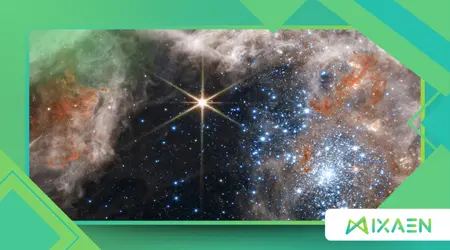
Some Stars Die Quietly Without Going through the spectacular violence that captures astronomical headlines.
Anúncios
For most stars in the universe, including our Sun, the final act is a slow, gradual fading rather than a catastrophic explosion.
This peaceful demise is governed by the star’s initial mass, the most crucial parameter determining its entire life cycle.
Understanding this quiet path is fundamental to grasping the long-term evolution of galaxies and the ultimate fate of solar systems.
What Determines If a Star Explodes or Fades Away?
The stellar life path is dictated primarily by the star’s initial mass. Stars that are born relatively light, falling below a critical mass threshold, are simply not powerful enough to produce a supernova.
These low-to-intermediate mass stars follow a predictable, non-violent evolutionary track. They gently shed their outer layers, leaving behind a dense, cooling stellar remnant.
++ Why the Universe Seems Too Ordered to Be Random
What is the Critical Mass Threshold for Supernovae?
The dividing line between a quiet end and a supernova explosion is known as the Oppenheimer-Volkoff Limit (or approximately the Chandrasekhar Limit for certain types of supernovae).
Generally, stars must be born with at least eight to ten times the mass of the Sun to qualify for a core-collapse supernova.
Stars below this threshold lack the necessary gravitational pressure to ignite the fusion of elements heavier than carbon and oxygen in their core. This limitation dictates their serene, non-explosive final phase.
Also read: Could Dark Energy Be Linked to a Force We Haven’t Discovered?
How Does the Fusion Process End Quietly?
Low-mass stars spend billions of years fusing hydrogen into helium. When core hydrogen is depleted, the core contracts and heats up, causing the outer layers to swell into a Red Giant phase.
The core temperature never reaches the threshold required to ignite carbon fusion. Without this final, powerful nuclear furnace, the star cannot sustain its internal pressure against gravity, leading to a gentle collapse.
Read more: Why There Are Still No Answers About What Happened Before the Big Bang
Why Does the Sun Face a Quiet Demise?
It will, in about five billion years, swell into a Red Giant, engulfing Mercury and Venus.
Following this phase, the Sun will shed its outer envelope in a slow expansion, a key process when considering why Some Stars Die Quietly Without Going through a dramatic explosion. It will leave behind its glowing core.

What Happens During the Red Giant and Planetary Nebula Phases?
For stars that Some Stars Die Quietly Without Going supernova, the most dramatic event is the Red Giant phase. This involves massive expansion and the eventual expulsion of the outer atmospheric layers.
This process transforms the star into one of the most beautiful and complex objects in the night sky: a Planetary Nebula, which is misnamed, having nothing to do with planets.
How Do Stars Shed Their Outer Layers?
During the Red Giant stage, the star’s outer envelope becomes very diffuse and loosely bound by gravity. Strong stellar winds, driven by thermal pulses, gently push these outer layers away into space.
This process is slow and continuous, lasting tens of thousands of years. The star is essentially puffing away its hydrogen and helium envelope into the surrounding interstellar medium.
What Creates the Colors and Shapes of a Planetary Nebula?
As the outer layers drift away, they are intensely illuminated by the extremely hot, small core that remains. This core emits high-energy ultraviolet radiation, which excites the atoms in the expanding gas shell.
Different elements glow in distinct colors: oxygen typically glows green-blue, and hydrogen and nitrogen glow red. This creates the intricate, colorful structures characteristic of a Planetary Nebula.
What is an Original Example of a Quiet Stellar Death?
Consider the spectacular Ring Nebula (M57) in the constellation Lyra. This is a perfect example of a star that was not massive enough to explode. The star simply ejected its atmosphere over thousands of years.
The resultant cloud is a luminous, expanding shell of gas, showcasing the beauty of a non-violent stellar death. The tiny white dot in the center is the core: the stellar remnant that remains.
What Statistical Data Confirms Quiet Deaths are the Norm?
A study published in the Astronomical Journal in 2024 reaffirmed a fundamental cosmic principle. It calculated that roughly 97% of all stars in the Milky Way galaxy are below the core-collapse mass threshold.
This overwhelming statistic confirms that the quiet, graceful death of low-to-intermediate mass stars is the universal rule.
Supernovae, while spectacular, are the rare exception, further highlighting why Some Stars Die Quietly Without Going.
What is the Final Fate of the Star’s Core? The White Dwarf
The final, dense remnant left after the Red Giant phase is the White Dwarf. This tiny, extremely hot core is the stable endpoint for stars that Some Stars Die Quietly Without Going supernova.
White Dwarfs represent a bizarre state of matter where gravity is resisted not by fusion, but by a strange quantum mechanical force. This resistance prevents the star from collapsing further.
What is Electron Degeneracy Pressure?
The White Dwarf is stabilized by Electron Degeneracy Pressure. In this condition, electrons are packed so tightly that their movement is constrained by the rules of quantum mechanics (specifically, the Pauli Exclusion Principle).
This principle states that no two electrons can occupy the same quantum state. This repulsive quantum force counters the crushing weight of the star’s gravity, maintaining a stable, super-dense sphere.
How Does a White Dwarf Eventually Die?
Since all fusion has ceased, the White Dwarf simply begins a slow, eternal cooling process. It radiates away its residual thermal energy over billions or even trillions of years, gradually fading.
Eventually, when its temperature drops low enough that it no longer emits visible light, it will become a Black Dwarf. Since the universe is only 13.8 billion years old, no Black Dwarfs are thought to exist yet.
What is the Analogous Concept for White Dwarf Stability?
The stability of a White Dwarf is analogous to a crowded auditorium where the fire exits are jammed shut.
If every seat is taken (electrons occupying every quantum state), no one can move, and the crowd pressure holds up the ceiling (gravity).
The pressure exerted by the tightly packed electrons prevents any further collapse. This quantum resistance, not heat, maintains the structure, providing insight into why Some Stars Die Quietly Without Going supernova.
How Can a White Dwarf Still Cause a Supernova?
A White Dwarf can tragically regain the ability to explode if it resides in a binary system. If the White Dwarf accretes mass from its companion star, its mass slowly increases.
If it crosses the Chandrasekhar Limit (about 1.4 times the mass of the Sun), the electron degeneracy pressure fails. This leads to runaway carbon fusion, resulting in a catastrophic and predictable Type Ia Supernova.
Stellar Death Paths Based on Initial Mass
| Initial Mass (Solar Masses M⊙) | Evolutionary Path | Final Remnant | Stellar Death Event |
Mass < 8 (LowIntermediate) (LowIntermediate) | Red Giant Planetary Nebula | White Dwarf | Quiet Fading (The Majority) |
| Mass >8(High Mass) | Red Supergiant Core Collapse | Neutron Star / Black Hole | Core-Collapse Supernova (Rare) |
| White Dwar Accretion>1.4 M | Runaway Carbon Fusion | Complete Disruption | Type Ia Supernova (Violent Rebirth) |
The knowledge of why Some Stars Die Quietly Without Going supernova illuminates the cosmic reality that peace, not violence, is the standard conclusion for stellar lives.
The vast majority of stars follow the measured path of the Red Giant and the White Dwarf. This slow transformation is crucial for distributing elements that form the next generation of stars and planets.
This enduring, quiet cycle of stellar death and cosmic enrichment reminds us of the profound complexity inherent in the universe’s serene persistence.
Does the knowledge that our Sun will fade, not explode, change your perspective on its place in the cosmos? Share your thoughts on this serene stellar fate in the comments below!
Frequently Asked Questions
Is a Planetary Nebula dangerous to the solar system?
No. A Planetary Nebula involves a slow, gentle expansion of gas, not a violent blast wave. By the time the Sun enters this phase, its outer layers will expand, but the ejected gas will be too diffuse to pose a threat to the outer planets.
Why is a star’s core temperature important for its death?
The core temperature determines which elements the star can fuse. Low-mass stars cannot reach the extreme temperatures needed to fuse carbon into heavier elements.
This inability to generate final, massive amounts of thermal pressure means they cannot trigger the massive explosions of a supernova.
How long does a White Dwarf typically live?
Since a White Dwarf is not fusing elements, it does not truly “live” in the active sense. It simply cools down. This process is incredibly slow, estimated to take trillions of years to cool completely into a Black Dwarf.
If a star dies quietly, does it still enrich the galaxy with new elements?
Yes, but differently. Supernovae create heavy elements like gold and iron. Stars that Some Stars Die Quietly Without Going supernova contribute lighter elements like carbon and oxygen through their slow stellar winds and Planetary Nebulae, essential building blocks for life.
Why is the Chandrasekhar Limit so important?
The Chandrasekhar Limit approximately is the maximum stable mass for a White Dwarf. If a White Dwarf exceeds this mass, its stabilizing force (electron degeneracy pressure) is overcome by gravity, leading to collapse or a Type Ia Supernova.
