
Why Space Exploration Timelines Often Collapse
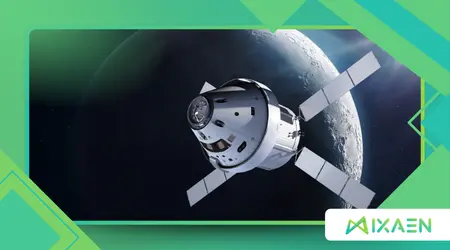
Space Exploration Timelines Often Collapse because the vacuum of space is an unforgiving environment that punishes even the smallest engineering oversight or budget fluctuation.
Anúncios
As we stand in early 2026, the ambitious Artemis missions and SpaceX Starship milestones face the harsh reality of orbital mechanics and complex supply chains.
The dream of reaching Mars or returning to the Moon often clashes with earthly constraints. Launch windows are rigid, and technology must be perfect before ignition.
Understanding these delays requires looking beyond the press releases into the volatile world of aerospace engineering and geopolitical funding shifts.
Strategic Overview of Mission Delays
- The Technical Barrier: Engineering challenges in deep space environments.
- The Financial Void: How shifting political tides impact long-term NASA funding.
- The Launch Window Trap: Why missing a date means waiting years for alignment.
- Supply Chain Gravity: Global logistics and their impact on rocket assembly.
Why does technical complexity derail lunar and martian goals?
The fundamental reason Space Exploration Timelines Often Collapse lies in the extreme precision required for life support and propulsion systems.
Every gram of weight added to a spacecraft requires exponential amounts of fuel, creating a “tyranny of the rocket equation” that halts progress.
Engineers often find that solving one problem, such as radiation shielding, creates another, like excess heat.
These cascading issues force teams back to the drawing board, instantly adding months or even years to the projected launch dates.
History shows us that pioneering new hardware, like the Space Launch System (SLS) or Starship’s Raptor engines, involves unpredictable “unknown unknowns.”
These are problems that simply cannot be simulated accurately until full-scale testing occurs on the launch pad.
When a test flight ends in a “rapid unscheduled disassembly,” the subsequent investigation must be exhaustive.
Federal regulators and internal safety boards prioritize mission success over speed, ensuring that the next attempt doesn’t repeat past failures.
++ Why Human Spaceflight Still Faces Biological Limits
How does the “unknown unknown” factor work?
In aerospace, an “unknown unknown” is a failure mode that engineers didn’t even consider during the design phase.
For instance, the James Webb Space Telescope faced delays because the sunshield deployment proved more temperamental than anyone predicted.
These surprises act like a hidden tax on innovation, where every breakthrough carries an invisible price tag of extra time.
Dealing with these issues requires specialized labor that cannot be rushed without compromising safety.
Also read: What We’ve Learned from Landing Rovers on Other Planets
What are the risks of rushing space hardware?
Rushing hardware usually leads to catastrophic failure, which is far more expensive than a delay.
The loss of a multi-billion dollar satellite or a crewed vessel would set the entire industry back by a decade.
Safety margins in space are incredibly thin, often leaving no room for error. Consequently, administrators prefer the political fallout of a delay over the permanent tragedy of a failed mission.
How do political and economic shifts freeze orbital progress?
Government agencies rely on annual budget approvals, making long-term planning nearly impossible.
Since Space Exploration Timelines Often Collapse when funding is diverted to immediate earthly crises, NASA often struggles to maintain its multi-year momentum.
A change in administration can lead to a complete shift in priorities. One president might focus on the Moon, while the next aims for Mars, forcing engineers to scrap years of dedicated work.
According to a report by the Government Accountability Office (GAO), the Artemis program has seen costs rise by billions due to these shifting requirements.
When the money fluctuates, the talent pool often moves to private sectors, further stalling the mission.
Private companies like SpaceX or Blue Origin face different pressures, such as investor confidence and market demand.
While they appear faster, they are still tethered to the same physical and economic realities as their government counterparts.
Read more: Reimagining the Hubble: How It Changed the Way We See Space
Why is congressional funding so volatile?
Congress often views space spending as a discretionary luxury rather than a strategic necessity.
This means that during economic downturns, space programs are often the first to face audits and potential budget cuts.
This cycle of “boom and bust” funding creates a stop-and-go workflow for contractors. Thousands of specialized technicians are hired and then let go, destroying the institutional knowledge needed for complex builds.
What is the role of international cooperation?
Mission timelines often depend on international partners like the ESA or JAXA. If one nation faces a domestic crisis, the entire global project can grind to a halt because of a single missing component.
Geopolitical tensions also play a role, as seen with the withdrawal of certain partnerships on the International Space Station.
These divorces require complex re-engineering of systems that were once shared across borders.
Why are planetary launch windows so unforgiving for planners?
The orbits of planets dictate the schedule, not human ambition. Because Space Exploration Timelines Often Collapse if a specific 30-day window is missed, a delay of one week can effectively become a delay of two years.
Launch windows are like trying to jump onto a moving merry-go-round from another moving merry-go-round. If you miss the leap, you have to wait for the entire machine to rotate back into the perfect position.
For Mars missions, the alignment occurs roughly every 26 months. If a fuel valve fails on the pad in August, the team might have to wait until late 2028 to try again, regardless of how fast they fix the valve.
This “orbital jail” is the ultimate equalizer in space travel. It doesn’t matter how much money a billionaire has; they cannot change the laws of celestial mechanics to suit their board meetings.
How does weather affect the countdown?
Local weather at launch sites like Cape Canaveral is notoriously unpredictable. High-altitude winds or lightning threats can scrub a launch within seconds of the T-zero mark, wasting millions in fuel and prep.
These scrubs are frustrating but necessary, as the stresses of ascending through a storm are too high.
Each scrub pushes the timeline further, often clashing with other scheduled satellite launches in a crowded manifest.
Why is deep space communication a bottleneck?
Developing the Deep Space Network to handle more data takes time. As more missions launch, the “traffic jam” in communications frequencies means some missions must wait their turn for dedicated signal time from Earth.
This digital congestion is a growing problem as we move toward 2026 and beyond. Without a robust data highway, sending a rover to a distant moon is a wasted effort if we cannot retrieve the findings.
Mission Impact Comparison Table (2025-2026 Data)
| Mission Factor | Typical Delay Period | Primary Reason | Probability in 2026 |
| Engine Testing | 6 – 12 Months | Combustion Instability | High |
| Launch Window | 24 – 26 Months | Planetary Alignment | Medium |
| Budget Audit | 3 – 6 Months | Congressional Review | High |
| Supply Chain | 2 – 5 Months | Raw Material Scarcity | Medium |
| Software Bug | 1 – 3 Months | Flight Logic Validation | Very High |
In 2026, we must accept that Space Exploration Timelines Often Collapse as a byproduct of our desire to do the impossible.
The intersection of rigid physics, fragile politics, and experimental engineering makes delays inevitable.
While frustrating to the public, these pauses are the quiet guardians of astronaut safety and mission integrity.
We are not just building machines; we are expanding the human footprint across a vacuum that offers no second chances. The path to the stars is paved with patience.
Do you believe the private sector will eventually solve the delay problem, or are the laws of physics simply too great to overcome? Share your experience or thoughts in the comments!
Frequently Asked Questions
Why can’t we just launch more rockets to make up for lost time?
Launching more rockets requires more launch pads and specialized crews. Currently, there is a “bottleneck” at major spaceports, meaning missions must wait in line for their turn on the pad.
Is it true that NASA missions always go over budget?
Not always, but the majority of pioneering missions do. This is because they are creating technologies that have never existed before, making accurate cost estimation nearly impossible at the project’s start.
Does SpaceX face the same delay issues as NASA?
Yes, though their “fail fast” philosophy allows them to iterate quicker. However, they are still subject to FAA regulations, weather, and the same orbital mechanics that affect every other space agency.
How does a 1% error in a timeline affect a mission?
A 1% error in trajectory or timing at the start of a mission can result in missing a planet by thousands of miles. This is why timelines are “collapsed” or paused until everything is perfect.
Will we ever reach a point where space travel is on a regular schedule?
We are moving toward that with Starlink and small-sat launches. However, deep space exploration will likely remain unpredictable for the next few decades due to the complexities involved.
