
Why Water-Rich Exoplanets May Be Hostile to Complex Life
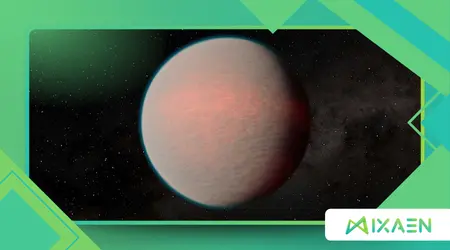
Water-Rich Exoplanets represent a fascinating target for modern astronomy, yet their deep oceans might actually prevent the emergence of advanced, multicellular organisms.
Anúncios
I have watched the scientific community shift from “follow the water” to a more nuanced understanding of planetary geochemistry as 2026 unfolds.
Searching for life often blinds us to the harsh realities of extreme physics.
In my analysis, having too much water creates a geological prison that disconnects the seafloor from the atmosphere, effectively killing the nutrient cycles we depend on.
Why does deep water block essential nutrient cycles?
Many Water-Rich Exoplanets possess oceans hundreds of kilometers deep, which sounds like a paradise but functions more like a sterile watery desert.
The sheer mass of this liquid column generates immense pressure at the base, creating exotic forms of high-pressure ice that seal the crust.
What many forget to observe is that without direct contact between liquid water and volcanic rocks, essential minerals cannot dissolve into the sea.
My recommendation for you is to view these worlds not as tropical getaways, but as chemically isolated spheres lacking the building blocks for DNA.
How does high-pressure ice form?
Pressure at the bottom of these massive oceans forces water molecules into a solid state known as Ice VII or Ice X, even at high temperatures.
These Water-Rich Exoplanets essentially grow a thick, impenetrable floor of ice that acts as a tectonic straitjacket, preventing any volcanic mineral enrichment.
This barrier is the ultimate deal-breaker for complex biology. Think of it like trying to grow a garden on a concrete slab; without the soil’s minerals, the plants or in this case, the microbes simply starve to death.
++ How Artificial Intelligence Is Accelerating the Search for Life
Why is the carbon cycle interrupted?
Earth regulates its temperature through the carbonate-silicate cycle, but Water-Rich Exoplanets lack the exposed land needed to scrub carbon from the sky.
Without dry rocks to weather, CO2 builds up unchecked, creating a runaway greenhouse effect that makes the surface temperature boil.
Nature needs a balance between land and sea to keep the planetary thermostat working.
On a world with no continents, the climate swings wildly or settles into a stifling heat that prevents complex protein chains from ever forming.
How does ocean depth impact atmospheric stability?
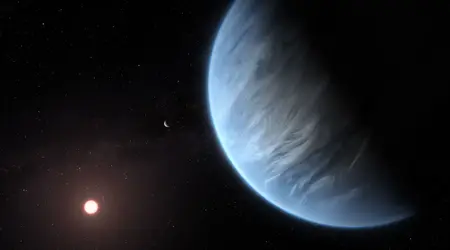
The atmosphere of Water-Rich Exoplanets often becomes a thick envelope of steam or high-pressure volatiles that crush anything beneath them.
I believe we must stop equating “liquid water” with “habitability” because the weight of a thousand-mile ocean changes the very chemistry of the air.
Astronomers recently used the James Webb Space Telescope to find that many “hycean” worlds likely have surface pressures thousands of times greater than Earth’s.
In my analysis, such crushing environments might support exotic bacteria, but they would flatten any complex creature resembling a fish or a mammal.
Also read: The Debate Around Technosignatures: Searching for Alien Technology
Can life survive without a seafloor?
Microbes might drift in the upper layers, but the lack of a “conveyor belt” to bring nutrients up from the depths limits their growth.
These Water-Rich Exoplanets suffer from a permanent shortage of phosphorus and iron, which are the fundamental currencies of any biological economy.
Imagine a city where the grocery stores are empty because the delivery trucks are stuck behind a wall of ice. That is the reality for any potential life forms swimming in these vast, nutrient-poor abysses.
Read more: Could We Create Life on Exoplanets Using Terraforming?
Why is oxygen rare on these worlds?
Photosynthesis requires specific catalysts, but Water-Rich Exoplanets often lack the shallow coastal shelf where life can easily access both sunlight and minerals.
Without a massive explosion of plant-like life, oxygen never builds up enough to support the high-energy demands of complex animals.
What many researchers overlook is that oxygen is a high-octane fuel for evolution.
Without it, life remains stuck in the slow lane, barely managing to exist as single-celled organisms for billions of years without ever evolving a brain.
What are the geochemical limits of habitability?
Recent data from the 2025 Ariel Mission simulations suggests that planets with more than 1% water by mass rarely maintain stable habitability.
Water-Rich Exoplanets frequently exceed 10% or even 20% water, leading to a total loss of the geochemical “pumps” that sustain a biosphere.
The “Goldilocks Zone” is a much narrower target than we previously thought.
My recommendation is to focus our search on “diluted” water worlds planets with just enough ocean to sustain life but enough land to keep the chemistry moving.
Is it possible that Earth is the exception because it is actually quite dry compared to its galactic neighbors? This question haunts every new discovery in the deep-space catalogs of the 21st century.
How does salinity kill potential life?
In these vast oceans, the salt concentrations can reach levels that would pickle any known cell membrane.
Water-Rich Exoplanets often dissolve massive amounts of chlorine and sodium during their formation, creating a brine so thick that it prevents the delicate folding of proteins.
Life is a chemistry set that requires very specific concentrations to function.
If the “soup” is too salty, the chemical reactions required for metabolism simply grind to a halt, leaving the planet a dead, salty wasteland.
Why do these planets lack magnetic shields?
A massive layer of high-pressure ice can insulate the planet’s core, preventing the heat flow necessary to generate a magnetic field.
Without this shield, Water-Rich Exoplanets are blasted by stellar radiation that strips away light gasses and fries any organic molecules in the upper ocean.
A planet without a magnetosphere is like a soldier going into battle without armor. Even if the water is there, the radiation from a nearby red dwarf star will eventually turn the atmosphere into a toxic graveyard.
Prós e Contras: Water-Rich vs. Earth-Like Habitability
| Feature | Earth-Like (Dry) | Water-Rich (Deep) |
| Nutrient Access | High (Rock/Water Contact) | Low (Ice Barrier) |
| Climate Control | Stable (Carbonate Cycle) | Unstable (Greenhouse) |
| Energy Source | High (Sunlight + Minerals) | Low (Sunlight only) |
| Biological Potential | Complex Animals | Microbes only |
| Pressure Limits | 1 Bar (Ideal) | 1000+ Bar (Crushing) |
Surviving on a world made entirely of water is a geochemical nightmare that most complex organisms would never overcome.
The disconnection between the rocky crust and the liquid surface creates a sterile environment that lacks the raw materials for evolution to build something significant.
While Water-Rich Exoplanets are common in the Milky Way, they likely serve as silent monuments to the difficulty of creating a truly habitable world.
We must look for planets that balance their liquid assets with solid ground if we ever hope to find neighbors in the cosmos.
Earth’s true secret isn’t that it has water, but that it has so little of it compared to these drowning giants.
Do you think we should stop prioritizing “Ocean Worlds” in our search for alien intelligence? Share your experience in the comments.
Dúvidas Frequentes
Can life exist in the high-pressure ice layers?
It is highly unlikely, as the crystalline structure of Ice VII is too rigid to allow for the molecular movement required for metabolism.
Is any amount of water too much for a planet?
Generally, if the water makes up more than 1% to 5% of the planet’s mass, the high-pressure ice barrier begins to form, hindering life.
Do all Water-Rich Exoplanets have steam atmospheres?
Not all, but those close to their stars often suffer from a permanent steam blanket that traps heat and increases surface pressure.
Could life evolve to breathe under such high pressure?
While some bacteria on Earth live in the Mariana Trench, the pressure on these exoplanets is often ten to a hundred times greater, challenging basic cell structure.
Why is phosphorus so important for these worlds?
Phosphorus is a key ingredient in DNA and ATP (energy); without a rocky seafloor to leach it from, an ocean becomes a biological dead zone.
