
Why Artemis II Mission Signals a New Era of Lunar Exploration
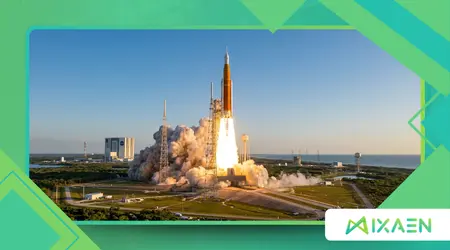
The Artemis II Mission Signals a New Era of Lunar Exploration because it transforms our celestial neighbor from a distant mystery into a functional workspace.
Humanity stands on the precipice of a profound transition. We are moving beyond flags and footprints toward a permanent presence in deep space.
This mission represents the first time humans will venture toward the Moon since 1972. It tests the life-support systems of the Orion spacecraft.
Success here validates the Space Launch System (SLS) as the most powerful rocket ever built. It ensures the safety of future crews on long-duration flights.
Key Mission Insights
- Crew Dynamics: The first diverse team heading toward lunar orbit.
- Technological Stakes: Testing high-bandwidth laser communications and carbon dioxide scrubbers.
- Strategic Trajectory: Utilizing a “free-return” path to ensure a safe splashdown.
- Global Impact: How international partnerships redefine who gets to touch the stars.
What Defines the SLS Success and Human Safety?
The Artemis II Mission Signals a New Era of Lunar Exploration by proving that our current engineering can withstand intense deep-space radiation levels.
NASA’s SLS rocket generates roughly 8.8 million pounds of thrust during liftoff. This power is necessary to propel the crewed Orion capsule toward the Moon.
Engineers focus on the “Heat Shield” performance during reentry at 25,000 miles per hour. This thermal protection must survive temperatures near 5,000 degrees Fahrenheit.
Without these critical safety benchmarks, the path to the lunar surface remains closed. Artemis II serves as the ultimate high-stakes dress rehearsal.
How does Orion protect the crew?
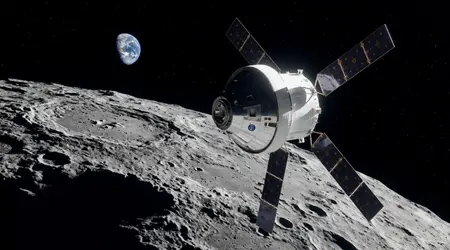
The spacecraft features a reinforced structure designed to mitigate the impact of solar particle events. It acts as a temporary shelter for four astronauts.
Modern avionics allow the crew to monitor systems in real-time. This autonomy is vital when communication delays with Earth become a technical reality.
++ Why Multi-Asteroid Missions Are Rising in Planetary Science
Why is the trajectory so unique?
Planners chose a hybrid free-return trajectory to maximize safety. If the main engines fail, lunar gravity naturally pulls the ship back toward Earth.
This design mirrors the “safety net” mentality of modern aerospace. It balances ambitious exploration with the non-negotiable requirement of bringing our pioneers home.
Why Is This Mission More Than a Scientific Trip?
We must acknowledge that the Artemis II Mission Signals a New Era of Lunar Exploration through its commitment to inclusion and global unity.
The crew includes the first woman, the first person of color, and the first Canadian to venture into deep space. Diversity drives innovation here.
Geopolitical tensions often stall progress, but Artemis brings nations together under a shared goal. It establishes the “Artemis Accords” as a framework for peace.
Think of this mission as the construction of a transcontinental railroad in the sky. It builds the infrastructure that future generations will eventually inhabit.
Also read: What We’ve Learned from Landing Rovers on Other Planets
What are the economic implications?
Private companies like SpaceX and Blue Origin are now vital partners. This commercial integration lowers costs and accelerates the development of lunar technologies.
We are seeing a shift from government-only ventures to a thriving space economy. Satellite refueling and lunar mining are no longer just science fiction.
Read more: Reimagining the Hubble: How It Changed the Way We See Space
How does this affect Earth?
Space exploration consistently yields “spin-off” technologies that improve life on our planet. Water purification systems and advanced medical imaging started in orbit.
Investing in the Moon creates jobs and inspires a new generation of scientists. It pushes the boundaries of what humans believe is physically possible.
How Does Artemis II Compare to Apollo?
The Artemis II Mission Signals a New Era of Lunar Exploration because it focuses on sustainability rather than a brief, symbolic political victory.
Apollo was a sprint to beat an adversary; Artemis is a marathon to establish a permanent colony. We are staying this time.
Data from the Lunar Reconnaissance Orbiter (LRO) shows that the South Pole contains water ice. This resource is the “gold” of the 21st century.
We will use this ice for life support and rocket fuel. This turning point makes the Moon a refueling station for missions to Mars.
Comparison of Lunar Eras
| Feature | Apollo Program (1960s-70s) | Artemis Program (2020s) |
| Primary Goal | Landing and returning | Sustained presence and Mars prep |
| Rocket System | Saturn V | Space Launch System (SLS) |
| Crew Size | 3 Astronauts | 4 Astronauts |
| Diversity | Homogeneous | International & Diverse |
| Stay Duration | Hours to Days | Weeks to Months (Gateway) |
What is the primary technological leap?
Computing power has advanced exponentially since the 1970s. Your modern smartphone has more processing capability than the entire Apollo guidance computer.
This allows for autonomous landing sequences and advanced hazard detection. We can now target landing sites that were once considered far too dangerous.
Why target the South Pole?
The South Pole features “peaks of eternal light” and “craters of eternal darkness.” This provides both constant solar power and preserved water ice.
Exploring these regions requires hardware that can function in extreme cold. Artemis II tests the communications needed to manage these complex polar operations.
Why Does Artemis II Use a Modular Strategy?
The Artemis II Mission Signals a New Era of Lunar Exploration by integrating the Lunar Gateway into the long-term mission architecture for safety.
The Gateway acts as a small space station orbiting the Moon. It serves as a communication hub and a temporary home for rotating crews.
Artemis II will not dock with the Gateway yet, but it validates the approach. It confirms the Orion’s ability to navigate precisely in deep space.
This modularity allows for easier repairs and upgrades over time. It is a smarter, more cost-effective way to explore the vast lunar frontier.
What is the role of the Service Module?
The European Space Agency (ESA) provided the Service Module for Orion. It handles propulsion, power, and the air the astronauts breathe every day.
This collaboration is a practical example of how international synergy works. No single nation needs to shoulder the entire financial or technical burden.
How do we handle deep-space communication?
Artemis II will test the “Deep Space Network” to its limits. Maintaining a high-definition video link with the crew is essential for public engagement.
Optical laser communications offer higher data rates than traditional radio waves. This tech ensures we see every moment of the journey in stunning detail.
Why Should the Public Care About This Mission?
Ultimately, the Artemis II Mission Signals a New Era of Lunar Exploration because it answers the fundamental human urge to explore the unknown.
Are we content with living on just one planet, or will we become a multi-planetary species? This mission provides the definitive answer to that.
Space is the ultimate high ground for science. Studying the Moon’s craters reveals the history of our solar system and the origin of Earth.
Every dollar spent on Artemis circulates back into the global economy. It funds the brightest minds to solve the hardest problems we face.
Can space solve resource scarcity?
The Moon contains Helium-3, a potential fuel for future fusion reactors. While distant, these possibilities represent a long-term solution to our energy needs.
We are planting the seeds for an era where resource wars become obsolete. The abundance of space provides enough for everyone if managed correctly.
What is the legacy of Artemis II?
This mission will be remembered as the moment we returned to the stars for good. It bridges the gap between memory and a bold future.
Children watching the launch today will be the engineers and pilots of tomorrow. It provides a rare moment of collective pride for all of humanity.
The Horizon Awaits
The Artemis II Mission Signals a New Era of Lunar Exploration by transforming a 240,000-mile journey into a sustainable bridge for scientific discovery.
We have moved past the era of “just visiting” and entered the era of “living” in deep space.
This mission proves that our technology, our diverse teams, and our international alliances are ready for the challenge.
It is the final checkmark before we put boots back on the ground with Artemis III. The Moon is no longer a destination; it is a laboratory, a shipyard, and a stepping stone to the Red Planet.
We are witnessing history in the making, written not just in ink, but in rocket fire and stardust. The countdown for Artemis II is a countdown for the next chapter of human evolution.
What part of the lunar mission excites you the most? Share your thoughts in the comments below!
Frequently Asked Questions
Is Artemis II landing on the Moon?
No, Artemis II is a flyby mission. The crew will orbit the Moon and return to Earth to test all systems.
When will the launch happen?
Currently, the mission is scheduled for late 2025 or early 2026, depending on final hardware certifications and weather.
How long does the mission last?
The mission is expected to take approximately 10 days from launch to splashdown in the Pacific Ocean.
Why is it called Artemis?
In Greek mythology, Artemis is the twin sister of Apollo and the goddess of the Moon, symbolizing a return to the lunar surface.
