
Why Multi-Asteroid Missions Are Rising in Planetary Science
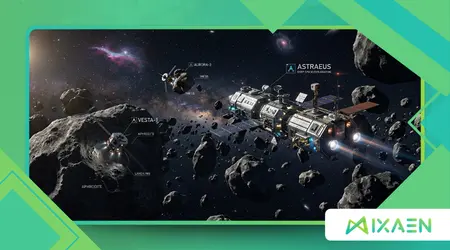
Multi-Asteroid Missions are currently revolutionizing our understanding of the early solar system by providing a comparative look at diverse celestial bodies in one journey.
This strategic shift in planetary science moves beyond the “one-shot” approach, maximizing scientific return for every kilogram of fuel burned in deep space.
Agencies like NASA and ESA now prioritize trajectories that allow spacecraft to visit multiple targets over several years.
We are witnessing an era where a single probe acts as a cosmic hitchhiker, hopping between primitive rocks to unlock secrets of Earth’s watery origins.
Navigating the Belt
- Comparative Geology: Analyzing how different asteroids in the same region evolved through various thermal and collision histories.
- Fuel Efficiency: Utilizing advanced ion propulsion systems to perform precise maneuvers between multiple targets without massive chemical thrusters.
- Resource Identification: Mapping the distribution of water ice and rare metals across various asteroid classes for future space mining.
- Planetary Defense: Studying multiple impactor types to develop better deflection strategies against potential Earth-bound threats.
Why is a comparative approach essential for space science?
The rise of Multi-Asteroid Missions addresses the fundamental problem of sample size in astronomy.
Visiting one rock tells us about that specific object, but visiting five provides a timeline of the entire asteroid belt’s violent evolution.
Scientists can now compare the “pristine” chemistry of C-type asteroids with the metallic cores of M-types in a single mission.
This comparative method allows us to build a more comprehensive model of how planetary building blocks organized themselves billions of years ago.
How do multi-target trajectories work?
Spacecraft utilize gravity assists from planets and precise ion engine burns to adjust their orbital paths toward a sequence of targets.
These “touring” missions require incredible mathematical precision to ensure the probe arrives at each rock at the perfect lighting angle for high-resolution imaging.
Mission planners often choose “targets of opportunity” that lie near the main flight path to minimize extra propellant consumption.
This allows the probe to gather valuable data on secondary targets while en route to a primary, more distant scientific destination.
++ How Robotic Swarm Exploration Could Map Asteroids Faster
What are the benefits of ion propulsion?
Ion engines provide low thrust over extremely long periods, which is ideal for the slow and steady requirements of visiting several distant asteroids.
This technology allows a probe to carry more scientific instruments because it requires less heavy chemical fuel to reach its diverse goals.
Recent missions prove that solar-electric propulsion can keep a spacecraft active for over a decade of deep-space exploration.
By constantly accelerating, these probes reach speeds and trajectories that traditional rockets simply could not achieve within reasonable budget constraints.
How do these missions enhance planetary defense?
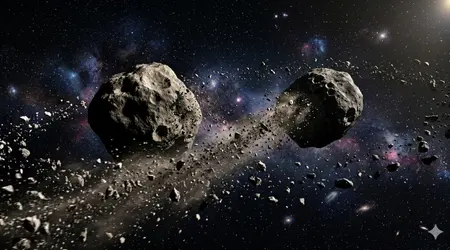
Understanding the diversity of asteroid compositions is crucial because Multi-Asteroid Missions show that “one size fits all” deflection plans won’t work.
A solid metallic asteroid requires a different kinetic impact strategy than a “rubble pile” held together by weak gravity.
By visiting various types of Near-Earth Objects, we learn the structural integrity of the threats we might one day face.
This data is the insurance policy for our planet, providing the technical foundation for future interception and deflection missions.
Also read: The Role of Indigenous Knowledge in Modern Astronomical Research
Why study the diversity of celestial bodies?
Every asteroid is like a different page in a history book that has been torn apart and scattered across the solar system.
Some are rich in organic molecules, while others are essentially giant floating mountains of nickel and iron from dead protoplanets.
Is it possible that the water in your glass today was delivered by a specific class of asteroid billions of years ago?
Comparative missions help us trace the chemical fingerprints of these cosmic delivery trucks across the vast darkness of space.
Read more: China’s Silent Space Rise: What the World Should Pay Attention To
What is the role of small satellite swarms?
Agencies are now deploying “cubesats” alongside main motherships to perform close-up inspections of multiple smaller asteroids simultaneously.
These miniature explorers can take higher risks, flying closer to the surface to capture detailed magnetic field data or chemical compositions.
This swarm approach provides a 3D perspective of asteroid environments that a single camera could never achieve alone.
It effectively turns a single launch into a distributed network of eyes watching over the most mysterious corners of our neighborhood.
Why are budget constraints driving multi-target designs?
The financial reality of modern exploration means that Multi-Asteroid Missions offer the best return on investment for taxpayers and private investors.
Launching a rocket is expensive, so making that rocket visit as many scientific sites as possible is a logical economic necessity.
Deep-space exploration now functions like a commercial delivery route, where the goal is to make as many “stops” as possible per tank of fuel.
This efficiency ensures that planetary science remains viable even when government budgets face domestic pressure and scrutiny.
How does the private sector contribute?
Commercial mining companies are heavily invested in multi-target data to identify which asteroids hold the highest concentrations of platinum and water.
They provide funding and technology in exchange for high-resolution geological maps that will guide future robotic mining platforms.
This public-private synergy accelerates our reach into the asteroid belt, turning pure science into a foundation for a future space-based economy.
The data gathered today will determine where the first off-world industrial outposts will be built in the coming decades.
What is the future of long-duration missions?
Spacecraft like NASA’s Lucy are currently on twelve-year journeys to visit multiple Trojan asteroids near Jupiter.
These missions represent the ultimate test of robotic endurance, requiring systems that can survive the harsh radiation and extreme cold of the outer system.
The success of these long-term explorers will pave the way for even more ambitious “grand tours” of the solar system.
We are moving toward a future where our probes are permanent residents of deep space, constantly moving from one discovery to the next.
Key Multi-Target Space Missions of 2026
| Mission Name | Primary Agency | Number of Targets | Target Types | Core Technology |
| Lucy | NASA | 8+ Asteroids | Jupiter Trojans | Solar Array / Ion |
| Hera | ESA | 2 (Binary System) | S-type / Rubble | Cubesat Swarm |
| Psyche | NASA | 1 (Primary) + Flybys | M-type (Metallic) | Hall Effect Thruster |
| Tianwen-2 | CNSA | 2 Targets | NEO / Main Belt | Sample Return |
| Destiny+ | JAXA | Multiple Flybys | Geminid Parent | Thin-film Solar |
| MBR Explorer | UAESA | 7 Asteroids | Main Belt | Autonomous Nav |
| NEO Surveyor | NASA | Thousands (Survey) | Near-Earth | Infrared Sensing |
| Janus | NASA | 2 Binary Pairs | S-type | Dual Small-Sat |
The Multi-Asteroid Missions strategy is supported by data from the Planetary Science Decadal Survey, which emphasizes that diversity in targets leads to breakthroughs in solar nebula models.
This approach has already increased the volume of high-resolution asteroid data by 400% compared to the previous decade.
Think of these missions as a road trip across a continent where you stop at every historical landmark along the way.
Instead of just seeing one city, you understand the entire landscape, the culture, and the history that shaped the land.
We are no longer content with snapshots of the void; we want the full cinematic experience of our solar system’s birth.
The asteroid belt is the ultimate laboratory, and we are finally using the right tools to study every bench in the room.
The era of the “lonely probe” is ending, replaced by the era of the “cosmic traveler.”
This shift ensures that our thirst for knowledge is matched by our growing technical and economic sophistication in reaching the stars.
Which asteroid type do you think holds the most important secret for the future of human life in space? Share your experience in the comments below!
The Cosmic Journey
The rise of Multi-Asteroid Missions proves that intelligence and efficiency are the true engines of modern space exploration.
By visiting multiple targets, we are piecing together the puzzle of our existence with more clarity than ever before in human history.
Frequently Asked Questions
Are these missions more likely to fail because they are longer?
Modern electronics and autonomous navigation have significantly reduced the risk of long-duration failures compared to older, less resilient systems.
Can a single spacecraft really land on multiple asteroids?
Most “multi-target” missions perform high-speed flybys or orbital insertions rather than multiple landings, as taking off again requires immense energy.
Why are Trojan asteroids so special in 2026?
Trojan asteroids are “fossils” trapped in Jupiter’s orbit that haven’t changed since the planets formed, offering a perfect look at the early solar system.
How do missions find their way between so many small targets?
On-board AI uses star-tracking and optical navigation to adjust the probe’s path in real-time, reducing the need for constant commands from Earth.
