
The Political Battle for Lunar Territory: Who Owns the Moon?

The political battle for lunar territory has intensified throughout 2026, marking a pivotal transition from symbolic flag-planting to the strategic occupation of lunar resources.
As multiple nations and private entities rush to establish a permanent presence, the legal frameworks governing space are being tested by the realities of a new, multipolar lunar race.
Modern space policy is currently caught between the foundational principles of the 1967 Outer Space Treaty and the emerging, more competitive dynamics of 21st-century exploration.
This shifting landscape raises fundamental questions about jurisdiction, resource rights, and the future of human expansion beyond Earth.
- The Legal Foundations of Space Law
- The South Pole: A Geopolitical Flashpoint
- Artemis Accords vs. Competitive Blocs
What determines control in lunar space?
The Outer Space Treaty limitations
The 1967 Outer Space Treaty remains the cornerstone of space law, explicitly prohibiting any nation from claiming sovereignty over the Moon or other celestial bodies.
Despite this clear prohibition, the treaty’s broad language creates gray areas regarding resource extraction and the establishment of temporary “safety zones” for mining or scientific research.
No state can technically own the lunar surface, yet the reality on the ground or under it is becoming increasingly complex.
Private and public actors operate with the assumption that while they cannot own the land, they can claim jurisdiction over the specific equipment, facilities, and extracted resources they control.
The rise of the Artemis Accords
As of May 2026, the political battle for lunar territory is heavily influenced by the Artemis Accords, a U.S.-led framework signed by 67 nations.
These principles aim to establish norms for peaceful, transparent, and interoperable lunar activity, acting as a functional “code of conduct” for those participating in the Artemis program.
Critics argue that these accords effectively create an exclusive club of space-faring nations.
By defining “safety zones” where actors can operate without interference, signatories are essentially securing operational territory, even if they lack formal sovereign ownership over those specific lunar coordinates.
++ Why Reusable Spacecraft Systems Redefine Exploration Costs
Multipolar disorder in orbit
The cooperative consensus of the post-Cold War era has evaporated, replaced by a competitive environment often described as multipolar disorder.
Nations like China and Russia have formed their own lunar research coalition, challenging the dominance of the U.S.-led Artemis framework and creating two distinct visions for the future of the Moon.
This divide is not just diplomatic; it is logistical. Two parallel infrastructures are being developed, each with its own standards and technological ecosystems.
The competition is no longer just about who arrives first, but whose legal and technical regime will set the precedent for lunar operations for the next century.
Why is the lunar south pole so valuable?
The strategic importance of water ice
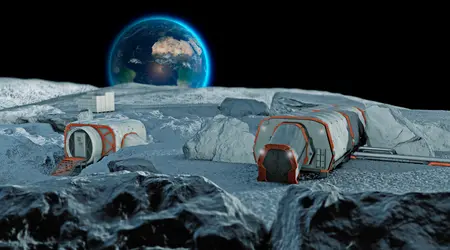
The current political battle for lunar territory is centered almost entirely on the south polar region of the Moon.
Permanently shadowed craters in this area are believed to contain significant deposits of water ice, which is the “gold” of the new space economy, serving as a source for oxygen, drinking water, and hydrogen propellant.
Securing access to these ice-rich craters is a massive logistical advantage for any base.
Whoever reaches and stabilizes a presence at the south pole gains a functional head start in the infrastructure-building phase of the 2030s, essentially holding the keys to deep-space refueling.
Also read: What We’ve Learned from Landing Rovers on Other Planets
Resources beyond the water
Rare earth elements and Helium-3 are also drawing significant interest from national space agencies and private corporations.
While the technology to extract and transport these resources at scale remains in its infancy, the potential for long-term economic returns is a primary driver of the current legislative and territorial maneuvering.
It is like the California Gold Rush of the 19th century, but with infinitely higher stakes and a much more unforgiving environment.
Companies and governments are racing to stake their claims, not by filing papers in a local office, but by landing hardware and deploying mobile terrain vehicles.
Read more: Reimagining the Hubble: How It Changed the Way We See Space
Managing the risk of collision
With more countries and private companies conducting missions, the risk of “harmful interference” is rising. The Artemis Accords attempt to mitigate this through notification systems and deconfliction protocols.
However, these mechanisms rely entirely on the goodwill and voluntary cooperation of the actors involved in the lunar theater.
When two nations or commercial entities target the same crater, the potential for conflict becomes a technical and diplomatic reality.
Without a robust international regulatory body to mediate these disputes, the risk of localized, accidental conflict between automated rovers or manned missions remains a significant geopolitical concern.
What is the economic impact of this competition?
The growth of the space economy
According to the McKinsey Space Report, the global space economy is projected to reach $1.8 trillion by 2035.
This massive valuation turns space exploration from a purely scientific endeavor into a primary driver of national economic policy. Governments are no longer just funding science; they are incentivizing industrial capability.
This financial growth is forcing a re-evaluation of space laws that were written decades ago. As commercial mining becomes a reality, the world must decide how to handle the inevitable disputes over “who gets what” on the lunar surface.
The political battle for lunar territory is fundamentally a race to define these future economic rules.
Private sector involvement and ownership
Commercial Lunar Payload Services (CLPS) are transforming how we operate. NASA now pays for services like cargo delivery rather than building everything itself.
This allows companies to retain ownership of their landers and proprietary technology, complicating the traditional legal definitions of “state-controlled” exploration.
When a private company lands, they carry their home nation’s jurisdiction with them, but their commercial interests are distinct.
This hybrid model part sovereign mission, part corporate venture means that the Moon is becoming a complex mosaic of international and private jurisdictions that existing treaties were never designed to manage.
The geopolitical risk premium
The political battle for lunar territory introduces a new form of geopolitical risk into the financial markets.
Investors are increasingly aware that lunar assets are vulnerable to both technical failure and diplomatic disputes. The stability of long-term lunar operations is now a critical factor in global investment strategies.
As we look toward 2028 and beyond, the precedent set by the first crewed lunar bases will be permanent.
The nations that establish the standard for “due regard” and resource sharing will effectively write the operating system for the next generation of space-faring civilizations.
Comparison of Lunar Governance Approaches
| Framework | Lead Actors | Core Philosophy | Status |
| Outer Space Treaty | UN (Global) | Province of Mankind | Baseline/Foundational |
| Artemis Accords | USA + 67 Nations | Interoperability/Safety Zones | Active/Expanding |
| ILRS Organization | China/Russia + Partners | Parallel Research Bases | Active/Competitive |
Understanding the New Lunar Reality
The “freshness” of the current political battle for lunar territory is like a modern digital frontier: the law exists, but the enforcement is entirely dependent on who builds the infrastructure first.
We are watching the transition from exploration to occupation in real-time, and it is happening faster than international diplomacy can manage.
If we continue down the path of polarized blocks, we risk a fragmented lunar surface characterized by exclusion zones and conflicting standards.
Conversely, if cooperation prevails, the Moon could serve as the ultimate bridge between terrestrial rivalries and a collaborative future in the solar system.
Conclusion and Call to Action
Ultimately, the Moon is no longer a silent satellite; it is a bustling, contested construction site.
We are at a historic juncture where our actions in 2026 will dictate the rights, responsibilities, and freedoms of humanity in space for generations to come.
What do you think is the best path forward to prevent conflict on the Moon? Share your perspective in the comments below!
Frequently Asked Questions
Can a country claim the Moon?
No, the 1967 Outer Space Treaty strictly prohibits national sovereignty over celestial bodies.
What are “Safety Zones”?
They are temporary operational areas designated by Artemis signatories to coordinate activities and avoid harmful interference with other missions.
Why is China not part of the Artemis Accords?
China views the Accords as an exclusionary, U.S.-led political structure; additionally, U.S. law largely prohibits NASA from bilateral cooperation with them.
Is mining allowed on the Moon?
Under the Outer Space Treaty, resource extraction is a debated area, but the Artemis Accords assert that it can be done sustainably for the benefit of all.
Who is currently leading the lunar race?
It is a complex landscape; the U.S. leads through the Artemis program, while China is rapidly advancing its own independent capabilities and international research coalition.
