
How Coronal Streamer Mapping Is Transforming Solar Research
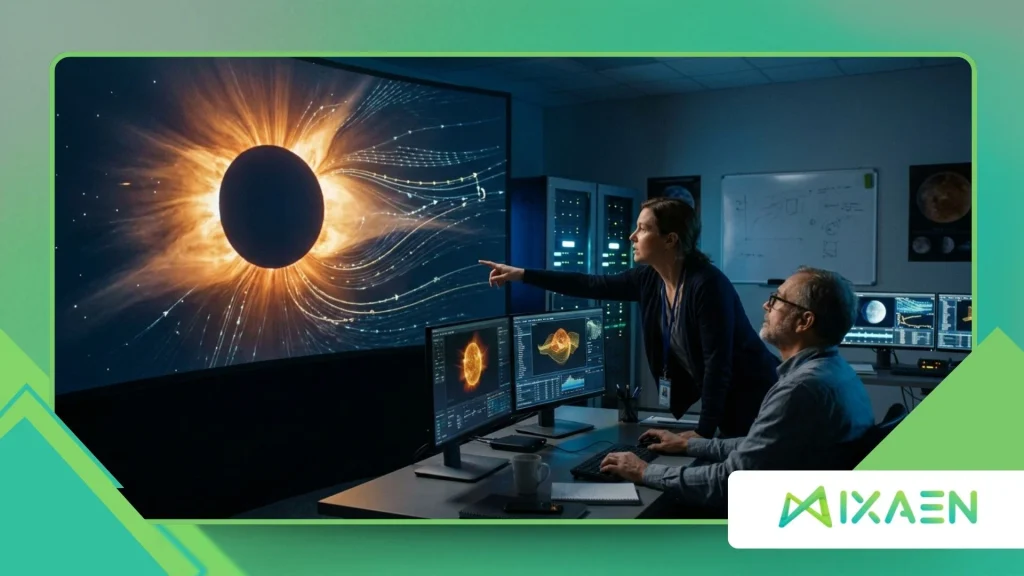
Coronal Streamer Mapping is completely changing how modern scientists study the complex dynamics of our nearest star, providing critical insights into space weather forecasting and solar wind origins.
As solar observation technology advances rapidly through 2026, understanding the outer atmosphere of the Sun has never been more vital for protecting satellite infrastructure and global power grids.
Modern astrophysics relies heavily on precise imaging and computational models to decode the invisible magnetic structures stretching far out into interplanetary space.
Researchers around the globe utilize advanced coronagraphs and spacecraft data to monitor these immense plasma structures in unprecedented detail.
This comprehensive article explores the groundbreaking methodologies, recent discoveries, and practical implications of mapping the solar corona.
Quick Navigation Through This Article
- What is Coronal Streamer Mapping and Why It Matters
- How Scientists Track and Model Solar Structures Today
- What Are the Main Challenges and Future Breakthroughs Ahead
What Is Coronal Streamer Mapping and How Does It Work?
What is the core definition of Coronal Streamer Mapping?
Coronal Streamer Mapping refers to the sophisticated scientific technique of locating, tracking, and reconstructing the large-scale magnetic loops and dense plasma structures that extend outward from the solar surface into the corona.
These luminous, helmet-shaped structures are fundamentally tied to the solar magnetic field and act as major source regions for the slow solar wind streams sweeping through the inner solar system.
By combining observational data from space-based telescopes with advanced magnetohydrodynamic modeling, astrophysicists can create comprehensive three-dimensional representations of these immense structures.
This process allows researchers to visualize how magnetic energy builds up, distorts, and eventually releases into space during coronal mass ejections.
Advanced instrumentation aboard modern solar observatories captures extreme ultraviolet and white-light imagery that serves as the raw foundation for these detailed maps.
Sophisticated inversion algorithms process the scattered light data, separating line-of-sight effects to isolate the true three-dimensional geometry of the streamer belts surrounding the Sun.
Consequently, scientists gain an unprecedented view of the solar atmosphere without being hindered by the intense glare of the solar disk itself.
This foundational clarity empowers researchers to connect surface magnetic activity directly with large-scale phenomena occurring millions of kilometers away in interplanetary space.
++ How the Sun’s Magnetic Field Shapes the Entire Solar System
How do researchers measure coronal plasma densities?
Measuring electron densities within the corona requires exceptionally sensitive instruments capable of detecting extremely faint polarized light scattering off free electrons in the plasma.
Coronagraphs simulate artificial eclipses by blocking the blinding direct light of the solar disk, revealing the tenuous corona with stunning clarity.
By analyzing the polarization state of this scattered light, scientists accurately calculate local plasma densities and trace magnetic field lines looping across vast distances.
These precise density calculations form the backbone of modern predictive models used by space weather agencies worldwide.
Continuous calibration against in-situ measurements from interplanetary spacecraft ensures that remote-sensing observations remain accurate and reliable over extended operational periods.
Researchers also apply tomography techniques, similar to medical CT scans, by compiling multiple viewpoints of the rotating Sun to reconstruct complex spatial volumes.
This multi-angle perspective eliminates ambiguities inherent in single-view observations, yielding robust maps of dynamic coronal boundaries.
Such rigorous measurement protocols enable scientists to detect subtle structural shifts long before they manifest as disruptive geomagnetic storms on Earth.
How Are These Advanced Mapping Techniques Transforming Space Weather Forecasting?
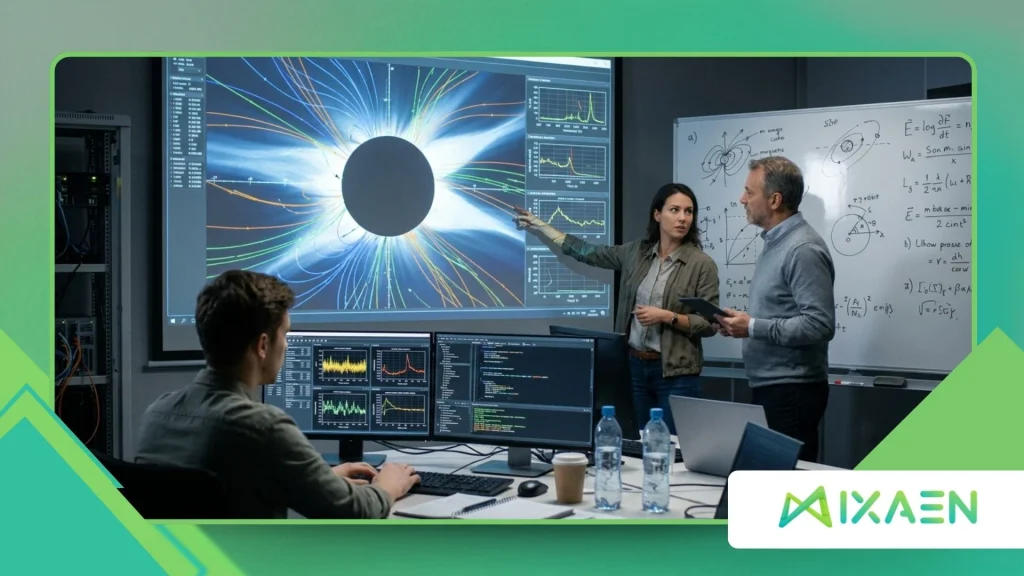
Why are accurate coronal maps crucial for Earth?
Accurate maps of the solar atmosphere serve as our primary early warning system against severe space weather events capable of crippling modern technological infrastructure.
Coronal streamers often destabilize, releasing colossal clouds of magnetized plasma that can trigger intense geomagnetic storms upon impacting Earth’s magnetosphere.
With precise spatial data regarding these streamer belts, forecasters can anticipate the trajectory, speed, and impact time of incoming solar wind disturbances with remarkable accuracy.
This advanced lead time allows satellite operators, power grid managers, and aviation authorities to implement protective measures well in advance.
Recent studies published by solar physics consortia demonstrate that assimilating real-time coronal maps into operational simulation codes reduces arrival-time error margins by nearly forty percent.
This tangible improvement safeguards multi-billion-dollar satellite fleets from irreversible radiation damage and prevents widespread electrical blackfalls across vulnerable high-latitude power grids.
Furthermore, accurate forecasting mitigates radiation risks for astronauts operating aboard orbital platforms and deep-space exploration missions.
Protecting global technological assets increasingly depends on continuous, high-resolution monitoring of these fundamental solar structures.
Also read: Solar Tornadoes: What They Are and Why They Matter
What role do modern spacecraft play in data collection?
A constellation of advanced solar observation platforms provides the continuous stream of multi-spectral imagery required to maintain up-to-date coronal maps.
Missions equipped with high-resolution coronagraphs capture dynamic changes in the corona from unique orbital vantage points that bypass atmospheric distortion entirely.
These spacecraft transmit terabytes of high-cadence data daily to ground stations, where automated processing pipelines synthesize the information into comprehensive global models.
The seamless integration of real-time telemetry ensures that researchers and forecasters maintain a continuous, unblinkered view of solar activity.
Synergy between multiple observation points allows stereoscopic viewing of complex magnetic loops, unveiling hidden structural details that single-point missions might overlook.
Advanced onboard processing algorithms filter noise and isolate transient features, accelerating the turnaround time for critical space weather alerts.
As space agencies continue deploying next-generation observation hardware, the temporal and spatial resolution of our solar maps will expand exponentially.
This technological leap promises a future where solar storms can be predicted with the same precision as terrestrial weather systems.
What Are the Major Challenges and Future Breakthroughs in Solar Physics?
What computational hurdles do astrophysicists face?
Reconstructing three-dimensional coronal structures demands immense computational power due to the non-linear physics governing magnetized plasma and magnetohydrodynamic turbulence.
Simulating the solar corona requires solving complex differential equations across vast spatial scales, ranging from dense microscopic magnetic footpoints to the vast expanses of the heliosphere.
Supercomputing clusters process massive data arrays to match theoretical models with actual observational imagery, a task that often consumes thousands of processor hours per simulation run.
Overcoming these computational bottlenecks remains a primary objective for research institutions striving for real-time predictive capabilities.
Data latency also presents a persistent challenge, as raw telemetry must travel millions of kilometers and undergo rigorous calibration before entering predictive simulation pipelines.
Researchers continually refine machine learning algorithms to automate feature recognition and streamline the data assimilation process without sacrificing scientific rigor.
These automated systems quickly flag anomalous structural changes, alerting human operators to impending solar eruptions faster than traditional manual analysis ever allowed.
Bridging the gap between raw data collection and actionable forecasting requires continuous innovation in both software architecture and hardware design.
Read more: The Parker Solar Probe: Flying Into the Heart of Our Star
What innovations will shape the next decade of research?
The upcoming deployment of next-generation ground-based solar telescopes and advanced orbital coronagraphs will revolutionize our understanding of fine-scale coronal dynamics.
Enhanced spatial resolution will reveal elusive magnetic reconnection sites and micro-instabilities that currently elude detection in existing observational datasets.
Researchers are also integrating artificial intelligence models with physics-based simulations to predict coronal evolution with unprecedented speed and accuracy.
These hybrid modeling frameworks promise to transform theoretical solar physics into an exact operational science.
| Observational Parameter | Traditional Methods | Next-Generation Techniques |
| Temporal Resolution | Hours to Days | Real-Time (Minutes) |
| Spatial Detail | Low-Resolution Global View | High-Resolution Fine Structures |
| Data Processing | Manual Inversion & Analysis | Automated AI-Driven Synthesis |
| Predictive Accuracy | Moderate Error Margins | High-Precision Forecasting |
Final Perspectives on Solar Research Advancement
The rapid evolution of Coronal Streamer Mapping marks a transformative milestone in our ongoing quest to understand and predict the behavior of our dynamic star.
By bridging observational astronomy with advanced computational modeling, modern science has unlocked new pathways for safeguarding global infrastructure against severe space weather disruptions.
Continued investment in solar observation technology guarantees even deeper insights into the fundamental forces shaping our solar system.
Share your thoughts or questions about these stellar discoveries in the comments below.
Frequently Asked Questions About Solar Mapping
What is the primary purpose of tracking coronal streamers?
Tracking coronal streamers helps scientists understand solar wind origins and forecast space weather events that impact Earth’s technology.
How frequently are new coronal maps generated by researchers?
Modern automated observatories update global coronal models continuously, often processing fresh telemetry data in near real-time.
Why are solar storms dangerous to modern infrastructure?
Intense solar storms induce geomagnetically induced currents that can damage power grids, disrupt satellite communications, and endanger astronauts.
What technology is used to block blinding sunlight?
Specialized optical instruments called coronagraphs use internal occulters to simulate total solar eclipses, revealing the faint corona.
How can the public access current space weather reports?
Space weather data and forecasts are publicly available through official scientific agencies like the National Oceanic and Atmospheric Administration.
