
Why Solar Polar Vortices Could Reshape Future Solar Cycle Models
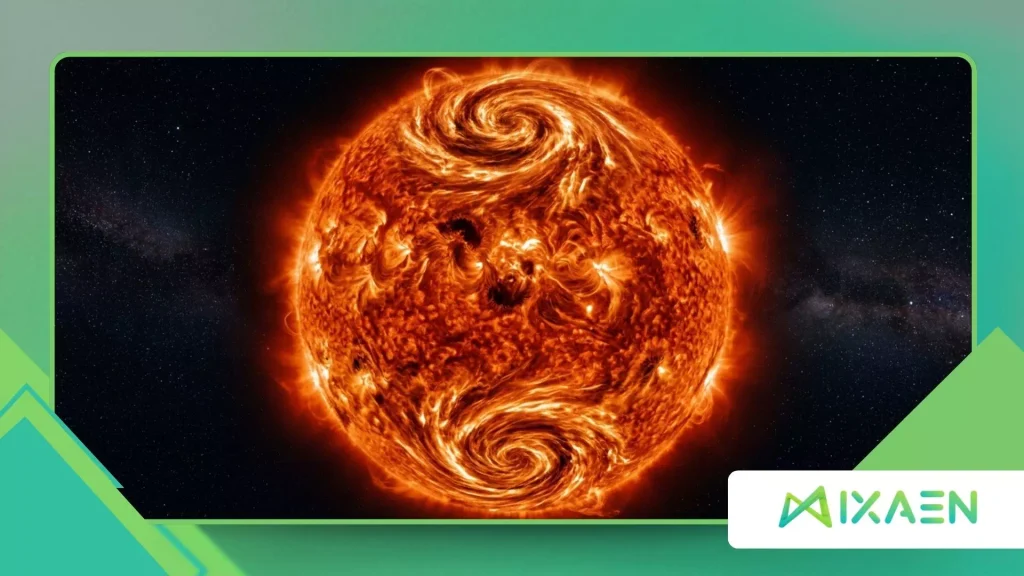
Solar Polar Vortices challenge conventional heliophysics models by revealing unexpected atmospheric circulation patterns at our star’s extreme northern and southern caps.
Modern space weather observatories tracking intense solar cycles uncover swirling plasma vortex structures that fundamentally alter how researchers predict coronal mass ejections.
Space physicists increasingly realize that polar magnetic dynamics dictate overall solar activity intensity far more than traditional sunspot counts alone.
Understanding these high-latitude circulation systems marks a massive paradigm shift in modern stellar astrophysics.
Navigating this complex solar frontier requires examining high-latitude magnetic fields, plasma circulation mechanics, and advanced observational telemetry data.
Researchers worldwide utilize space-based coronagraphs to map these elusive vortices before solar maximum peaks intensify radiation risks.
Think of these swirling polar regions as the invisible weather engines governing our entire interplanetary neighborhood. Are you ready to explore how polar plasma dynamics reshape space weather forecasting?
Navigating High-Latitude Solar Dynamics
- Investigating high-latitude plasma circulation and polar vortex formation mechanics.
- Analyzing magnetic flux transport mechanisms driving future solar cycle intensity.
- Evaluating space weather forecasting improvements using advanced polar telemetry data.
- Measuring coronal mass ejection trajectories influenced by high-latitude magnetic caps.
What Are Solar Polar Vortices and How Do They Form?
Solar Polar Vortices represent massive rotating atmospheric structures confined near the Sun’s high-latitude regions, operating similarly to terrestrial polar jet streams.
Plasma flowing from lower latitudes converges toward the poles, where intense Coriolis-like magnetic forces twist the material into colossal cyclonic spirals.
Imagine a giant atmospheric whirlpool spinning furiously above the solar cap, churning magnetized gas into complex thermodynamic patterns.
Recent helioseismic data published by NASA solar dynamics researchers confirm that these hidden vortices regulate internal stellar rotation speeds.
Advanced imaging from space probes reveals that these high-latitude cyclones undergo dramatic structural shifts during different phases of the eleven-year solar cycle.
When magnetic flux accumulates rapidly near the poles, these vortex systems intensify, altering global magnetic field configurations instantly.
Solar physicists monitor these rotational anomalies closely to anticipate severe geomagnetic storms heading toward Earth.
High-latitude circulation mechanics remain the ultimate key to unlocking accurate stellar weather predictions.
How Does Plasma Circulation Drive Vortex Rotation?
Convective currents transport hot plasma upward from the solar interior, interacting with differential rotation rates across various stellar latitudes.
As superheated material reaches the polar caps, magnetic tension forces the flowing plasma into closed rotational vortex loops.
++ How the Sun’s Magnetic Field Shapes the Entire Solar System
Why Are High-Latitude Regions Difficult to Observe?
Earth-based telescopes view the Sun from an equatorial plane, leaving extreme polar caps obscured by foreshortening perspective distortions.
Dedicated polar orbiters finally provide direct visual telemetry necessary to analyze these elusive high-latitude cyclonic structures accurately.
Why Do These Vortices Disrupt Traditional Cycle Models?
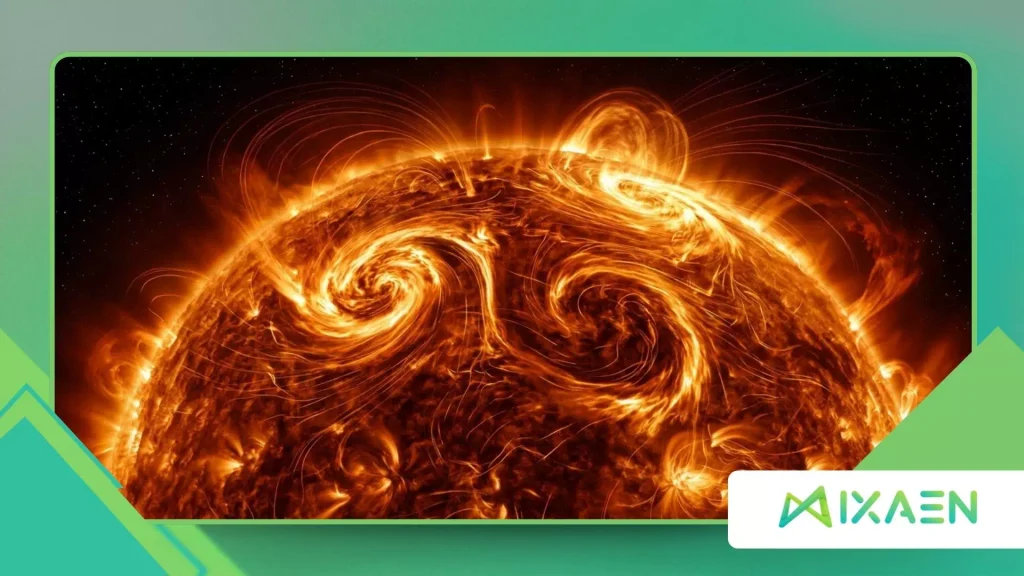
Standard solar prediction models historically relied almost exclusively on equatorial sunspot counts, completely ignoring high-latitude magnetic circulation phenomena.
The discovery of persistent polar vortices proves that sub-surface dynamo processes operate independently across different latitudinal bands.
Think of relying only on surface traffic to predict regional weather while ignoring massive jet streams rushing overhead.
Astrophysical research institutes note that incorporating polar vortex telemetry corrects severe forecasting errors observed during recent solar maximums.
When high-latitude vortices accelerate unexpectedly, they trigger premature magnetic reversals that catch forecasters off guard and intensify global space weather events.
Modern predictive algorithms now integrate polar circulation metrics to simulate coronal mass ejections with unprecedented precision.
Space weather agencies depend on these advanced models to protect vulnerable satellite constellations and terrestrial power grids from sudden solar flares.
Accounting for polar dynamics ensures robust technological infrastructure defense.
Also read: Solar Tornadoes: What They Are and Why They Matter
How Do Magnetic Reversals Alter Polar Circulation?
During peak solar activity, the Sun’s magnetic poles undergo complete polarity inversion, disrupting established vortex rotation patterns violently.
This magnetic turbulence accelerates plasma ejection rates across interplanetary space.
Read more: The Parker Solar Probe: Flying Into the Heart of Our Star
What Makes Traditional Sunspot Models Inadequate?
Sunspots track only localized active regions near the solar equator, missing the overarching global magnetic currents driving entire cycle fluctuations.
Ignoring polar caps creates massive blind spots in long-term solar intensity forecasts.
How Will Next-Generation Telemetry Improve Space Weather Forecasting?
Future solar observation missions deploying specialized high-latitude orbiters will continuously map Solar Polar Vortices without equatorial perspective limitations.
Enhanced magnetograph instruments capture real-time vector magnetic fields swirling directly above the solar caps, providing early warning signals for severe geomagnetic storms.
Imagine outfitting meteorologists with radar satellites directly above Earth’s poles to track hurricanes days before landfall.
These technological leaps transform space weather forecasting from reactive emergency response into proactive planetary defense.
Global defense agencies and telecommunications operators invest heavily in advanced solar modeling software driven by continuous polar telemetry feeds.
Accurate early warnings allow power grid operators to reroute electrical loads safely during high-intensity coronal mass ejection impacts.
Understanding high-latitude stellar dynamics secures our modern digital civilization against devastating solar disruptions. Scientific innovation directly safeguards our technological future.
What Role Do Polar Orbiters Play in Telemetry?
Dedicated spacecraft traveling outside the ecliptic plane gaze directly down upon the solar poles, capturing unobstructed data regarding vortex rotation speeds.
This direct perspective eliminates previous observational blind spots entirely.
How Do Early Warning Systems Protect Infrastructure?
Detecting anomalous vortex shifts weeks in advance grants satellite operators vital time to power down sensitive electronics before high-energy radiation strikes.
Proactive mitigation prevents permanent orbital equipment failures.
Solar Cycle Prediction Method Comparison Matrix
The structured table below contrasts traditional sunspot-based forecasting models with advanced polar vortex telemetry approaches across key metrics.
| Predictive Dimension | Traditional Sunspot Models | Advanced Polar Vortex Telemetry |
| Observation Angle | Restricted equatorial plane perspective | Direct high-latitude polar orbiter view |
| Forecast Accuracy | Moderate short-term reliability | High long-term predictive precision |
| Core Variable Tracked | Equatorial sunspot emergence frequency | High-latitude plasma circulation and cyclonic spin |
| Infrastructure Protection | Reactive warning after flare eruption | Proactive mitigation before solar maximum peaks |
Securing Earth’s Technological Future Through Stellar Insights
Solar Polar Vortices represent a revolutionary frontier in heliophysics, proving that extreme high-latitude dynamics govern our star’s entire magnetic heartbeat.
By integrating advanced polar telemetry into modern prediction models, scientists can finally anticipate severe space weather events with absolute confidence.
Embracing these paradigm-shifting discoveries ensures our global technological infrastructure remains resilient against future solar maximum outbursts.
Take a moment to reflect on how solar activity impacts our connected digital world today. How will your organization prepare for upcoming space weather shifts? Share your insights in the comments below!
Frequently Asked Questions
What are Solar Polar Vortices?
They are massive rotating atmospheric plasma structures located near the Sun’s extreme northern and southern caps, functioning similarly to terrestrial polar jet streams.
Why do polar vortices disrupt traditional solar models?
They prove that global magnetic dynamo processes operate across high latitudes independently of equatorial sunspot counts, creating forecasting blind spots in older models.
How do space scientists observe high-latitude solar regions?
Researchers utilize specialized space-based solar orbiters traveling outside the equatorial plane to capture unobstructed telemetry data directly above the polar caps.
Can solar polar dynamics affect everyday life on Earth?
Yes, intense activity driven by polar magnetic shifts can trigger severe geomagnetic storms that disrupt satellite communications, GPS navigation, and terrestrial power grids.
Why are modern forecasting models incorporating polar telemetry?
Integrating high-latitude circulation data provides early warning signals for coronal mass ejections, protecting vulnerable global technological infrastructure from sudden solar radiation damage.
