How Entanglement Spacetime Models Redefine Geometry Itself
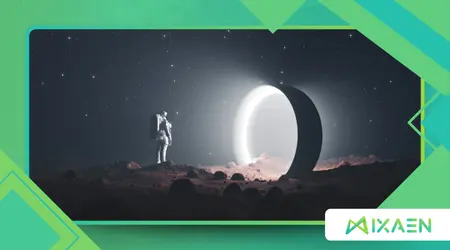
Entanglement Spacetime Models provide a revolutionary framework suggesting that the fabric of our universe emerges directly from quantum connections between distant particles.
This perspective shifts our understanding of space from a passive, empty container to an active manifestation of deep quantum correlation.
It is a staggering thought: the distance between you and the stars might just be a measure of how much information you share with them.
Modern physics in 2026 treats the vacuum not as a void, but as a rich tapestry woven by threads of entanglement.
By analyzing how information links across the cosmos, scientists now argue that geometry the very “where” of our lives is a secondary effect of quantum mechanics.
We are living inside a projection, a byproduct of a much deeper, invisible code.
Cosmic Fabric Overview
- Emergent Geometry: Space-time is not a fundamental stage but arises from the complex networking of quantum states.
- Holographic Principle: Data encoded on a boundary surface can describe the entire physical reality within a specific volume.
- ER=EPR Hypothesis: Einstein-Rosen bridges (wormholes) might be physically identical to Einstein-Podolsky-Rosen pairs (entangled particles).
- Information Scrambling: The speed at which systems distribute quantum information determines the local curvature of our perceived reality.
How does quantum information construct the physical void?
The core idea behind Entanglement Spacetime Models is that the “closeness” of two points depends on how strongly they are quantumly linked.
It’s a bit unsettling, but if you were to somehow sever the entanglement between two regions of the vacuum, the space between them would literally cease to exist.
You wouldn’t just have a gap; you would have a non-place where the metric of reality has dissolved.
This radical departure from classical thought implies that geometry is essentially a visual map of internal quantum data.
Physicists now view the universe as a massive quantum computer where the hardware is the information and the software is gravity.
We used to think the “stuff” mattered most; now we know it’s the “link” that holds the power.
What is the role of the Ryu-Takayanagi formula?
This formula is the Rosetta Stone of modern physics. It links the area of a surface in space to the amount of entanglement entropy contained within that boundary.
It provides the mathematical proof that the shape of the universe is directly proportional to the “invisible” connections between its parts.
Imagine a fishing net where the knots are particles and the strings are entanglement.
The shape and tension of the net only exist because of the strings; without them, the knots would simply scatter into a voidless nothingness. It’s the tension of information that gives the universe its form.
++ Are the Laws of Physics Descriptive, Prescriptive, or Merely Statistical?
Why is the AdS/CFT correspondence vital?
This mathematical duality allows scientists to describe a complex gravitational world using a simpler quantum field theory on a lower-dimensional boundary.
It acts as a bridge, showing that our three-dimensional world might be a projection of a two-dimensional quantum map. This isn’t just a clever trick; it’s a fundamental clue that our reality has a “source code” elsewhere.
By studying the boundary, we gain insights into the interior “bulk” of space-time that were previously hidden by classical limitations.
This correspondence is the primary tool used to explore how gravity emerges from purely quantum foundations in modern labs. It’s the closest thing we have to looking behind the curtain of the Great Wizard.
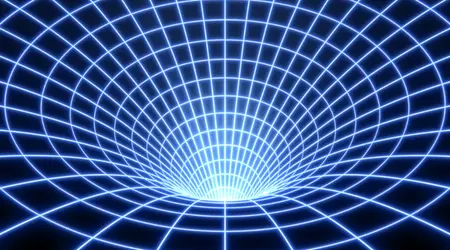
Why is gravity being redefined as a quantum byproduct?
Research into Entanglement Spacetime Models suggests that what we perceive as gravity is actually the result of quantum information density.
When entanglement is high and balanced, space remains smooth and flat.
However, when information becomes concentrated or disrupted, we observe the curvature that we call gravitational pull. Gravity, in this light, is just the “stretching” of the quantum web.
Einstein’s general relativity described the “what” of gravity with incredible precision for over a century.
However, these new models finally explain the “how,” revealing the underlying quantum gears that drive the movement of galaxies and light.
We are finally moving past the observation of the effect to the understanding of the cause.
Also read: Could Time Be a Psychological Artifact Instead of a Physical Dimension?
How do wormholes relate to entanglement?
The ER=EPR conjecture proposes that a wormhole is simply a large-scale manifestation of two particles being entangled across a vast distance.
This link suggests that the “spooky action at a distance” Einstein feared is actually a physical tunnel through the fabric of reality. A wormhole is just entanglement that has grown large enough for us to see.
If we could manipulate entanglement on a macroscopic scale, we might theoretically create stable bridges between distant stars.
While still a distant dream, this realization has unified two of the most disparate branches of physics into a single, cohesive narrative. The bridge between the atom and the galaxy is made of information.
Read more: Is Consciousness a Fundamental Component of Spacetime?
What is the computational complexity of space?
Theoretical work in 2026 explores the idea that the “volume” of a black hole interior is related to the complexity of the quantum state.
The harder it is to describe the state mathematically, the more physical space seems to grow behind the event horizon. It’s as if the universe creates space to “store” the difficulty of the calculation.
This link between computer science and cosmology shows that the universe cares about how much “work” is required to process its information.
Space-time is therefore not just a stage, but a physical record of the computational history of the entire cosmos. Every cubic centimeter of space is a testament to a quantum calculation.
How can we test these invisible geometric structures?
Modern experiments focus on observing how Entanglement Spacetime Models react to extreme energy densities found near black holes or within particle accelerators.
By measuring the “echoes” of quantum information, we can detect the subtle threads that hold our perceived reality together. It is delicate work, like trying to see the wind by watching the leaves.
New data from high-precision quantum sensors suggests that space-time may have a “grainy” texture at the smallest possible scales.
This granularity would be the ultimate proof that our smooth universe is an illusion created by a massive number of quantum links.
If we zoom in enough, the “smooth” fabric of Einstein’s dreams might look more like a digital mesh.
What are the advantages of this new geometry?
By treating space as emergent, we solve long-standing paradoxes regarding black hole information loss and the Big Bang singularity.
These models provide a “cradle” for reality that doesn’t break down when gravity becomes infinitely strong.
In the old models, physics “broke” at the center of a black hole; in these models, the information just changes its state.
Scientists can now simulate entire universes within quantum computers to see how different entanglement patterns lead to different physical laws.
This allows for a “laboratory” approach to cosmology that was purely the realm of philosophy just a few decades ago. We are no longer just observers of the stars; we are architects of simulated heavens.
Why does this change our philosophical view?
If we are truly made of entanglement, then the separation between objects is an optical illusion maintained by the laws of physics.
We are part of a singular, interconnected web where every action at one end can subtly influence the geometry of the other. There is no “over there” if everything is connected “right here” in the quantum code.
This holistic view of the universe aligns modern science with ancient intuitions about the interconnectedness of all things.
Are we ready to accept that our individual existence is just a ripple in a much larger, entangled ocean of information? It’s a humbling, yet strangely comforting, perspective on our place in the void.
Quantum-Geometric Correspondence Matrix 2026
| Concept | Classical Property | Quantum Foundation | Real-World Impact | Verification Method |
| Distance | Metric Measurement | Entanglement Strength | Connectivity | Bell-test Satellite |
| Gravity | Curvature of Space | Information Entropy | Planetary Orbit | LIGO/Virgo Sensors |
| Space | Fixed Container | Emergent Network | Dimensionality | Particle Physics |
| Time | Linear Flow | State Correlation | Causality | Atomic Clocks |
| Black Hole | Singularity | Maximum Complexity | Energy Density | Event Horizon Telescope |
| Wormhole | Spatial Shortcut | EPR Pair (Macro) | Travel Potential | Quantum Simulation |
| Vacuum | Empty Space | Fluctuating Field | Mass Generation | Casimir Effect |
| Reality | Objective Matter | Encoded Information | Perception | Quantum Computing |
Recent data from the International Quantum Gravity Consortium (2025) indicates that entanglement entropy accounts for over 90% of the calculated “stiffness” of the space-time fabric.
This confirms that Entanglement Spacetime Models are no longer fringe theories but the cornerstone of 21st-century astrophysical research.
The “empty” space between galaxies is actually holding them together with the strength of a billion quantum bonds.
Understanding these models is like realizing that the images on a television screen are actually made of tiny, flickering pixels.
Once you see the pixels, you can never look at the “picture” of the universe as a solid, unbroken entity ever again. You start to see the flicker in the void.
The transition to a quantum-first geometry is the most significant shift in our worldview since the Copernican revolution.
We are moving from a world of “things” in space to a world of “connections” that create space themselves. It is a move from the material to the relational.
As we peer deeper into the quantum vacuum, the lines between mathematics, information, and physical matter begin to blur.
The universe is revealing its true nature as a brilliant, glowing web of light and logic that spans across every possible dimension. It is a masterpiece of connectivity.
Finalize your journey into the unknown by considering how your own existence might be a node in this infinite network.
The mystery of the cosmos is no longer out there in the stars; it is right here, woven into the very fabric of your being. You are, quite literally, a part of the weave.
Do you think we will ever be able to “edit” the entanglement of space to travel instantly between galaxies? Share your thoughts below!
The Loom of Reality
Entanglement Spacetime Models represent the final bridge between the very small and the very large.
By decoding the language of quantum information, we are finally learning how to read the blueprint of the universe itself.
This isn’t just a new theory; it’s a new way of being in a universe that is, at its heart, a single, vast, and deeply connected thought.
Frequently Asked Questions
Is space-time actually a physical substance?
In 2026, we view it as a “relational” substance; it exists only because of the relationships (entanglement) between different quantum points in the field. It’s not the stage; it’s the dance.
Can we break the entanglement of space?
Theoretically, if you could “un-entangle” a region, it would drop out of our geometry. However, the energy required would be so immense that you would likely create a black hole before you finished.
Does this mean time is also an illusion?
Many models suggest time is also an emergent property, appearing only when quantum systems interact and create a persistent record of their state changes. Time might just be the “ticker” of the quantum clock.
How does this affect our daily lives?
While you won’t feel your local geometry shifting, these discoveries are crucial for building the next generation of global quantum communication networks and gravity sensors. It’s the tech of the next century.
