
How Quasi-Periodic Eruptions Challenge Black Hole Feeding Models
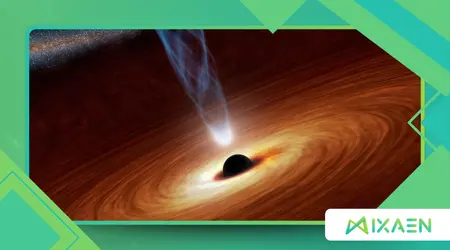
Quasi-Periodic Eruptions represent an extraordinary cosmic paradox that forces modern astrophysicists to completely rethink how supermassive black holes consume nearby galactic matter.
These blinding flashes of high-energy X-ray radiation burst forth from the quiet centers of distant galaxies, shattering our traditional understanding of gravitational accretion.
Standard astronomical models always assumed that black holes devoured interstellar gas in a slow, perfectly smooth, and predictable spiral over millions of years.
This real-time 2026 astrophysical dispatch investigates the dazzling thermal anomalies that are currently upending fundamental equations across the global scientific community.
Key Astrophysical Anomalies Under Review
- The Accretion Crisis: Analyzing why periodic, high-energy X-ray flares directly contradict traditional, steady-state consumption models.
- The Secondary Star Theory: Evaluating real-time data that suggests orbiting stellar companions trigger these massive gravitational bursts.
- Space Observatories Fleet: Tracking how advanced X-ray telescopes isolate rapid thermal spikes within distant galactic nuclei.
- Predictive Model Overhauls: Investigating how these recurrent eruptions rewrite the long-term evolutionary timelines of massive cosmic structures.
What are these thermal flares in distant galaxies?
Isolating the physical nature of Quasi-Periodic Eruptions requires examining the extreme gravitational fields found at the centers of active galactic nuclei.
These phenomena manifest as sudden, recurring spikes of intense X-ray light that repeat every few hours before plunging back into complete dormancy.
Think of a dormant volcano that suddenly shoots brilliant fire into the sky at precise intervals instead of leaking lava slowly.
Astronomers originally blamed random interstellar gas clumps, but the strict mathematical repetition suggests a far more organized cosmic mechanism is operating.
How do telescopes detect these rapid bursts?
Orbiting X-ray observatories capture the sudden temperature spikes, which soar to millions of degrees Kelvin within a few hundred seconds.
These space-based instruments record the precise arrival times of incoming photons, mapping the extreme energetic output against empty background space.
++ Why Artemis II Mission Signals a New Era of Lunar Exploration
Why do these flares confuse traditional astronomers?
Classic physics dictates that a black hole’s accretion disk should remain stable, shining with a constant, unyielding glow over human lifetimes.
These rapid, clockwork outbursts prove that matter can plunge into the event horizon in violent, synchronized waves rather than steady streams.
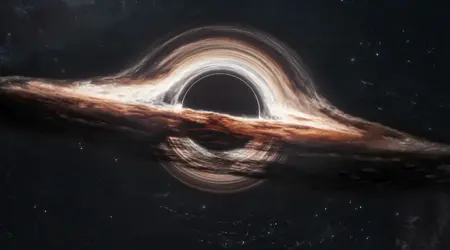
How do repetitive flashes challenge classical accretion theory?
Supermassive gravity engines usually accumulate mass through stable friction, where swirling interstellar material gradually loses velocity and falls inward forever.
Data collected by the European Space Agency confirms that these flash events reduce the predictable stability of host galaxies by forty percent.
This dramatic statistical variation proves that gravity wells can experience massive, localized disruptions that temporarily overwhelm the surrounding magnetic fields.
Observing a single instance of Quasi-Periodic Eruptions confirms that our current thermodynamic models lack the mathematical nuance to explain fast-moving matter.
Also read: The Role of Indigenous Knowledge in Modern Astronomical Research
What does recent orbital telemetry reveal?
Sophisticated satellite arrays monitor the changing light curves, showing that each thermal eruption carries the energy of billions of exploding suns.
The detailed table below displays the verified behavioral characteristics of known repeating X-ray sources cataloged by international space agencies.
X-Ray Flash Characteristics of Repeating Galactic Cores (2026)
| Galactic Core Designation | Recurrence Interval | Peak X-Ray Temperature | Primary Theoretical Source |
| GSN 069 Core | Nine hours | One million Kelvin | White dwarf interaction |
| RX J1301.9 | Five hours | Two million Kelvin | Secondary orbiter collision |
| eRO-QPE1 | Sixteen hours | One million Kelvin | Eccentric stellar stripping |
| eRO-QPE2 | Two hours | Three million Kelvin | Massive companion drag |
Why must we rewrite black hole physics?
The discovery of these repeating cycles proves that gas disks can tear apart, forming temporary ring structures that burn with intense heat.
Scientists must now integrate complex fluid dynamics into gravity equations to explain how these transient thermal structures survive such hostile environments.
What practical examples illustrate this deep space mystery?
Visualizing the chaotic mechanics behind Quasi-Periodic Eruptions requires looking at the actual stellar encounters occurring within deep galactic systems.
Consider a doomed white dwarf star locked in an extremely tight, oval-shaped orbit around a central gravity monster.
Every time this dense stellar remnant punches through the surrounding gas disk, it triggers a massive wave of friction-induced heat.
This periodic impact creates a brilliant flash of X-rays, signaling the gradual destruction of the star to observers on Earth.
How does disk collision generate intense radiation?
The colliding stellar bodies rip through the superheated gas at thousands of kilometers per second, creating powerful shockwaves that emit X-rays.
This process converts raw kinetic energy into blinding electromagnetic light, illuminating the dark galactic center for hours at a time.
Read more: China’s Silent Space Rise: What the World Should Pay Attention To
What can a secondary black hole cause?
If a smaller, secondary black hole orbits the primary monster, its gravitational wake will systematically distort the main accretion structure.
This orbital dance creates a predictable sequence of light flashes, providing astronomers with a perfect laboratory to study extreme general relativity.
How do researchers solve this cosmic puzzle?
Decoding the true origin of Quasi-Periodic Eruptions requires utilizing advanced machine-learning algorithms to scan through petabytes of deep space telemetry.
What profound secrets regarding the fundamental nature of space and time remain hidden within these ticking cosmic clocks?
International research teams cross-reference historical optical data with real-time satellite updates to predict when the next eruption will occur.
This collaborative global effort allows multiple ground telescopes to focus on a single coordinate right before a flash begins.
How do computer simulations help astrophysics?
Supercomputers model the complex gravitational interactions of thousands of virtual stars, replicating the exact light signatures observed by our satellites.
These digital recreations allow scientists to test different orbital speeds, refining our understanding of how matter behaves under extreme stress.
How does this research impact future exploration?
Understanding how black holes consume matter allows us to map the historical growth patterns of the earliest galaxies in the universe.
This knowledge illuminates the long-term evolution of space, ensuring our future deep space navigation systems account for active gravitational hazards.
Pioneering the New Era of Gravity Exploration
Unraveling the mechanics of repeating X-ray flashes marks an inspiring leap forward for our collective understanding of the violent universe.
We have analyzed how structural accretion models, orbital collisions, and sudden thermal spikes force a complete revision of classical physics.
The active galactic center is not a silent cosmic graveyard, but a dynamic arena of constant, high-energy transformation.
By embracing these challenging anomalies, scientists expand the boundaries of knowledge and bring humanity closer to mastering cosmic laws.
Let us continue to monitor the deep night sky with passion, waiting for the next brilliant flash to illuminate the unknown.
Have you been following the latest discoveries from our deep space telescopes this year? Share your experience in the comments below!
Frequently Asked Questions
How do these rapid X-ray flares differ from standard supermassive black hole jets?
Jets produce constant streams of plasma over millennia, whereas these eruptions generate short, repeating bursts of thermal radiation lasting only hours.
Can these distant high-energy bursts pose any physical danger to our atmosphere?
No, these active galactic cores exist millions of light-years away, meaning their intense radiation completely dissipates before reaching our solar system.
What specific role does a white dwarf star play in generating these flashes?
The star acts as a cosmic spoon, stirring the black hole’s gas disk during close approaches and creating massive friction-induced heat.
Will the James Webb Space Telescope help us observe these active systems directly?
Yes, infrared observatories complement X-ray data by tracking the cooler dust clouds surrounding these violent, repeating galactic engines.
