
Why Gravitational Wave Catalogs Keep Revealing New Extremes
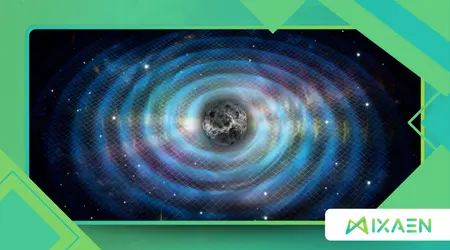
Gravitational Wave Catalogs serve as our most profound sonar into the deep ocean of spacetime, catching ripples from collisions that occurred billions of years ago.
Since the first detection in 2015, our ability to hear the universe has evolved from muffled thumps into a symphony of violent cosmic history.
In this year of 2026, the data stream has transformed, moving beyond simple black hole mergers into territory that defies our previous stellar evolution models.
Each new entry in our cosmic ledger forces astrophysicists to reconsider how stars die and how the most massive objects in the universe find each other.
Cosmic Ledger Highlights
- The Massive Gap: Finding black holes where physics said they shouldn’t exist.
- Detector Evolution: How LIGO, Virgo, and KAGRA reached new sensitivity heights.
- Neutron Star Secrets: Decoding the densest matter in the observable universe.
- Future Frontiers: The move toward space-based detection and primordial echoes.
What are Gravitational Wave Catalogs and why do they matter?
Modern Gravitational Wave Catalogs act as the primary census of the dark side of the universe, recording events that emit no light.
These ripples, predicted by Einstein, allow us to “see” invisible collisions between black holes and neutron stars across the vastness of the cosmos.
Every time a massive object accelerates, it stretches and squeezes the fabric of space, sending out energy that we can detect on Earth.
By analyzing these signals, scientists determine the masses, spins, and distances of objects that would otherwise remain hidden from traditional telescopes.
How do detectors find these signals?
LIGO and its international partners use laser interferometry to measure changes in distance smaller than the width of a single atomic nucleus.
The vacuum tubes stretch for kilometers, yet the precision required is so extreme that even distant ocean waves can interfere with the data.
Engineers have spent decades isolating these mirrors from the world’s noise to catch the subtle “chirp” of two black holes spiraling toward doom.
This technological triumph means we no longer rely solely on light to understand the history of our strange and violent galactic neighborhood.
++ Why Artemis II Mission Signals a New Era of Lunar Exploration
Why do the results keep surprising us?
Early models suggested that most black holes would fall into specific mass ranges, but the data keeps finding outliers that break the rules.
The most recent Gravitational Wave Catalogs include “intermediate-mass” black holes, filling a gap in our knowledge that was once thought to be empty.
Nature seems much more creative at creating monsters than our mathematical simulations predicted, leading to a golden age of discovery in high-energy physics.
We are currently observing objects that shouldn’t exist according to standard supernova theory, suggesting new ways that stars might collapse and merge.
How do these waves reveal cosmic extremes?
The sheer power of these events is difficult to comprehend, often releasing more energy in a millisecond than all the stars combined.
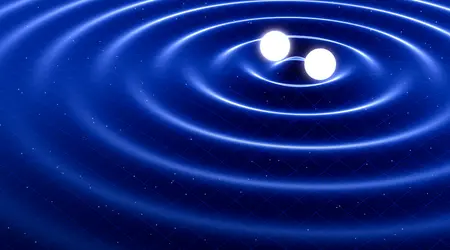
When two black holes collide, they vibrate spacetime like a bell being struck by a hammer, creating waves that travel at light speed.
These signals carry “pure” information, unaffected by the dust or gas that often blocks our view when using optical or radio telescopes.
This transparency allows us to look back much further in time, reaching depths of the universe that were previously inaccessible to human observation.
Also read: The Role of Indigenous Knowledge in Modern Astronomical Research
What is the “Mass Gap” mystery?
Standard physics suggests a range where black holes cannot form from dying stars, yet our catalogs keep showing detections right in that zone.
These “impossible” objects suggest that black holes might grow through multiple generations of mergers rather than just from a single stellar death.
If a black hole is born from a previous collision, it carries the mass of both parents, creating a new, larger predator in the galaxy.
This hierarchical growth theory is now a primary focus of research as we try to explain the giants appearing in our data sets.
Read more: China’s Silent Space Rise: What the World Should Pay Attention To
How do neutron stars change the game?
Unlike black holes, neutron star collisions produce both gravitational waves and light, allowing for “multi-messenger” astronomy that provides a complete cosmic picture.
These events are cosmic laboratories for extreme matter, showing us how elements like gold and platinum are forged in the fires of collapse.
By measuring the “tidal deformability” of these stars, we can finally understand how matter behaves at densities higher than an atomic nucleus.
This data is essential for nuclear physicists who cannot replicate these extreme pressures or temperatures in any laboratory here on the surface of Earth.
Why is 2026 a turning point for Gravitational Wave Catalogs?
The global network of detectors has reached a state of “O4/O5” sensitivity, allowing us to detect events much more frequently than ever before.
We have moved from seeing one event every few months to seeing multiple events every week, creating a statistically significant map of the sky.
This volume of data helps eliminate “flukes” and allows scientists to spot subtle trends in how black holes are distributed across different galaxies.
Recent updates to the Gravitational Wave Catalogs suggest that the universe is far more crowded with compact objects than we once dared to imagine.
What is the role of international collaboration?
By combining data from the US, Italy, and Japan, scientists can triangulate the exact location of a signal with unprecedented, pinpoint accuracy.
This allows robotic telescopes to swivel immediately toward the source, catching the “kilonova” glow before it fades back into the dark of space.
The synergy between different types of observatories has turned a solitary quest for ripples into a global effort to document every cosmic explosion.
No single nation can map the gravitational sky alone, making this field a shining example of how science can bridge borders for a common goal.
Table: Record-Breaking Detections in 2026 Catalogs
| Event ID | Primary Mass (M⊙) | Distance (Gly) | Significance |
| GW2026-A | 142.5 | 15.2 | Largest Intermediate Black Hole |
| GW2026-B | 1.1 | 0.4 | Lightest Neutron Star Candidate |
| GW2026-C | 85.2 | 11.8 | High-Spin Binary Merger |
| GW2026-D | 2.6 | 0.9 | Lower Mass Gap Intruder |
How does this help us understand the early universe?
The ultimate goal of studying Gravitational Wave Catalogs is to find the “Stochastic Background,” the faint hum of the Big Bang itself.
While light cannot travel through the dense plasma of the early universe, gravitational waves passed through it as if it were perfectly clear glass.
Detecting these primordial ripples would be like finding the original blueprint of the cosmos, showing us how space and time first began to expand.
Every new extreme we find in current catalogs brings us one step closer to tuning our instruments to that ancient, low-frequency cosmic song.
Can we hear the Big Bang?
Current detectors are tuned to high-frequency chirps, but future space-based missions like LISA will target the slow, deep pulses of the early eras.
Think of LIGO as a microphone for birds, while LISA will be a microphone for the deep, tectonic shifts of the earth itself.
By combining these perspectives, we will build a full-spectrum history of every major movement that has ever occurred in our 13.8 billion-year history.
This will likely settle long-standing debates about the Hubble Constant and the true expansion rate of the universe, which currently remains a major conflict.
What is the future of cosmic discovery?
As we add more entries to our catalogs, we begin to see the “hidden” population of black holes that don’t live in binaries and don’t collide.
Future upgrades might even allow us to detect “continuous waves” from rapidly spinning, slightly lumpy neutron stars within our own Milky Way galaxy.
This would provide a permanent lighthouse in the dark, allowing us to test the limits of General Relativity with a precision never before seen.
The mysteries of dark matter and dark energy may finally yield their secrets as we observe how these waves are distorted by the unseen.
Decoding the Silent Symphony
The ongoing expansion of Gravitational Wave Catalogs represents our transition from being observers of the light to listeners of the dark.
We have found that the universe is much stranger, more violent, and more creative than our previous textbook theories could ever have accounted for.
By embracing these new extremes, we are forced to grow our understanding of physics, moving closer to a unified theory of the very large and very small.
Just as the first telescope changed our view of the planets, these ripples are changing our fundamental understanding of the structure of reality itself.
Every new signal is a gift from the deep past, a whisper across the void telling us where we came from and what the universe is truly made of.
What do you think is the most exciting mystery left in the stars? Share your experience in the comments and let’s discuss these cosmic wonders!
Frequently Asked Questions
Can humans feel gravitational waves?
No, the waves are so incredibly weak by the time they reach Earth that they only move matter by a fraction of an atom’s width.
Will we ever find a “perfect” black hole?
“Perfect” is a subjective term, but we are looking for “Schwarzschild” black holes that don’t spin, though most we find are spinning rapidly.
Is LIGO the only detector?
LIGO has two sites in the US, but it works closely with Virgo in Italy and KAGRA in Japan to provide a global detection network.
How long does a collision take?
The actual merger of two black holes happens in the blink of an eye often less than a tenth of a second for the final “plunge.”
