
How Reusable Lunar Landers Could Reduce Moon Mission Costs
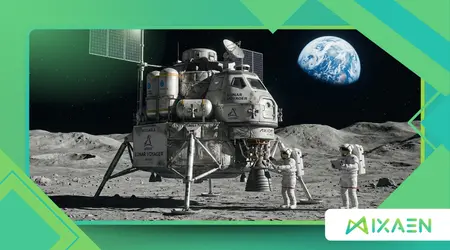
Reusable Lunar Landers represent a paradigm shift in deep space logistics, decoupling rocket staging from the financial waste of abandoning hardware on the Moon.
For decades, lunar exploration relied on the disposal of massive, single-use modules, where millions of dollars in advanced aerospace engineering crashed into the regolith after a single flight.
As we advance through 2026, the economics of spaceflight demand a radical departure from these legacy expendable models.
Commercial operations and international coalitions now require transport architectures that mirror commercial aviation refuel, launch, land, repeat to make sustained human presence on the Moon financially viable.
Quick Navigation
- The Financial Framework of Modern Lunar Exploration
- Operational Mechanics and Infrastructure
- Comparative Cost Breakdown
- Frequently Asked Questions
What Is the Economic Reality of Reusable Lunar Landers?
The conceptual transition from expendable systems to sustained infrastructure hinges entirely on amortization.
When space agencies build a unique spacecraft for every single landing, the total development, manufacturing, and qualification costs must be absorbed by that lone mission.
By leveraging reusable lunar landers, operators can spread initial capital expenditures across dozens of flights, drastically lowering the cost per kilogram delivered to the lunar surface.
This financial model transforms space exploration from a series of high-budget political spectacles into a repeatable, commercialized logistical pipeline.
To grasp the magnitude of this shift, consider a practical analogy: imagine buying a new commercial Boeing 777 for a single flight from New York to London, then scrapping the entire airplane upon arrival.
The ticket price for passengers on that flight would be millions of dollars, rendering air travel an elite, unsustainable luxury.
By applying the aviation principle of rapid reuse to lunar vehicles, private companies and international coalitions are fundamentally altering the cost baseline of deep space travel.
This shift allows scientists to focus budget allocations on actual research instruments rather than the disposable vehicles carrying them.
Why Are Heritage Expendable Systems No Longer Viable?
The Apollo program proved that human lunar landing was possible, but its architecture was inherently unsustainable for long-term presence.
The Lunar Module consisted of a descent stage left on the Moon and an ascent stage crashed after docking, meaning every mission required manufacturing entirely new vehicles from scratch.
++ Why Reusable Spacecraft Systems Redefine Exploration Costs
Who Is Driving the New Era of Space Logistics?
NASA’s Artemis program explicitly mandates sustainable architectures, forcing commercial partners to pioneer innovative spacecraft that can survive multiple thermal cycles.
Private entities recognize that capturing the emerging lunar market requires vehicles capable of executing routine round-trips without requiring structural overhauls.
Also read: What We’ve Learned from Landing Rovers on Other Planets
What Role Does In-Situ Resource Utilization Play?
The long-term profitability of these advanced spacecraft relies heavily on harvesting local resources, specifically water ice from shadowed lunar craters.
Turning lunar ice into liquid hydrogen and oxygen propellants will allow landers to refuel directly on the Moon, cutting the costly tie to Earth’s gravity.
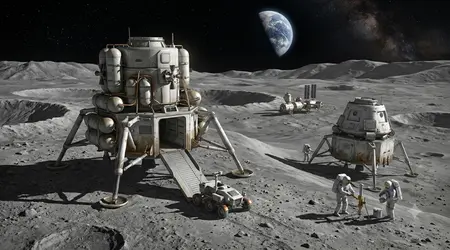
How Do Reusable Lunar Landers Function in Deep Space?
Operating a vehicle repeatedly in the harsh vacuum of space requires robust thermal management systems, specialized propulsion, and orbital refueling infrastructure.
Unlike traditional landers that burn up or remain abandoned, a modern reusable lunar lander descends to the surface, performs its mission, and launches back into orbit using the exact same hardware.
Once in orbit, the vehicle docks with a propellant depot or a space station like the Gateway, replenishes its tanks, and prepares for its next descent cycle.
This closed-loop operational ecosystem eliminates the need to launch massive, integrated rockets from Earth for every surface excursion.
Consider the practical mechanics of SpaceX’s Starship Human Landing System (HLS) or Blue Origin’s Blue Moon Mark 2.
These vehicles rely on multiple cryogenic refuelings in Low Earth Orbit (LEO) or near-rectilinear halo orbits (NRHO) before even attempting a lunar descent.
A single launch from Earth no longer dictates the entire mass allowance of the lunar payload; instead, multiple tanker flights build up the necessary fuel reserves in orbit.
This decoupling of payload mass from initial launch vehicle constraints allows for unprecedented heavy cargo delivery capacities to the lunar South Pole.
Read more: Reimagining the Hubble: How It Changed the Way We See Space
How Do Engineers Handle Cryogenic Fuel Boil-Off?
Storing liquid methane, hydrogen, and oxygen in space for extended periods presents a massive engineering hurdle due to solar radiation.
Modern space craft utilize advanced active cooling systems and multi-layer insulation blankets to keep propellants at ultra-low temperatures, preventing catastrophic fuel boil-off.
What Technologies Enable Precision Autonomous Landing?
Landing repeatedly at the exact same lunar base requires Terrain Relative Navigation (TRN) coupled with LiDAR sensors.
These systems scan the surface in real-time, matching features to onboard maps to avoid hazards and ensure touchdown accuracy within meters.
How Is Structural Fatigue Managed Without Earth Maintenance?
Without a traditional hangar, these vehicles must withstand extreme thermal fluctuations ranging from 120°C in sunlight to -130°C in shadow.
Engineers utilize advanced carbon composites and specialized alloys that endure these intense thermal stresses without developing micro-cracks over multiple flights.
What Are the Financial Advantages of Reusable Systems?
The primary financial metric in space logistics is the cost per kilogram delivered to the destination surface. Historical data from the mid-20th century highlights the extreme premium paid for single-use technology.
By introducing reusable lunar landers, the cost profile shifts from a steep, linear accumulation of expenses to a flattening curve where every subsequent landing yields higher profit margins.
This economic evolution opens the door for smaller nations, universities, and private enterprises to fund their own lunar research payloads.
| Metric Component | Legacy Expendable Architecture | Modern Reusable Architecture (2026 Baseline) |
| Vehicle Manufacturing Cost | Paid in full for every single mission | Amortized over an estimated 10–20 flights |
| Earth Launch Requirements | Heavy-lift rocket per mission | Medium/Heavy rockets for routine propellant tankers |
| Payload Capacity to Surface | Strictly limited (typically < 5 metric tons) | Significantly scalable (15 to 100+ metric tons) |
| Estimated Cost per Kilogram | ~$100,000+ USD | Projected < $10,000 USD via sustained reuse |
Analysis from recent aerospace economic reports indicates that implementing a fully reusable architecture can reduce total mission costs by up to 60% over a ten-mission lifecycle.
This statistic demonstrates that the initial high development costs of reusable systems are rapidly offset by eliminating recurring manufacturing pipelines.
Are we truly willing to let high launch costs permanently limit humanity to a single planet when the path to affordable space access is right in front of us?
The data clearly shows that reuse is the definitive financial gateway to sustainable exploration.
How Does Fleet Standardization Lower Operational Costs?
Building a standardized fleet of identical landers streamlines ground operations, software updates, and component tracking.
Technicians and mission controllers manage a uniform architecture, drastically reducing the overhead costs associated with training personnel for unique, bespoke spacecraft.
What Are the Secondary Savings for Earth Launch Providers?
When reusable lunar landers remain stationed in space, Earth-based rockets only need to carry fuel and payloads to orbit.
This shifts the launch market toward high-cadence, lower-cost tanker flights, driving down the price of access to orbit through pure economies of scale.
How Do Reusable Systems Mitigate Space Debris Capital Risks?
Abandoning stages in lunar orbit creates a hazardous orbital environment that threatens expensive institutional satellites and communication constellations.
Reusable systems actively manage their trajectories and orbits, preserving clean operational corridors around the Moon and safeguarding billions in orbital assets.
A New Horizons Blueprint for Sustainable Lunar Colonization
The ultimate realization of affordable lunar access depends on creating an interconnected transport loop between Earth, orbital staging areas, and the lunar surface.
By removing the financial penalty of hardware disposal, space programs can shift their focus toward long-term infrastructure, such as habitats, power grids, and mining facilities.
The reusable lunar landers framework serves as the foundational spine of this entire cis-lunar economy. Without it, any attempt at a permanent human presence remains an unsustainably expensive endeavor.
As we look toward the next decade of deep space exploration, the normalization of reusable spacecraft will redefine our relationship with the Moon.
The financial barriers that once kept space exploration exclusively within the domain of superpower governments are crumbling.
What thoughts do you have on this massive shift in space exploration? Share your perspective and experiences regarding the future of commercial spaceflight in the comments section below!
Frequently Asked Questions
How many times can a reusable lunar lander be launched before retirement?
Current engineering models target between 10 and 20 missions per vehicle, depending on structural stress, thermal cycles, and propulsion degradation.
Do reusable landers require maintenance on the Moon’s surface?
Initial architectures rely on autonomous health diagnostics and orbital servicing, though future surface bases will feature specialized robotic gantries for minor repairs and dust removal.
How much cheaper is a refueled mission compared to a brand new launch?
Once development costs are amortized, a refueled mission utilizing local or pre-staged propellants can be up to 60% cheaper than manufacturing and launching a brand-new expendable landing module.
