
How Transient Lunar Phenomena Continue Defying Clear Explanations
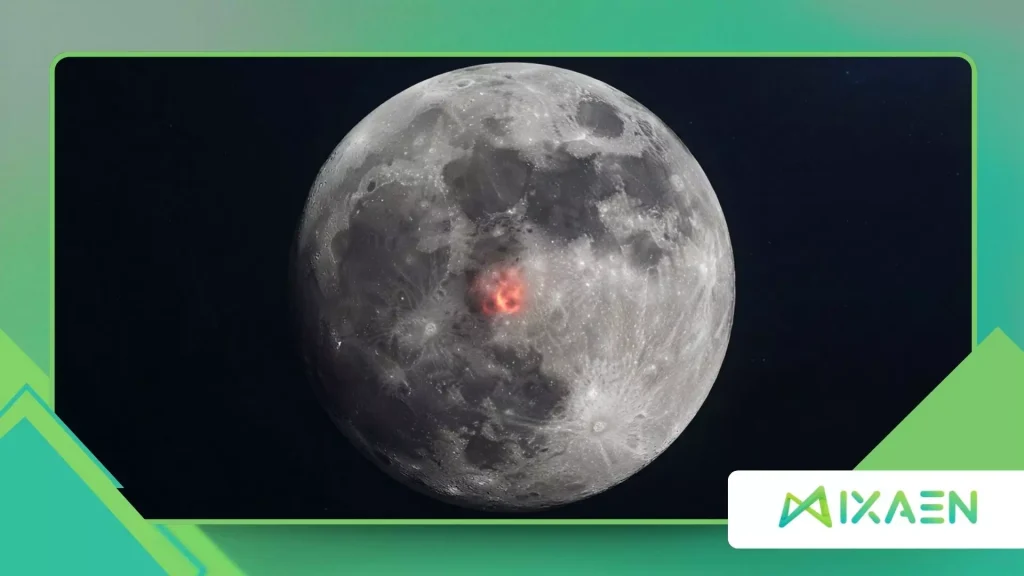
Transient Lunar Phenomena (TLP) continue to mystify astronomers worldwide, challenging our core understanding of a supposedly dead and geologically inactive satellite.
For centuries, professional stargazers and amateur astronomers have documented sudden, fleeting changes in brightness, shifting colors, and localized clouds of dust on the Moon’s surface.
These brief flashes and shifting obscurations defy easy categorization, forcing modern astrophysics to re-evaluate the lunar subsurface environment.
The scientific community historically dismissed these brief events as atmospheric distortions or optical illusions caused by primitive telescopes.
However, coordinated observation networks and modern digital sensors have verified that these anomalous flashes are genuinely occurring directly on the lunar surface.
As international space agencies establish permanent robotic infrastructure on the Moon, understanding these unpredictable occurrences becomes a matter of critical operational safety.
A Quick Blueprint of This Cosmic Mystery
- The Anomalies: Investigation into the historical timeline, specific visual characteristics, and geographic distribution of localized lunar flashes.
- Competing Hypotheses: Analysis of geological outgassing, electrostatic dust levitation, and high-velocity meteoroid impacts as potential triggers.
- Modern Workspace: Examination of active satellite data, terrestrial monitoring programs, and the specific operational risks posed to astronauts.
What Are Transient Lunar Phenomena and Why Do They Flit Across the Moon?
A Transient Lunar Phenomena event represents a sudden, short-lived change in the appearance of the lunar surface, typically lasting from a few seconds to several hours.
These anomalies present themselves as intense flashes of light, reddish or bluish colorations, or localized hazy patches that completely obscure familiar crater floors.
Why does our closest celestial neighbor, long considered a cold and inert rock, continue to display such vibrant signs of sporadic activity?
Astronomers focus their attention on distinct geological regions, particularly the crater Aristarchus, which accounts for a staggering percentage of all recorded anomalies.
This localized concentration implies that unique subsurface conditions or composition anomalies exist beneath specific craters, allowing energy or matter to escape into the vacuum.
The sheer unpredictability of these events creates a profound observation puzzle, as telescopes must be looking at the exact right millisecond to record the data.
How Do Historical Observations Contrast with Modern Digital Proof?
Historical archives contain hundreds of TLP accounts dating back to the Middle Ages, including a famous 1178 report by five monks in Canterbury who witnessed the upper horn of the Moon splitting in two.
For centuries, mainstream science categorized these stories as mere folklore or atmospheric interference within Earth’s own turbulent air layers.
Today, automated observatory networks equipped with high-speed digital cameras completely eliminate human bias and atmospheric confusion by using simultaneous dual-telescope verification.
When two separate observatories located hundreds of miles apart record the exact same luminous flare in the crater Plato, the event transitions from unverified anomaly to hard empirical fact.
++ Why Hypervelocity Stars Escape Galaxies at Impossible Speeds
Where Do the Characteristic Red and Blue Shifting Tints Originate?
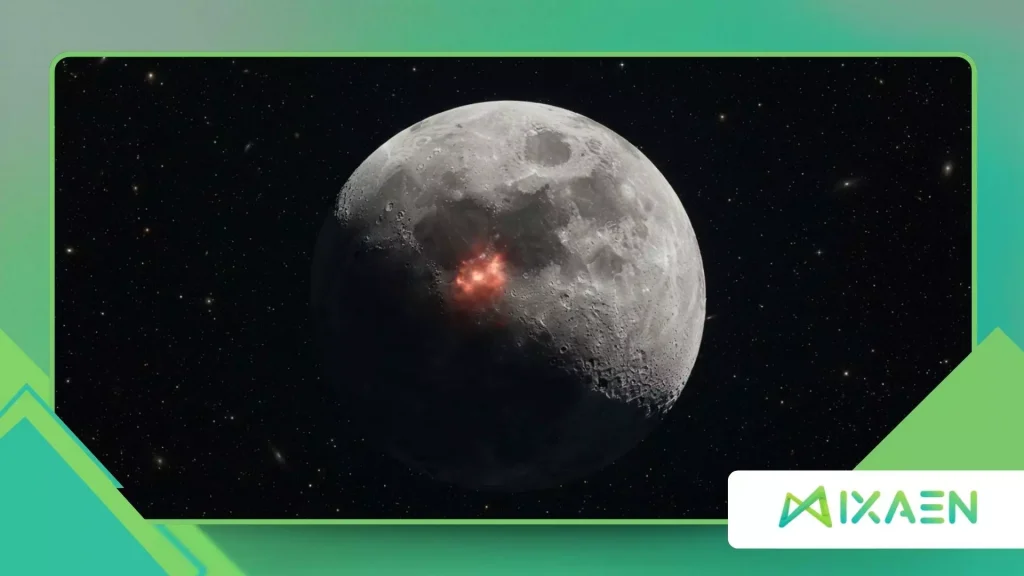
The distinct color changes observed during a Transient Lunar Phenomena event often lean toward a deep ruby red or a piercing electric blue.
Theoretical models suggest that these brief color shifts occur when underground gases escape through deep crustal fractures and interact with harsh solar radiation.
This process resembles neon signs on Earth, where electrical currents excite gas molecules to emit specific wavelengths of light.
When pockets of trapped radon or carbon monoxide burst into the lunar vacuum, the sudden exposure to unfiltered sunlight ionizes the gas particles, creating a brief, colorful glow visible through terrestrial telescopes.
What Geological Mechanisms Try to Explain These Flash Anomalies?
The leading scientific explanation for these enigmatic events involves outgassing, where volatile gases trapped deep within the lunar interior escape through crustal fissures.
The Moon undergoes immense gravitational stress as it moves through its elliptical orbit, stretched and compressed by Earth’s powerful tidal forces.
This constant mechanical squeezing acts like a cosmic bellows, flexing deep faults and allowing trapped pockets of gas to burst through the regolith.
Another prominent theory focuses on electrostatic dust transport, where solar UV radiation charges fine lunar dust particles until they repel each other and levitate above the surface.
This floating dust storm creates a reflective, hazy cloud that distorts light and mimics a localized fog from our perspective on Earth.
The continuous interplay between mechanical tidal stress and solar radiation creates a dynamic environment where Transient Lunar Phenomena can manifest without warning.
Also read: Cosmic Lithium Problem Defies Big Bang Predictions Today
How Does Earth’s Gravitational Pull Trigger Internal Outgassing?
Earth’s gravitational relationship with the Moon creates severe internal friction through tidal flexing, generating heat and stress along ancient volcanic conduits.
When the Moon reaches perigee its closest approach to Earth these structural stresses peak, visibly widening microscopic cracks within the lunar crust.
As these fractures expand, trapped reservoirs of ancient volcanic gases find an immediate escape path to the airless surface.
This cyclical release of internal pressure explains why a significant statistical cluster of TLP reports coincides directly with specific orbital positions of maximum tidal tension.
Read omre: Why Extreme Magnetar Flares Produce Unusual Gamma-Ray Signals
Why Do Meteoroid Impacts Mimic Endogenous Lunar Activity?
High-velocity meteoroid impacts provide an alternative explanation for the briefest bright flashes recorded by modern lunar monitoring programs.
Space debris striking the unprotected lunar surface converts kinetic energy into blinding heat, creating a localized plasma plume that lasts for a fraction of a second.
While these external impacts explain singular bright points of light, they fail to account for the long-duration hazy obscurations that linger inside craters for hours.
Therefore, scientists view meteoroids as just one contributing factor within a much larger, more complex matrix of distinct lunar phenomena.
How Do Space Agencies Protect Future Missions from Cosmic Anomalies?
As humanity prepares to establish permanent habitats via the Artemis program, understanding these unpredictable surface changes shifts from abstract academic curiosity to vital astronaut safety.
A sudden gas release or a localized electrostatic dust storm could easily damage sensitive scientific instruments, degrade spacesuit seals, or obscure vital landing sensors during descent.
Space agencies must map these volatile zones with absolute precision before constructing long-term infrastructure on the lunar crust.
To mitigate these risks, international space coalitions are developing real-time orbital monitoring networks that track thermal anomalies and gas signatures from low lunar orbit.
Understanding the precise relationship between crustal stress, solar activity, and surface flashes allows mission planners to predict potential flare-ups.
Ultimately, mapping Transient Lunar Phenomena ensures that future lunar bases are constructed on stable ground, far away from active vent sites.
What Structural Threats Do Electrostatic Dust Clouds Pose to Technology?
Levitating lunar dust carries a sharp, abrasive static charge that clings tenaciously to solar panels, camera lenses, and mechanical seals.
During a TLP dust event, these microscopic particles can compromise the thermal management systems of rovers by insulating components that need to cool down.
Astronauts working near an active zone could inadvertently transport these highly abrasive, jagged particles into their habitats, causing respiratory issues and mechanical failures.
Protective engineering requires robust dust-repelling electromagnetic shields to safeguard human life and delicate circuitry.
How Do Orbiters Map the Most Volatile Sites Across the Lunar Surface?
Satellites orbiting the Moon utilize advanced neutron spectrometers and thermal infrared cameras to scan the surface for hidden pockets of volatile compounds.
By measuring anomalous heat signatures rising from deep craters, these instruments identify active underground thermal systems before they can rupture into space.
The resulting data allows scientists to construct high-resolution vulnerability maps, highlighting areas prone to sudden structural shifts or gas eruptions.
These orbital insights provide the foundational safety guidelines for selecting international base locations.
The structured data below highlights the primary observation zones and the leading scientific consensus regarding their specific anomalous activities.
| Lunar Location | Dominant TLP Type | Statistical Frequency | Primary Theoretical Trigger |
| Aristarchus Crater | Bright Flashes & Blue Glows | ~33% of Total Reports | Volatile Gas Outgassing / Radon Venting |
| Plato Crater | Localized Hazy Obscurations | ~18% of Total Reports | Electrostatic Dust Levitation |
| Mare Crisium | Reddish Discolorations | ~12% of Total Reports | Crustal Tidal Flexing / Fissure Release |
Decoding the Hidden Dynamics of Our Nearest Neighbor
The persistent mystery of these short-lived anomalies reminds us that the Moon still conceals fundamental secrets from modern science.
Every verified flash and hazy glow challenges the outdated notion of a completely stagnant world, pointing instead to a subtle, deeply hidden internal vitality.
As our observational tools grow sharper and human boots return to the regolith, the enigmatic nature of Transient Lunar Phenomena will eventually yield to empirical discovery.
The ongoing study of these flashes bridges the gap between historical astronomy and future interstellar exploration, proving that profound cosmic mysteries exist right on our doorstep.
What do you think is the primary cause behind these elusive lunar glows? Share your experience in the comments below and let us discuss the strange forces reshaping our view of the Moon.
Frequently Asked Questions
Can amateur astronomers detect Transient Lunar Phenomena from home?
Yes, dedicated amateur astronomers frequently record these events using standard backyard telescopes equipped with high-frame-rate digital cameras and specialized color filters.
Are these lunar flashes dangerous to robotic rovers currently on the surface?
Singular light flashes pose no threat, but the localized electrostatic dust storms associated with long-duration events can severely degrade solar panels and scratch delicate optical sensors.
How does NASA officially track these brief surface anomalies today?
NASA utilizes specialized ground-based observation programs, alongside international partners, to systematically monitor the lunar night-side for impact flashes and sudden outgassing events.
