
Why Planetary Albedo Effects Alter Habitability Estimates
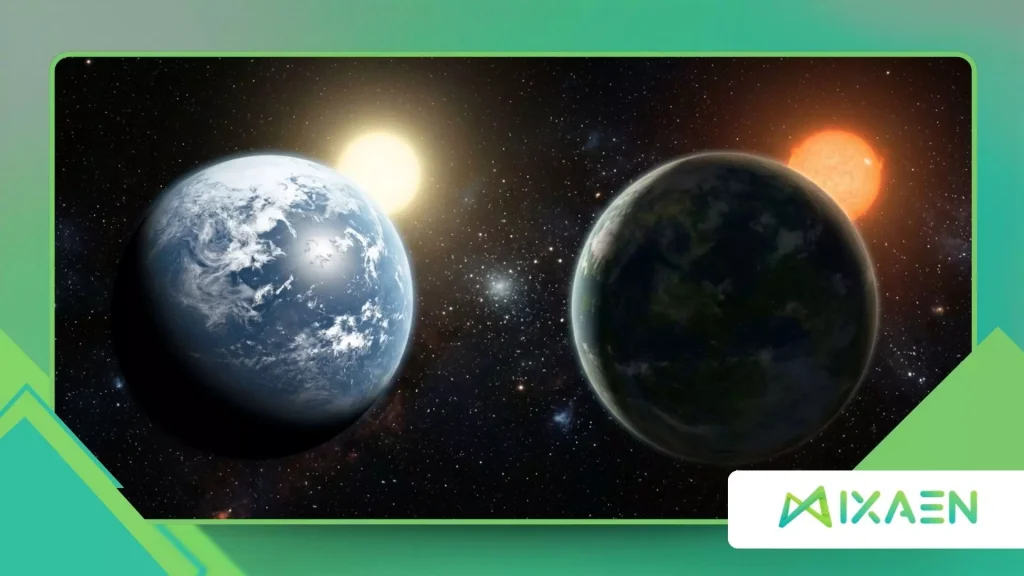
Planetary Albedo Effects dictate how we view alien worlds, serving as a critical cornerstone in modern astrobiology and exoplanet characterization.
As telescope technology advances in 2026, researchers are realizing that evaluating a planet’s habitability requires looking far beyond its distance from a host star.
The reflectance of a planet shapes its climate, determines liquid water stability, and redefines our understanding of traditional goldilocks zones.
Scientists now understand that a world’s brightness can completely override standard equilibrium temperature models, sparking intense debate within the scientific community.
Relying solely on distance creates massive blind spots, forcing us to integrate atmospheric chemistry, cloud dynamics, and surface composition into our predictive models.
This comprehensive analysis dives into these mechanisms, revealing how surface reflections fundamentally alter our search for life across the cosmos.
Key Discussion Points
- Core Mechanisms: Understanding the foundational science of planetary reflectance.
- Habitable Zone Disruptions: How brightness shifts the boundaries of life-supporting regions.
- The Ice-Albedo Feedback Loop: A look at the destabilizing climate mechanics on alien worlds.
- The Aqua-Planet Paradigm: Analyzing ocean absorption and cloud reflections.
- Technological Frontiers: Modern tools mapping distant planetary surfaces in 2026.
What Are Planetary Albedo Effects and How Do They Work?
The fundamental concept rests on a simple ratio: the amount of electromagnetic radiation reflected from a planet versus the total amount it receives.
When stellar light hits an exoplanet, atmospheric gases, cloud formations, and surface materials like ice or rock immediately scatter a portion back into space.
The remaining energy penetrates the system, warming the planet and establishing the baseline thermal conditions required for atmospheric circulation.
Sophisticated three-dimensional General Circulation Models (GCMs) prove that even minor shifts in this reflective balance drastically alter global surface temperatures.
For instance, high-reflectivity clouds can shield an otherwise scorched planet from intense stellar radiation, keeping surface water cool enough to remain liquid.
Conversely, dark, absorptive surfaces can transform a distant, frozen world into a thriving, temperate oasis capable of supporting organic chemistry.
Why Does Surface Composition Dictate Energy Absorption?
Surface features act as the primary thermal engine of any rocky exoplanet lacking a dense, opaque atmosphere.
Continental configurations, widespread basaltic volcanism, or expansive desert regions establish baseline reflectivity values that dictate how much solar energy a planet retains.
When landmasses cluster near the equator, their specific reflective properties heavily influence global climate sensitivity and tropical convective patterns.
Recent peer-reviewed studies using data from the James Webb Space Telescope (JWST) highlight how diverse mineralogies create distinct thermal signatures across rocky worlds.
A planet covered in dark volcanic rock absorbs maximum energy, whereas a world dominated by silicate-rich sands reflects a massive portion of its host star’s light.
These variations mean two planets with identical sizes and orbits can experience completely different climate realities.
++ What If We Discover Life That Doesn’t Want to Be Found?
How Do Atmospheric Clouds Alter Global Temperature?
Clouds represent the most volatile wild card in astrobiological modeling due to their dynamic, ever-changing nature.
Water vapor, methane, or sulfur dioxide clouds reflect incoming starlight while simultaneously trapping outgoing infrared radiation, creating a complex thermodynamic tug-of-war.
The altitude, droplet size, and latitudinal distribution of these cloud decks ultimately decide whether the net effect cools or warms the planet.
Think of clouds as a dynamic planetary thermostat that adjusts itself based on stellar wind and evaporation rates.
High, thin cirrus-like clouds generally allow starlight to pass through but trap escaping heat, amplifying greenhouse warming.
Meanwhile, thick, low-altitude stratocumulus decks act as a highly effective mirror, bouncing stellar energy away and driving global temperatures down.
Also read: Why Finding Life Elsewhere Might Force Us to Rethink Religion
What Is the Ice-Albedo Feedback Mechanism?
This classic thermodynamic feedback loop represents one of the most powerful climate drivers in planetary science.
When an exoplanet cools slightly, polar ice caps expand, exposing a bright, highly reflective surface that repels incoming stellar radiation.
This increased reflection starves the planet of heat, causing temperatures to plummet further and forcing the ice sheets to creep closer to the equator.
If the ice sheets cross a critical latitudinal threshold typically around 30 degrees the planet falls into a runaway “Snowball” state.
Once locked in global ice, escaping this frozen equilibrium requires massive volcanic outgassing to build a dense greenhouse atmosphere over millions of years.
This extreme climate instability shows how planetary albedo effects can permanently push a once-habitable world into a sterile, frozen dead end.
Why Do These Reflections Shift the Habitable Zone?
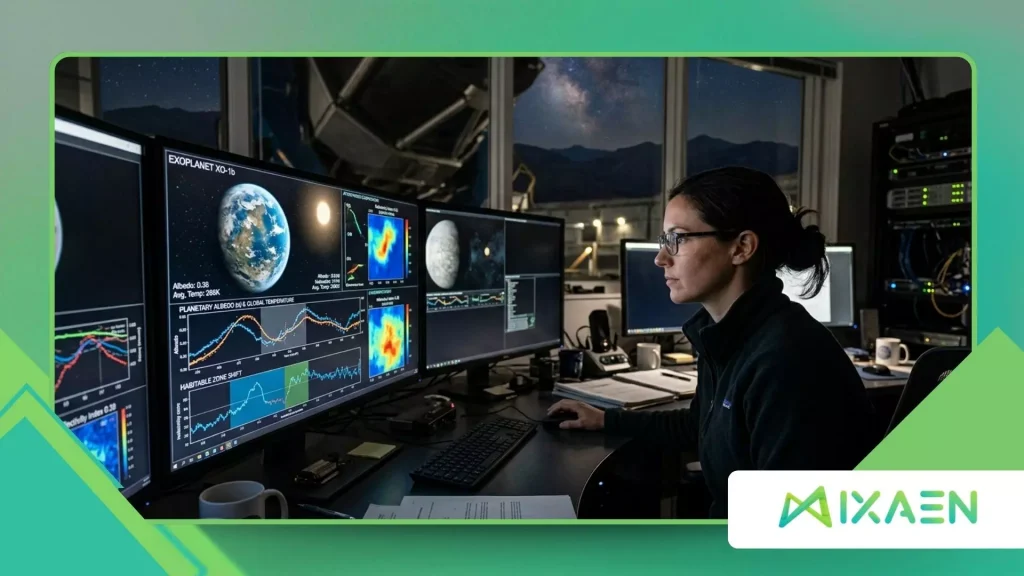
Traditional definitions of the Habitable Zone rely almost entirely on stellar luminosity and orbital distance to predict liquid water.
However, this rigid framework crumbles when we account for real-world planetary properties that alter energy retention.
High-reflectivity worlds can sit comfortably near the inner edge of a zone without boiling, while dark worlds stay warm at the outer fringes.
By ignoring these variations, astronomers risk misclassifying thousands of exoplanets as either hostile hellscapes or frozen voids.
Acknowledging these reflective properties expands our search parameters, allowing us to identify highly viable targets that traditional models prematurely dismissed.
This paradigm shift ensures precious telescope time is focused on worlds with the highest actual probability of hosting life.
Read more: How Exoplanet Water Inventories Influence Climate Stability
How Do M-Dwarf Stars Influence Reflectivity?
M-dwarf systems, the most common stellar hosts in our galaxy, emit the vast majority of their light in the near-infrared spectrum.
This specific wavelength matches the absorption bands of water ice perfectly, causing ice on these worlds to absorb energy rather than reflect it.
Consequently, an icy planet orbiting a red dwarf responds very differently than an identical planet orbiting a sun-like G-type star.
Because near-infrared light penetrates ice efficiently, the traditional runaway snowball effect is remarkably muted around M-dwarf stars.
This unique stellar-surface interaction allows planets to maintain open oceans at much greater orbital distances than previously thought possible.
It proves that we cannot evaluate habitability without looking at the interplay between stellar spectra and planetary surfaces.
Can a Bright Planet Prevent a Runaway Greenhouse?
When an exoplanet sits near the scorching inner edge of its habitable zone, intense stellar radiation threatens to vaporize its oceans.
However, rapid evaporation triggers the massive formation of highly reflective convective clouds directly at the sub-stellar point.
This brilliant cloud shield acts as a natural defense system, bouncing immense amounts of stellar energy straight back into space.
This negative feedback loop stabilizes the climate, preventing the planet from transitioning into a suffocating, Venus-like runaway greenhouse state.
Have you ever wondered why some worlds seem to defy the laws of orbital proximity? The answer lies in this protective atmospheric mirror, which preserves liquid water on worlds that should theoretically be molten rock.
Why Must Astrobiologists Revise Early Habitability Models?
Early models treated exoplanets as uniform, gray spheres with fixed, arbitrary reflectivity values, typically mimicking Earth’s baseline of 0.3.
This oversimplification led to highly inaccurate climate predictions, ignoring how dynamic geological and atmospheric changes reshape a planet’s energy balance.
Modern astrophysics demands multi-dimensional models that treat reflectivity as an evolving, living property of the planetary system.
Without these updates, our automated biosignature pipelines will continue to yield false negatives and misleading classifications.
Incorporating dynamic planetary properties allows researchers to interpret atmospheric data with unprecedented precision, uncovering subtle signs of habitability.
The evolution of these models marks our transition from speculative astronomy to precise, data-driven exoplanetary census-taking.
How Do Oceans and Continents Impact Alien Climates?
Liquid oceans are exceptional energy collectors, possessing a remarkably low reflectivity that absorbs roughly 93% of incident starlight.
When an exoplanet is dominated by open water, it retains vast amounts of thermal energy, driving deep oceanic currents that redistribute heat globally.
This efficient heat distribution prevents extreme temperature swings, creating stable, long-term environments where biochemical life can steadily evolve.
Conversely, the emergence of sprawling, reflective continents disrupts these oceanic conveyor belts, altering regional precipitation and wind patterns.
If a planet’s landmasses are barren and bright, they bounce energy away, chilling the interior of the continents and forming localized glaciers.
This intricate dance between dark oceans and bright landmasses determines whether a planet develops a stable climate or swings wildly between ecological extremes.
What Is the “Aqua-Planet” Climate Profile?
An aqua-planet a world covered entirely by a deep, global ocean presents a fascinating study in extreme climate stability and high energy absorption.
Without continental barriers, atmospheric winds and oceanic currents flow completely unimpeded, distributing tropical warmth toward the polar regions with incredible efficiency.
These worlds rarely feature extreme temperature gradients, making them highly resilient against sudden cosmic or stellar climate disruptions.
However, their low reflectivity makes aqua-planets highly sensitive to increases in stellar luminosity, putting them at greater risk of sudden evaporation crises.
Because the dark surface absorbs energy so aggressively, any spike in stellar output can quickly push the ocean temperatures toward dangerous thresholds.
This vulnerability requires a delicate balance of cloud cover to maintain long-term, stable habitability.
How Do Desert Worlds Evade Total Glaciation?
Desert exoplanets, devoid of large oceans, feature high baseline reflectivity due to expansive tracts of exposed sand and silicate rock.
While they absorb less total energy, their lack of water vapor a potent greenhouse gas means they struggle to retain the heat they do collect.
Paradoxically, this dry environment makes them incredibly resilient against the devastating runaway snowball states that threaten wetter worlds.
Because there are no oceans to freeze into highly reflective ice sheets, a desert world’s reflectivity remains stable even as temperatures drop.
This unique characteristic prevents the planet from entering an uncontrollable cooling loop, keeping its equatorial zones dry but temperately stable.
These arid landscapes could represent some of the most durable habitable environments in the galaxy.
Why Do Continental Layouts Matter for Biosignatures?
The specific geographic positioning of landmasses determines how effectively a planet reflects starlight throughout its orbital year.
If bright continents form a ring around the equator, they reflect intense tropical starlight, cooling the entire planetary system from the center out.
If those same continents cluster at the frozen poles, they become anchor points for permanent, highly reflective ice sheets that amplify global cooling.
These variations produce distinct, time-variable light curves that modern observatories can detect as the exoplanet rotates on its axis.
By analyzing these subtle changes in reflected light, astrobiologists can map the rough distribution of oceans and continents across light-years of space.
This structural mapping provides vital context for validating chemical biosignatures detected within the planet’s atmosphere.
The data below summarizes how different planetary configurations and surface materials fundamentally alter a world’s energy balance and habitability limits.
| Surface/Planet Type | Average Reflectivity | Primary Thermal Effect | Impact on Habitable Zone Limits |
| Deep Global Ocean | 0.07 (Very Low) | Maximizes energy absorption; distributes heat evenly | Pushes viable habitability further away from the host star |
| Desert / Silicate Rock | 0.40 (High) | Reflects solar energy; prevents runaway freezing loops | Allows planets to survive closer to bright, volatile stars |
| Fresh Snow / Ice Sheet | 0.85 (Extreme) | Repels nearly all light; drives runaway cooling | Triggers global glaciation, trapping worlds in deep freezes |
| Thick Stratocumulus Clouds | 0.60 (High) | Acts as a global mirror; cools the surface | Protects inner-edge planets from boiling their oceans |
Conclusion
Understanding how planetary albedo effects reshape our calculations is no longer optional; it is a fundamental requirement for modern astrobiology.
By proving that a planet’s surface and atmospheric reflectivity can entirely rewrite its climate destiny, science has moved past overly simplistic orbital models.
We now see exoplanets as dynamic, integrated systems where clouds, oceans, and stars engage in a continuous thermodynamic dialogue.
As we stand on the cusp of discovering truly Earth-like worlds, analyzing these reflective properties will guide our telescopes toward genuine signs of life.
Have you noticed how our perspective on planetary habitability has shifted from simple distance to complex, interconnected systems? Share your thoughts and experiences with astronomy news in the comments below!
Frequently Asked Questions
What exactly is the difference between bond albedo and geometric albedo?
Bond albedo measures the total proportion of all solar energy reflected by a planet across all wavelengths and angles, making it critical for calculating energy balance.
Geometric albedo compares a planet’s brightness at full phase specifically to a perfectly reflecting flat disk, serving as a vital tool for observational astronomers analyzing direct starlight reflections.
Can an exoplanet’s reflectivity change over short geological timescales?
Yes, reflectivity can shift rapidly due to volcanic eruptions releasing light-scattering aerosols, sudden shifts in global cloud coverage, or the melting of massive polar ice sheets.
These rapid changes can trigger strong feedback loops that quickly push a planet’s climate into entirely new equilibrium states.
How do astronomers measure the reflectivity of a world light-years away?
Astronomers determine a distant world’s reflectivity by carefully monitoring its secondary eclipse, which occurs when the exoplanet passes directly behind its host star.
By measuring the precise drop in total light when the planet is hidden, scientists calculate exactly how much starlight the planet was reflecting back toward Earth.
