
Why Finding Life Elsewhere Might Force Us to Rethink Religion
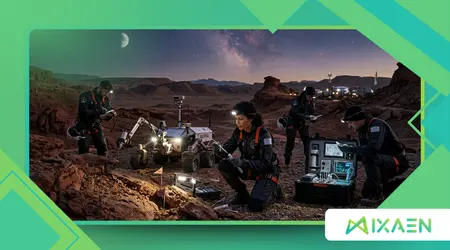
Finding life elsewhere represents the most profound existential challenge humanity has ever faced, threatening to dismantle centuries of theological dogma and anthropocentric cosmic assumptions.
As telescopes like the James Webb and the emerging ELT scan the atmospheres of distant exoplanets, we stand on the precipice of a discovery that shifts our very definition of the divine.
This potential encounter is not merely a biological or scientific triumph; it is a spiritual tremor.
If we detect bio-signatures on an exoplanet, the central narratives of many world religions may require urgent re-evaluation. Are we truly unique, or are we simply one of many chapters in a vast, sprawling celestial story?
Navigating the cosmic mirror
- The evolution of religious doctrines
- Extraterrestrial life as a theological test
- The search for non-human sentience
Why would extraterrestrial life disrupt traditional faith?
Historical dogma often places humanity at the center of the universe. If biology thrives under distant suns, the narrative that life exists solely for human stewardship faces immediate collapse.
Faith systems that emphasize an exclusive relationship between a creator and humans must adapt. Religions might evolve to view extraterrestrial beings as further expressions of divine creativity rather than anomalies.
Consider the theological shift during the Copernican revolution.
The church eventually reconciled a heliocentric model with its tenets, suggesting that religious belief possesses a surprising capacity for deep structural adjustment.
Does discovery challenge the concept of salvation?
Theology frequently centers on the salvation of human souls. What happens if an alien species exists without the same history of sin, fall, or spiritual seeking?
Some theologians argue that a creator would extend grace universally. Others fear the implication that our specific religious frameworks are local, not universal, truths of existence.
This tension forces us to ask: Is salvation an exclusive human covenant, or is it a broad, cosmic architecture designed for all conscious entities capable of moral recognition?
++ How Exoplanet Water Inventories Influence Climate Stability
Can world religions adopt a cosmic perspective?
Major traditions possess sophisticated mechanisms for interpreting new scientific evidence. They might frame finding life elsewhere as the ultimate proof of a vast, intelligent design.
Integrating non-human intelligence into a spiritual worldview allows for a more expansive understanding of reality. It transforms religion from an earthly concern into a galactic necessity.
We must observe how leaders navigate these waters. Some may retreat into insular skepticism, while others will likely emerge as architects of a new, post-anthropocentric spirituality.
Also read: How Artificial Intelligence Is Accelerating the Search for Life
How does exobiology redefine the creator?
An infinite universe implies an infinite capacity for creation. A creator responsible for life across millions of worlds feels vastly more complex than one confined to Earth.
The realization that finding life elsewhere is a statistical probability changes our prayer. We move away from asking for personal favors toward acknowledging a grander, universal order.
This transition mimics an old analogy: a child believing their parents live only within the confines of the house, only to realize later the vast world they inhabit.
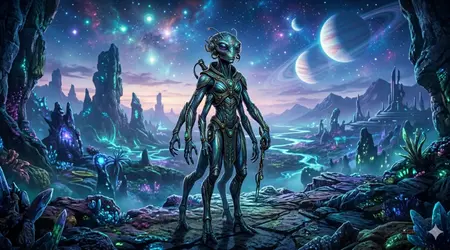
How will organized religion handle the news?
Institutions rely on stability and tradition. A sudden shift in our biological status, moving from unique creations to mere neighbors, creates significant administrative and cultural pressure.
Religious leaders will likely initiate intense scholarly debates. They will examine sacred texts for metaphors that accommodate the existence of “others” and the potential for life beyond Earth.
The response will vary globally. Diverse cultures and traditions will interpret the data through the lenses of their unique history, mythology, and ethical codes of conduct.
Read more: The Debate Around Technosignatures: Searching for Alien Technology
Why do theologians fear the change?
Fear stems from the risk of becoming irrelevant. If our biological presence is common, our spiritual significance might be perceived as shrinking proportionally to the vastness.
Yet, this fear ignores the human need for meaning. Finding life elsewhere does not solve the human struggle; it only provides a new context for our long-standing questions.
Perhaps we are simply afraid of the mirror. Seeing a civilization that survived its own adolescence might force us to confront our own planetary mismanagement and moral failures.
When will the debate reach the mainstream?
Public discourse currently treats extraterrestrial life as sci-fi fodder. Once a confirmed biosignature appears in a peer-reviewed journal, the conversation will shift overnight to serious theological analysis.
We should prepare for this intellectual tsunami now. Scientific data rarely enters a cultural vacuum, and religious organizations will be the first to frame the discovery for their followers.
Are we ready to see a world where our religious institutions advocate for universal rights that encompass not just humans, but potentially sentient beings from distant, rocky worlds?
Where is the evidence of potential life?
In 2026, researchers focus on K2-18b and similar worlds with potential water vapor. These environments suggest that life, while rare, may follow patterns we recognize as chemistry.
Data indicates that the presence of methane and oxygen in equilibrium could signal life. This specific, hard scientific evidence acts as the catalyst for the next religious crisis.
| Feature | Human-Centric View | Universalist View |
| Life’s Origin | Divine Miracle | Natural Evolution |
| Human Status | Unique/Special | One of Many |
| Creator’s Scope | Earth/Humanity | Cosmic/Infinite |
| Salvation | Exclusive Covenant | Universal Grace |
Can we reconcile science and spiritual truth?
Science answers the “how,” while religion attempts to answer the “why.” These domains have coexisted for centuries, often uncomfortably, but usually within a stable societal framework.
Finding life elsewhere creates a collision point, yet it also provides an opportunity. It could lead to a synthesis where our spiritual values honor the entire living universe.
We must remain open to the idea that our current understanding of both science and divinity is woefully incomplete, serving only as a temporary map of reality.
What are the dangers of ignoring science?
Ignoring empirical reality leads to radicalization and cognitive dissonance. When the world changes but the doctrine does not, institutions often lose their moral authority over the youth.
A proactive approach to the cosmic reality ensures that spiritual values remain relevant. Leaders who embrace the cosmos as a divine playground will foster hope, not anxiety.
The history of humanity shows that progress is inevitable. Those who align their wisdom with the reality of the stars will lead the next generation into the future.
Will we find peace or division?
The discovery could unify us, or it could ignite new conflicts. Tribalism often emerges when the “other” appears, and our first reaction might be to categorize aliens as threats to our beliefs.
However, the sheer distance and complexity of the universe suggest a need for humility. Finding life elsewhere should teach us that life is precious, fragile, and worthy of profound, universal respect.
We hold the power to choose our reaction. Will we see a threat to our identity, or will we celebrate the expansion of the family of intelligent life?
Does the search change our values?
The act of searching itself changes us. By looking outward, we prioritize global cooperation. We realize that the problems of Earth are shared, small, and solvable together.
This pursuit acts as a catalyst for maturity. As we refine our technology to detect life, we simultaneously refine our ethical standards for how we treat our neighbors.
The process of finding life elsewhere is, ultimately, a journey into ourselves. It demands that we define what it truly means to be a conscious, sentient inhabitant of the cosmos.
Conclusion
The potential for contact forces us to look past our current horizon. We must accept that our spiritual narratives have always been local, waiting for the expansion that the stars provide.
By embracing the possibility of life, we do not discard our history; we evolve it. We must ensure that our future includes room for both rigorous science and deep, meaningful faith.
The cosmic silence is beginning to fade. When the day finally comes, will you stand in fear, or will you greet the realization of a vibrant, living universe with open arms?
Frequently Asked Questions
1. Will finding alien life destroy all religion?
Most scholars believe it will trigger a transformation rather than destruction, as religions have historically adapted to major scientific paradigm shifts.
2. Are there specific religions better prepared for this?
Religions that emphasize a vast, interconnected universe often find it easier to integrate the existence of extraterrestrial intelligence into their existing theological frameworks.
3. What is the most likely form of life we will find first?
Microbial life is the most probable target. While less “exciting” than civilizations, it still challenges the idea that Earth is the only cradle of biology.
4. Why is the search for life taking so long?
The universe is unimaginably vast and our tools are only just reaching the necessary sensitivity to distinguish biological signatures from inanimate chemical signals.
