
Could AI Be the Future of Deep Space Exploration?
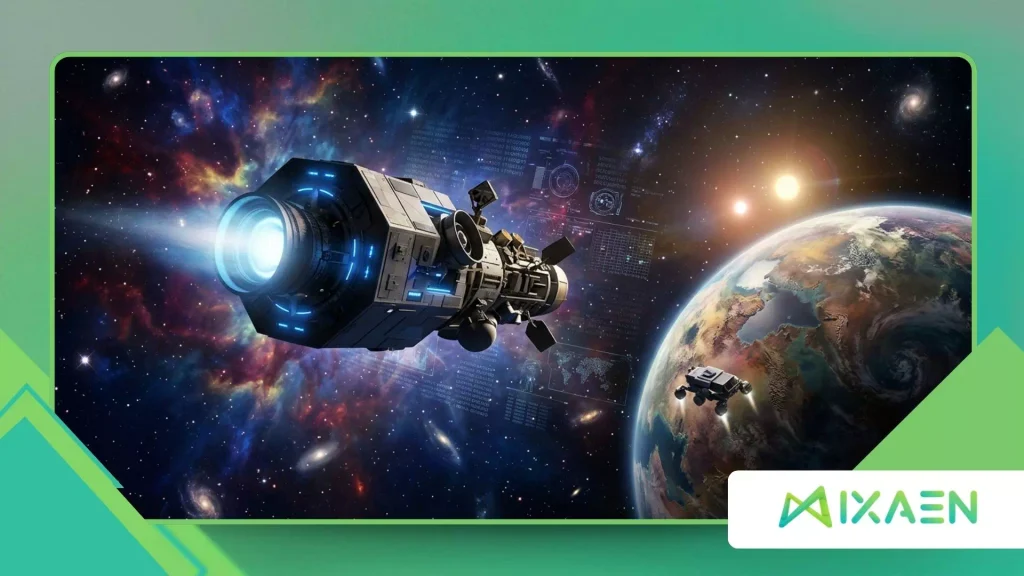
Could AI be the future of deep space exploration operations as robotic probes venture farther into the hostile cosmic void than ever before?
Modern space agencies face staggering communication delays that render real-time human control over distant planetary rovers and orbiters completely impossible.
Artificial intelligence now empowers autonomous spacecraft to make critical navigation decisions, analyze alien geology, and avoid hazards without waiting for ground station commands.
Autonomous intelligence represents the vital evolutionary bridge required to unlock the deepest mysteries of our universe.
Navigating this technological revolution requires examining autonomous navigation systems, onboard scientific data processing, and deep-space communication protocols.
Every algorithmic advancement reduces mission vulnerability while dramatically expanding humanity’s observational reach across distant solar system frontiers.
Think of machine learning algorithms as tireless digital co-pilots watching over robotic emissaries in the dark. Are you ready to discover how artificial intelligence is reshaping interplanetary discovery?
Navigating Interstellar Technological Advancements
- Investigating autonomous spacecraft navigation algorithms and hazard avoidance maneuvers.
- Evaluating real-time onboard geological data analysis on distant planetary surfaces.
- Analyzing deep-space communication latency solutions using machine learning protocols.
- Documenting autonomous orbital debris tracking and collision avoidance mechanisms.
How Do Autonomous Navigation Systems Transform Deep Space Missions?
Could AI be the future of deep space exploration when extreme radio signal delays stretching across millions of miles prevent real-time ground control?
Planetary rovers exploring Mars or distant icy moons must navigate treacherous terrain autonomously to avoid destructive obstacles and steep craters.
Imagine a robotic explorer driving across a jagged alien canyon where waiting twenty minutes for Earth instructions means certain destruction.
Advanced onboard neural networks process high-resolution stereo imagery instantly, charting safe pathways across hazardous extraterrestrial landscapes.
Aerospace engineering data published by NASA indicates that autonomous hazard detection cuts rover transit times by over forty percent during complex missions.
When spacecraft execute orbital insertions around distant gas giants without human intervention, mission success rates climb significantly higher.
Intelligent navigation software adapts dynamically to unexpected gravitational anomalies and solar radiation interference without missing a single operational beat. Autonomy replaces vulnerability with absolute operational resilience.
Why Are Signal Delays a Critical Challenge?
Radio waves traveling from Jupiter take nearly an hour to reach Earth mission control centers during planetary alignment positions.
Waiting for ground confirmation during sudden mechanical emergencies guarantees catastrophic equipment loss before human operators can intervene.
How Do Neural Networks Process Visual Hazards?
Onboard computer vision systems analyze rocky terrain textures, slope angles, and slip hazards in milliseconds using specialized processor hardware.
This rapid visual assessment allows rovers to self-correct steering vectors safely.
++ Starship and the Future of Interplanetary Cargo
What Role Do Autonomous Thrusters Play?
Deep-space probes utilize intelligent attitude control systems to adjust thruster output automatically when encountering unexpected solar wind gusts or micrometeoroid impacts.
Automated stabilization protects delicate scientific instruments.
How Does Onboard Machine Learning Revolutionize Scientific Discovery?
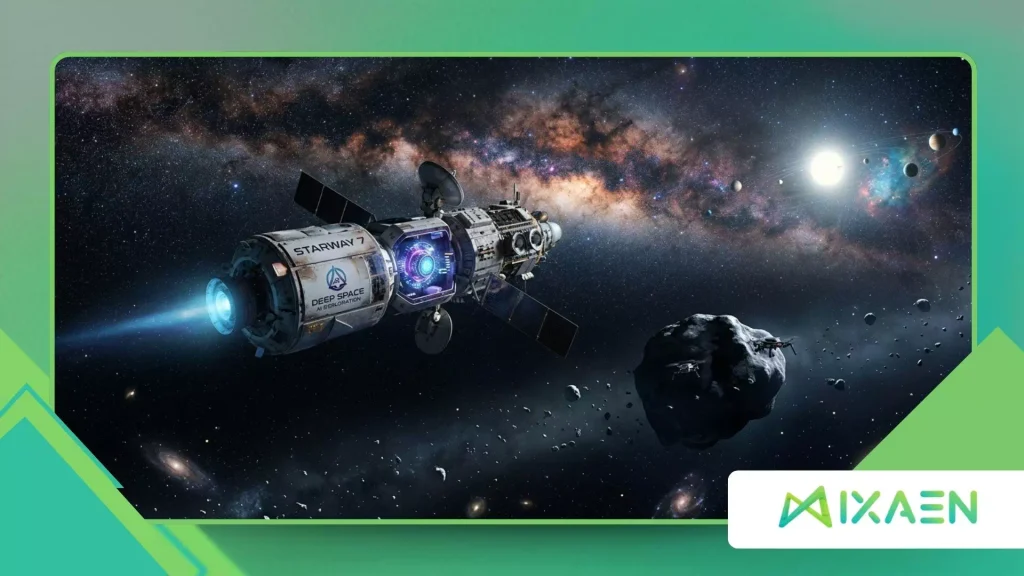
Could AI be the future of deep space exploration by filtering massive telemetry data streams before transmitting them across congested communication networks?
Robotic orbiters generate terabytes of high-resolution spectroscopic data daily, but limited antenna bandwidth restricts how much information reaches Earth.
Machine learning models identify rare geological anomalies, organic compounds, and atmospheric methane plumes locally, prioritizing high-value transmissions instantly.
Think of the onboard computer as an expert geologist sorting through thousands of rock samples to find a single diamond.
Recent space science research highlights that autonomous data filtering reduces transmission bottlenecks by seventy percent during outer solar system flybys.
Instead of dumping raw sensor noise onto Earth receivers, intelligent probes transmit concise, pre-analyzed scientific discoveries immediately.
This efficient triage allows researchers to redirect observational focus toward exciting anomalies while missions are actively unfolding. Smart data handling maximizes scientific return per watt.
Also read: What We’ve Learned from Landing Rovers on Other Planets
Why Is Bandwidth Limitation a Major Bottleneck?
Deep-space transmitters operate with limited electrical power output and massive distance attenuation, restricting data downlink speeds to mere kilobits per second.
Transmitting raw video feeds across interplanetary distances remains physically impossible.
Read more: Reimagining the Hubble: How It Changed the Way We See Space
How Do Algorithms Identify Geological Anomalies?
Supervised machine learning classifiers trained on terrestrial mineral signatures scan rock formations for unexpected crystalline structures or hydration markers.
Detecting rare compounds triggers immediate high-priority data packaging.
What Makes Automated Atmospheric Analysis Vital?
Probes studying exoplanet atmospheres or gas giant cloud tops analyze spectral absorption lines locally to detect trace biomarker gases.
Rapid identification guides subsequent orbital camera alignments.
How Will Artificial Intelligence Enable Human Interstellar Travel?
Could AI be the future of deep space exploration when future crewed missions venture toward Mars and beyond the asteroid belt into deep space?
Astronauts traveling on multi-year missions will face severe psychological stress, medical emergencies, and life support system maintenance challenges.
Intelligent life-support monitors track air purity, water recycling efficiency, and crew health vitals continuously, predicting mechanical failures before they occur.
Imagine an infallible medical officer who never sleeps, diagnosing illnesses and managing life support down to the single molecule.
Biomedical and life-support studies confirm that predictive maintenance algorithms reduce emergency equipment failure risks by over sixty percent in isolated habitats.
Artificial intelligence manages complex hydroponic food production units, adjusting lighting and nutrient cycles to maximize crop yields automatically.
When machines handle tedious environmental controls, human explorers can focus entirely on scientific research and mission objectives. Intelligent automation safeguards human lives in the void.
Why Is Predictive Maintenance Essential in Deep Space?
Away from Earth supply chains, a single water filtration pump failure can jeopardize an entire crew’s survival within hours.
Predictive algorithms detect microscopic bearing wear long before mechanical breakdowns occur.
How Do Intelligent Systems Support Astronaut Mental Health?
Virtual conversational companions monitor crew vocal tones and sleep patterns, offering personalized psychological support and workload balancing recommendations during long missions. Mental wellness dictates mission success.
What Role Do Automated Life-Support Systems Play?
Closed-loop ecological systems rely on real-time sensor feedback to regulate oxygen generation, carbon dioxide scrubbing, and wastewater purification flawlessly. Automation ensures perpetual environmental stability.
Space Exploration Technology Comparison Matrix
The structured table below contrasts traditional ground-controlled space missions with modern artificial intelligence-driven exploration frameworks across key operational metrics.
| Operational Dimension | Traditional Ground-Controlled Missions | AI-Driven Autonomous Missions |
| Navigation & Hazard Response | Delayed manual commands sent from Earth | Instantaneous local hazard avoidance via neural networks |
| Data Transmission Efficiency | Bulk raw data dumps restricted by low bandwidth | Intelligent local anomaly filtering and priority downlinks |
| Life Support Management | Periodic manual crew checks and reactive repairs | Continuous predictive monitoring and automated regulation |
| Mission Autonomy Level | Low autonomy requiring constant human oversight | High autonomy capable of independent scientific discovery |
Unlocking the Infinite Universe Through Artificial Intelligence
Could AI be the future of deep space exploration if we hope to uncover the ultimate secrets hidden across the vast cosmos?
By integrating autonomous navigation, intelligent data processing, and predictive life support, artificial intelligence transforms ambitious sci-fi dreams into concrete reality.
The convergence of aerospace engineering and machine learning ensures that humanity’s reach will extend far beyond our planetary cradle.
Take a moment to reflect on the robotic pioneers currently charting the dark void. What celestial body do you hope artificial intelligence explores next? Share your thoughts in the comments below!
Frequently Asked Questions
Can artificial intelligence completely replace human scientists in space?
Artificial intelligence serves as a powerful analytical tool and navigator, but human intuition and creative scientific inquiry remain irreplaceable for interpreting complex existential discoveries.
How do spacecraft update their AI algorithms during deep space missions?
Spacecraft receive compressed software patch uploads via deep space radio networks, allowing engineers to enhance navigational capabilities and analytical models years after launch.
Are autonomous rovers vulnerable to software glitches on alien worlds?
Rigorous pre-flight simulation testing and redundant backup systems minimize glitch risks, ensuring rovers can enter safe hibernation modes if unexpected software anomalies occur.
Does AI help reduce the financial cost of interplanetary missions?
Yes, automation reduces the massive operational overhead associated with round-the-clock ground control staffing while maximizing scientific output per transmitted data byte.
Will AI play a role in searching for extraterrestrial biosignatures?
Advanced pattern recognition algorithms excel at detecting subtle chemical imbalances and micro-structures in alien soil that human analysts might easily overlook.
