
How Space Mission Miniaturization Is Redefining Exploration Strategy
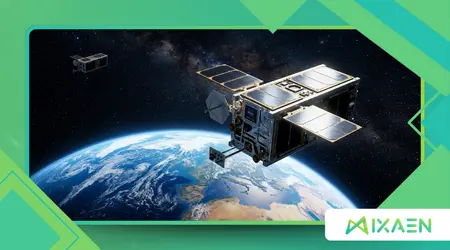
Space Mission Miniaturization represents a seismic paradigm shift in modern aerospace engineering, dismantling decades of reliance on school-bus-sized interplanetary probes.
Deep space networks now communicate with highly efficient, compact systems that pack unprecedented analytical power into chassis smaller than a standard shoebox.
This technological evolution redefines how national agencies and private aerospace firms deploy resources across our solar system in this exciting year of 2026.
We stand on the brink of an era where distributed networks of tiny sensors will replace single, multi-billion-dollar flagship instruments completely.
Key Structural Shifts in Cosmic Exploration
- Mass Reduction: Lowering launch vehicle weight requirements to slash initial capital deployment barriers for interplanetary departures.
- Swarm Intelligence: Deploying interconnected networks of tiny spacecraft to gather diverse, simultaneous spatial data points around distant celestial bodies.
- Component Integration: Leveraging advanced commercial microelectronics to pack high-fidelity spectrometers into extraordinarily tiny physical volumes.
- Risk Mitigation: Distributing operational payloads across multiple small platforms to avoid catastrophic single-point mission failures during cosmic transits.
What is the core mechanism behind smaller spacecraft?
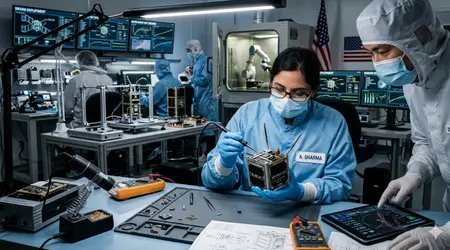
The structural foundation of Space Mission Miniaturization relies on advanced micro-electromechanical systems that shrink complex sensors down to the millimeter scale.
Engineers assemble integrated circuits that manage propulsion, power distribution, and thermal regulation within a single, highly dense composite structure.
This design strategy mirrors the evolution of cellular phones, which concentrated massive computing arrays into slim, pocket-sized consumer devices over recent decades.
By shedding dead structural weight, modern probes utilize incredibly small amounts of fuel to achieve immense velocities across deep space.
How do modern micro-thrusters function?
Tiny satellites utilize specialized electric iodine thrusters or cold-gas micro-nozzles to execute precise orbital maneuvers without carrying massive, volatile chemical tanks.
These propulsion units generate microscopic bursts of force, ensuring stable orientation control while maintaining an incredibly low mass profile during long journeys.
++ Why Artemis II Mission Signals a New Era of Lunar Exploration
Why do materials sciences matter so much?
Carbon-nanotube matrices and advanced aerogels provide exceptional structural integrity and insulation while weighing significantly less than traditional aluminum or titanium alloys.
These exotic materials shield delicate internal micro-processors from intense solar radiation without adding bulk to the streamlined exterior of the probe.
What are the primary advantages of downscaled probes?
When engineers implement Space Mission Miniaturization, they unlock the ability to launch dozens of specialized explorer craft inside a single rocket payload.
This approach effectively democratizes cosmic research, allowing smaller universities and independent nations to fund dedicated orbital missions to neighboring worlds.
If a single micro-probe suffers a critical system malfunction, the remaining assets in the cluster continue gathering valuable scientific information uninterrupted.
This operational flexibility changes the mathematical equation of risk, transforming deep space exploration from a high-stakes gamble into a manageable process.
Also read: The Role of Indigenous Knowledge in Modern Astronomical Research
How does cost efficiency change research?
According to historical launch manifests from NASA, deploying a standard CubeSat cost under $300,000, whereas traditional flagships required billions of dollars.
This massive economic divergence allows teams to test highly experimental instruments in low Earth orbit without risking an agency’s entire annual budget.
Analysis of Spacecraft Scale and Cost Metrics
| Spacecraft Class | Average Mass Range (kg) | Estimated Launch Cost (USD) | Primary Scientific Utility |
| Flagship Orbiter | 1,000 – 5,000 | $500M – $2B | Deep-space multi-instrument surveys |
| Minisatellite | 100 – 500 | $10M – $50M | Targeted regional planetary observations |
| Cubesat (6U/12U) | 10 – 25 | $200K – $1M | Atmospheric sensing & telecommunications |
| Femtosatellite | Under 0.1 | Under $50K | Distributed sensor swarms & mesh networks |
How do swarms improve data gathering?
A localized cluster of twenty tiny probes can map a planet’s magnetic field from twenty distinct physical vectors simultaneously in real time.
This simultaneous multi-point analysis provides a holistic data picture that a single large orbiter could never replicate, regardless of its size.
Why are agencies prioritizing distributed networks now?
Global research organizations increasingly recognize that Space Mission Miniaturization provides the fastest path to mapping volatile environments like asteroid belts.
The current 2026 exploration landscape demands rapid deployment cycles that traditional, slow-moving aerospace manufacturing pipelines simply cannot support anymore.
Scientists now focus heavily on agility, building nimble fleets that launch within months of conception rather than waiting multiple agonizing decades.
This tactical pivot ensures that cosmic exploration keeps pace with the blistering speed of modern computational and artificial intelligence breakthroughs.
Read more: China’s Silent Space Rise: What the World Should Pay Attention To
What can we learn from the Mars Ingenuity helicopter?
The immense success of tiny aerial explorers on Mars proved that small, independent sub-payloads yield revolutionary scientific returns for minimal cost.
Agencies now design specialized swarms of micro-bots to explore deep lunar caverns where human astronauts or heavy rovers cannot safely tread.
How does deep space communication adapt?
Miniaturized laser communication arrays utilize focused light beams to transmit massive data files across millions of miles using minimal onboard electrical power.
These optical systems eliminate the need for massive, heavy radio dishes, allowing the overall craft structure to remain remarkably compact.
How does miniaturization change the search for alien life?
The adoption of Space Mission Miniaturization alters our biological search strategies by allowing direct, high-risk exploration of volatile oceanic ice worlds.
Instead of risking a massive multi-billion-dollar ship near Jupiter’s radiation belts, scientists can deploy hundreds of expendable micro-submarines into subsurface oceans.
These tiny explorers act like a school of mechanical fish, spreading out across dark alien seas to detect microscopic bio-signatures.
Are we finally on the verge of finding life precisely because we stopped building giant machines and started thinking small?
Can micro-sensors detect organic compounds?
Modern microfluidic chips can analyze liquid samples for amino acids using a device no larger than a standard postage stamp.
These automated laboratories wash samples over specialized chemical channels, reading results electronically and transmitting the data back to an orbital relay.
What is the long-term future of cosmic swarms?
Looking beyond our immediate neighborhood, micro-probes propelled by powerful ground-based lasers could theoretically reach neighboring star systems within a few decades.
These sailing chips represent our species’ first real opportunity to gather close-up imagery of exoplanets residing deep within habitable stellar zones.
The Grand Future of Small Scale Horizons
Embracing Space Mission Miniaturization allows humanity to transform the vast, forbidding cosmos into an accessible network of continuous scientific discovery.
We have observed how downscaled architectures reduce financial barriers, minimize mission risks, and maximize our total data-gathering capabilities across distant worlds.
The future of cosmic exploration does not belong to lumbering giants, but to nimble, interconnected swarms that dance gracefully between the stars.
By investing in microscopic precision today, we unlock an expansive, highly resilient infrastructure capable of exploring the deepest secrets of our universe.
Let us celebrate the engineers who compress grand human ambitions into tiny frames, proving that size never dictates the scale of discovery.
Would you trust a swarm of tiny micro-probes over a single massive flagship spacecraft? Share your experience in the comments below!
Frequently Asked Questions
What exactly is a CubeSat in modern space exploration?
A CubeSat is a modular miniaturized satellite based on standardized ten-centimeter cubical units, allowing for easy integration into commercial rocket launch vehicles.
How do tiny satellites protect themselves from extreme cosmic radiation?
Engineers utilize software-level redundancy and specialized chemical shielding layers that deflect high-energy particles without adding significant physical mass to the craft.
Can miniaturized spacecraft travel out of our solar system?
Yes, when combined with solar sail technology or high-efficiency ion drives, downscaled probes can maintain continuous acceleration to reach deep interstellar boundaries.
Do smaller missions mean less accurate scientific data?
Not at all, because modern micro-sensors achieve identical or superior resolution compared to older, bulky instruments thanks to rapid advancements in semiconductor manufacturing.
