
Why Space Exploration Economy Is Expanding Beyond Governments
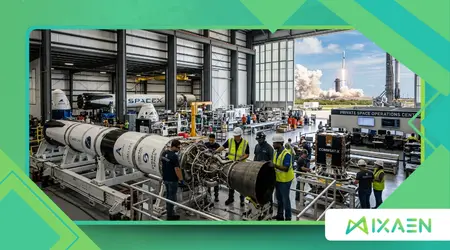
Space Exploration Economy Is Expanding Beyond Governments as we witness a historic transition from state-led scientific missions to a diverse, profit-driven marketplace in 2026.
This shift marks the end of the “flags and footprints” era, replacing it with a sustainable ecosystem of satellite networks and lunar logistics.
Private capital now flows into orbit at unprecedented rates, fueling startups that aim to mine asteroids or build commercial space stations for research.
Lower launch costs have demolished the barriers to entry, allowing small nations and corporations to participate in what was once a superpower game.
Key Market Transitions
- The Reusability Factor: How SpaceX and Blue Origin changed the financial math of orbital access.
- Satellite Services: The explosion of low-earth orbit (LEO) constellations for global internet and climate monitoring.
- Lunar Infrastructure: Private companies providing “last-mile” delivery to the moon’s south pole for scientific outposts.
- In-Space Manufacturing: Utilizing microgravity to create superior semiconductors and biological tissues for pharmaceutical use.
What is the New Space Economy and why is it growing?
The global Space Exploration Economy Is Expanding Beyond Governments because the return on investment has finally become tangible for venture capitalists and tech giants.
Orbit is no longer just a place for curiosity; it is a critical layer of our modern digital and physical infrastructure.
Satellite data now drives everything from precision agriculture on Earth to real-time supply chain tracking across the vast oceans of our planet.
This commercialization allows NASA and the ESA to act as customers rather than the sole architects of every single mission hardware.
How does launch cost reduction drive growth?
Traditional rockets were disposable, expensive assets that made space an elitist club accessible only to the wealthiest government agencies and tax bases.
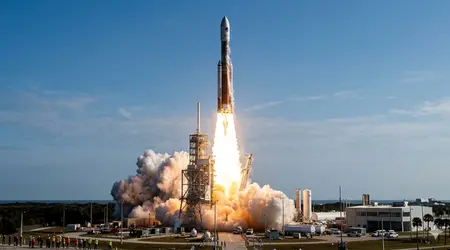
With the perfection of vertical landing technology, a single booster can fly dozens of times, slashing the price per kilogram of payload significantly.
++ Why Artemis II Mission Signals a New Era of Lunar Exploration
Why are corporations investing in the moon?
The lunar surface holds valuable resources like Helium-3 for potential fusion energy and water ice that can be converted into rocket fuel.
Companies are now building the “gas stations” of the future, ensuring that deeper missions to Mars have the propellant needed to survive.
How does private orbital manufacturing create value?
The environment of microgravity allows for the creation of materials that are physically impossible to manufacture under the heavy pull of Earth’s gravity.
ZBLAN optical fibers, for instance, can be produced with far fewer impurities in space, leading to significantly higher data transmission speeds for internet.
Pharmaceutical companies are testing protein crystallization in orbit to develop more effective drugs for treating chronic diseases that affect millions of people.
These specialized products carry high enough margins to justify the logistical costs of bringing them back down to the surface for consumer use.
Also read: The Role of Indigenous Knowledge in Modern Astronomical Research
What is the role of commercial space stations?
As the International Space Station nears its planned retirement, private firms like Axiom Space are launching modules to host researchers and tourists alike.
These outposts serve as hotels, laboratories, and film studios, creating a multi-use economy that does not rely on a single government budget.
Read more: China’s Silent Space Rise: What the World Should Pay Attention To
Can space tourism become a mass market?
While currently a luxury for the ultra-wealthy, the rapid scaling of flight frequency is expected to bring ticket prices down over the next decade.
Think of it like early aviation; what started as a dangerous hobby for pioneers eventually became a routine way for families to travel.
What do the latest 2026 financial reports indicate?
Market analysis shows that the total value of the space sector is projected to surpass $1 trillion by the early 2030s, driven by LEO.
The Space Exploration Economy Is Expanding Beyond Governments as private equity firms allocate billions to “off-world” technology portfolios to diversify their long-term holdings.
Investment is no longer limited to rockets; it includes space-based cybersecurity, orbital debris removal, and even insurance for deep-space mining equipment and personnel.
The following data reflects the share of orbital launches conducted by private entities versus traditional national space agencies over the last few years.
Orbital Launch Share Trends (2022 – 2026)
| Year | Private/Commercial Share (%) | Government/State Share (%) | Primary Payload Type |
| 2022 | 62% | 38% | LEO Communications |
| 2023 | 71% | 29% | Small-Sat Constellations |
| 2024 | 78% | 22% | Climate Monitoring |
| 2025 | 84% | 16% | Lunar Logistics |
| 2026 | 89% | 11% | Industrial/Scientific |
Why is the private sector outpacing states?
Private companies operate with a speed and risk tolerance that bureaucratic government agencies simply cannot match due to political and budgetary constraints.
This agility allows for rapid prototyping and iterative testing, which accelerates the pace of innovation and lowers the overall cost of failure.
What is the primary risk for investors?
Orbital debris, or “space junk,” poses a significant threat to the multi-billion dollar satellite networks that currently orbit the Earth in high density.
A single collision could trigger a chain reaction that renders certain orbits unusable for generations, destroying the very economy investors are trying to build.
Why is international collaboration still necessary?
Even though the Space Exploration Economy Is Expanding Beyond Governments, we still require international treaties to manage “traffic” and prevent orbital conflicts between rivals.
The Artemis Accords provide a framework for peaceful cooperation on the moon, ensuring that resources are managed fairly and transparently for all humanity.
Without a clear legal structure, the “Wild West” of space could lead to disputes over mining rights and the placement of critical lunar infrastructure.
Governments now play the role of the regulator and the referee, ensuring that the private race remains safe and sustainable for future generations.
Who owns the resources in space?
Current international law states that no nation can “own” a celestial body, but companies can own the materials they extract and process.
This legal distinction is what gives mining startups the confidence to invest in the expensive machinery required to drill into an asteroid.
Will we see a space-based stock exchange?
Some economists predict that as the volume of off-world trade increases, we will need specialized financial markets to handle space-related commodities and logistics.
Could we one day see a “Lunar Index” that tracks the price of water ice and lunar regolith just like we track oil?
How can we participate in this economic frontier?
The Space Exploration Economy Is Expanding Beyond Governments, and for the average person, this means a massive surge in high-tech job opportunities worldwide.
Engineers, biologists, lawyers, and even artists are now needed to design the habitats and legal systems of our burgeoning off-world civilization and economy.
Investing in public companies that provide satellite services or launch hardware is another way for individuals to gain exposure to this growing sector.
We are living through a “New Gold Rush,” but instead of picks and shovels, we are using software code and liquid oxygen engines.
What is the impact on Earth’s environment?
Space-based solar power is a developing field that could eventually provide clean, limitless energy by beaming it down to Earth via microwaves.
This could be the ultimate solution to our climate crisis, moving the most energy-intensive and polluting industries off our home planet entirely and forever.
Is this the beginning of a multi-planetary species?
Establishing a permanent commercial presence on the moon is the first step toward building a self-sustaining city on the red planet, Mars.
Every private launch today is a brick in the road that will eventually lead humanity to the stars and beyond our home world.
Navigating the Stars for Profit and Progress
The expansion of the space economy marks a turning point in human history where the cosmos becomes an accessible part of our global marketplace.
By moving beyond government constraints, we have unlocked a level of innovation and competition that was previously unimaginable in the mid-20th century.
Space is no longer a vacuum of cold science; it is a vibrant frontier of commerce, technology, and hope for a sustainable future.
We must continue to balance our drive for profit with a commitment to preserving the orbital environment for those who will follow us.
The stars are finally within our reach, and this time, we are going there to stay, to build, and to thrive together.
Which part of the new space economy excites you most tourism, mining, or orbital manufacturing? Share your thoughts in the comments below!
Frequently Asked Questions
Is it safe for private companies to handle space missions?
Yes, companies must adhere to strict safety regulations from organizations like the FAA, and their success rates in 2026 are comparable to national agencies.
What happens if a private company goes bankrupt in space?
International treaties require the “launching state” to remain responsible for any hardware left in orbit, ensuring that abandoned equipment is eventually removed safely.
Can I buy land on the Moon?
No, international law currently forbids the private ownership of lunar land, although you can own the rights to minerals you extract from the surface.
How does space mining help people on Earth?
By extracting rare metals like platinum from asteroids, we can lower the cost of electronics and green technologies like hydrogen fuel cells and batteries.
