
What If We Discover Life That Doesn’t Want to Be Found?

Imagine the profound cosmic shift if we discover life that doesn’t want to be found, altering our perception of our place in the universe forever.
This haunting possibility challenges the core assumption of astrobiology, which traditionally assumes that alien organisms would inadvertently broadcast their existence through biosignatures.
As planetary exploration intensifies, we must confront the reality that advanced civilizations might actively conceal their presence from cosmic neighbors like us.
This investigative analysis explores the scientific, technological, and philosophical dimensions of encountering a quiet, avoidant universe.
Key Points of This Analysis
- The Silent Cosmos: Why alien species might choose complete concealment.
- Detection Paradigms: How modern astrobiology searches for stealth technosignatures.
- The Zoo Hypothesis: Re-evaluating Earth’s isolation in a populated galaxy.
- Philosophical Shock: The societal impact of discovering an avoidant cosmic neighbor.
What Is the Concept of Cosmic Avoidance?
The cosmos appears empty, a paradox that has puzzled researchers since Enrico Fermi famously asked where everyone was during a lunch discussion.
Scientists call this the Great Silence, suggesting that civilizations might deliberately hide to avoid interstellar predation or resource competition.
If we discover life that doesn’t want to be found, our current optical and radio telescopes will prove fundamentally inadequate for the task.
We must shift our focus from looking for intentional beacons to detecting the microscopic, accidental anomalies left behind by stealth technologies.
Why Do Civilizations Choose Silence?
Evolutionary biology on Earth teaches us that camouflage is a primary survival mechanism, a rule that likely applies across the wider universe.
Renowned scientists argue that advanced societies would logically view any interstellar communication as an unacceptable security risk to their planet.
The famous “Dark Forest” theory models the universe as a night landscape where every civilization acts like an armed hunter stepping stealthily through trees.
In this environment, revealing one’s location invites immediate destruction, making total silence the only rational choice for survival.
++ How Exoplanet Water Inventories Influence Climate Stability
How Does Natural Camouflage Scale to Space?
Extraterrestrial life might not hide using advanced technology, but rather through biological adaptations shaped by the harsh environments of distant exoplanets.
For instance, organisms living inside sub-surface oceans beneath miles of ice, like on Europa, are naturally shielded from interstellar detection.
Consider the terrestrial octopus, which shifts its color and texture instantly to vanish into its surroundings when a predator approaches the reef.
A cosmic entity could employ similar macro-scale biological adaptations, blending its atmospheric signatures perfectly into the natural background radiation.
Also read: How Artificial Intelligence Is Accelerating the Search for Life
What Are Stealth Technosignatures?
Stealth technosignatures represent the accidental physical evidence of a civilization that is actively trying to minimize its observable footprint across the galaxy.
These include faint infrared waste heat leaks from cloaked megastructures or heavily shielded communication lasers that accidentally bleed into deep space.
Astronomers look for these anomalies because no concealment system can completely break the laws of thermodynamics without defying physics itself.
Even the most advanced cloaking shield must eventually radiate away its trapped heat, leaving a distinct, telltale infrared glow.
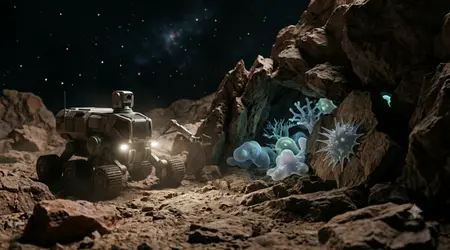
How Do We Search for Stealthy Exoplanets?
Modern astrobiology relies on cutting-edge space telescopes to dissect the chemical composition of atmospheres light-years away from our solar system.
When hunting for evasive life, scientists look for unnatural atmospheric depletion, where specific gases are intentionally scrubbed to hide industrial activity.
Imagine trying to find a dark ship sailing across a midnight ocean by looking for the slight disturbance it creates in the starlight.
If we discover life that doesn’t want to be found, it will happen through these microscopic, indirect disruptions of cosmic backgrounds.
Read more: The Debate Around Technosignatures: Searching for Alien Technology
What Is Atmospheric Engineering?
Advanced societies could deliberately inject specific aerosols into their atmosphere to mimic a dead, uninhabitable world to passing alien telescopes.
By masking methane and oxygen levels, they effectively trick our spectroscopic surveys into classifying their home as a toxic wasteland.
A real-world parallel is found in a 2024 study published in The Astrophysical Journal, which analyzed how specific artificial greenhouse gases leave distinct, inescapable thermodynamic footprints.
Even intentional atmospheric masking leaves tiny chemical boundaries that our next-generation observatories can eventually parse out.
Why Use Gravitational Microlensing?
Gravitational microlensing allows astronomers to detect distant planets by observing how their mass bends the light of a background star.
This method does not rely on the light emitted or reflected by the target planet, making it completely immune to cloaking technologies.
This technique functions like studying the wind by watching the movement of leaves, rather than looking for the invisible air current itself.
Even if a civilization completely dampens its electromagnetic emissions, its physical mass will always betray its location to our sensors.
How Do Neutrino Detectors Help Us?
Advanced quantum communications or fusion energy grids would inevitably emit vast quantities of neutrinos, nearly massless particles that easily pass through solid matter.
Because neutrinos are incredibly difficult to contain, they represent the ultimate accidental giveaway for a technologically advanced, hidden society.
Deep underground observatories, like IceCube in Antarctica, monitor the universe for these high-energy particle streams that cannot be explained by natural phenomena.
A sudden, highly structured point-source of neutrinos would pierce through any electromagnetic cloaking device an alien civilization deployed.
Why Is the Zoo Hypothesis Relevantly Discussed?
The Zoo Hypothesis suggests that advanced extraterrestrial civilizations are fully aware of Earth but intentionally avoid contacting us to allow our natural development.
Under this framework, our solar system is essentially a cosmic wilderness preserve where we are kept entirely in the dark.
If we discover life that doesn’t want to be found, it breaks this cosmic quarantine, forcing a confrontation between humanity and our silent observers.
This realization would instantly reshape our understanding of galactic law, cosmic ethics, and our global theological frameworks.
What Are the Galactic Quarantine Rules?
Anthropologists on Earth utilize strict non-interference protocols when studying isolated indigenous groups to protect them from cultural contamination and disease.
It is highly probable that a galactic community enforces similar, binding ethical directives regarding emerging planetary species like humans.
Breaking this quarantine wouldn’t require physical travel; simply proving their existence mathematically would shatter the illusion of our cosmic isolation. This sudden revelation would force the hidden observers to either acknowledge us or alter their methods of concealment.
How Do We Detect Cosmic Observers?
If an alien civilization is monitoring Earth, their observation probes must reside nearby, potentially hidden among the asteroid belt or Lagrange points.
Astronomers scan these gravitationally stable regions for Co-Orbital Objects, which could serve as hidden, ancient automated monitoring stations.
These probes would remain completely dormant, absorbing solar energy and transmitting tightly focused data beams back to their home systems far away.
Finding one would require identifying an object with an unnatural, highly polished surface hidden among chaotic space debris.
Why Does the Fermi Paradox Persist?
The persistence of the Fermi Paradox suggests that survival in the milky way might directly depend on a species’ ability to remain hidden.
Statistically, with billions of habitable planets in our galaxy, the absence of obvious radio signals points toward intentional, widespread silence.
Statistical models indicate that if even 1% of civilizations chose to broadcast aggressively, the sky would be filled with radio noise. The deafening silence we observe strongly implies a universal consensus among elders of the cosmos: stay quiet, or face the consequences.
Understanding Cosmic Concealment Methods
To contextualize how a civilization might hide from us, we must look at the intersection of thermodynamics, physics, and planetary observation metrics.
| Concealment Method | Theoretical Basis | Primary Detection Weakness | Real-world Analogy |
| Atmosphere Masking | Chemical scrubbing of biosignatures | Trace isotopic imbalances | Military camouflage netting |
| Electromagnetic Silence | Zero radio/laser broadcasting | Neutrino leakage | Submarine running silent |
| Infrared Redirection | Channeling waste heat via lasers | Omnidirectional heat bleeding | A thermos cooling down |
| Orbital Cloaking | Light-bending metamaterials | Gravitational microlensing | A cloaked aircraft silhouette |
Facing the Reality of a Silent Cosmos
The profound philosophical shock of realizing we are being actively avoided would reverberate through every sector of human civilization.
If we discover life that doesn’t want to be found, we must decide whether to respect their privacy or aggressively pursue further contact. What happens to our collective ego when we discover that humanity is viewed not as a peer, but as a dangerous biological hazard?
This discovery would challenge the foundational assumption that connection is always desirable, replacing it with a nuanced lesson in cosmic humility.
Ultimately, finding a civilization that actively shuns us might teach us more about our own destructive tendencies than a friendly interstellar greeting ever could.
Frequently Asked Questions
What happens if we try to force contact with a hidden civilization?
Forcing contact could be interpreted as an aggressive act or a security breach by a superior civilization, potentially triggering defensive measures or a complete relocation of their observable assets.
Can a civilization completely hide its existence from a telescope?
No, because the laws of thermodynamics dictate that any energy consumption must produce waste heat, which will eventually register on sensitive infrared space telescopes.
Why would an alien species fear humanity?
An alien species might view our rapid technological growth, combined with our historical penchant for warfare and resource depletion, as an unpredictable existential threat to galactic stability.
