
Why Every New Telescope Deepens the Mystery Instead of Solving It
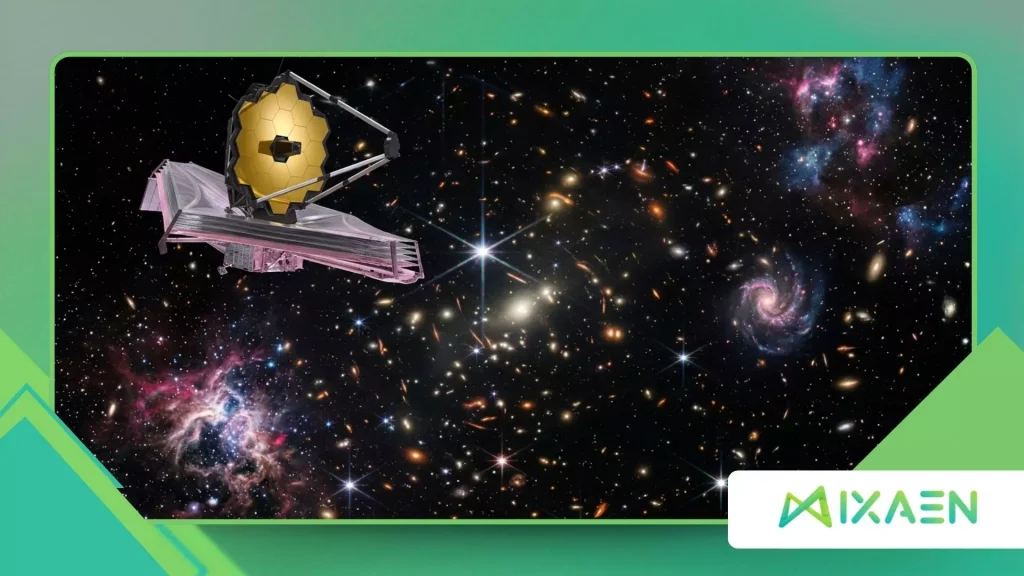
Every new telescope deepens the mystery of our universe by shattering long-held academic consensus, challenging traditional cosmological models, and introducing stunning new paradoxes.
As we advance through 2026, cutting-edge space observatories continue to beam back data that leaves top global astrophysicists questioning foundational laws of physics.
Instead of neatly wrapping up cosmic questions, each upgrade in imaging power acts like an magnifying glass revealing unexpected subatomic fractures in standard reality.
This persistent scientific phenomenon proves that peering further into the dark cosmos inevitably exposes our profound ignorance regarding the universe’s mechanics.
Critical Cosmic Discovered Paradoxes
- The Early Galaxy Conundrum: Massive, fully formed stellar systems existing at a cosmic epoch where only loose gas clouds should reside.
- The Hubble Tension Crisis: Increasingly precise instruments reveal diverging values for the expansion rate of our surrounding cosmic fabric.
- The Dark Sector Enigma: Advanced mapping sensors find zero tangible physical clues regarding the true nature of dark matter or energy.
Why Do Advanced Space Observatories Break Standard Cosmological Models?
How Does the James Webb Space Telescope Shatter Early Universe Expectations?
Astronomers expected the James Webb Space Telescope to confirm our neat linear models of cosmic evolution by capturing small, primitive stellar nurseries.
Instead, the instrument revealed shockingly massive, fully mature galaxies glowing brightly at just a few hundred million years after the Big Bang.
These ancient systems contain heavy elements that require multiple generations of stellar life and deathcycles to form naturally.
This stunning astronomical discovery means our current timelines regarding star formation and dark matter accumulation are fundamentally flawed, incomplete, or outright wrong.
Astrophysicists find themselves scrambling to rewrite core textbook chapters as these impossibly bright, highly organized structures continue to emerge from the deep cosmic dawn.
The data forces us to reconsider whether our basic assumptions about gravity and cosmic evolution require a massive, revolutionary overhaul.
Why Do Exoplanet Atmospheres Defy Chemical Classification Models?
Every single time our latest space telescopes lock their sights onto distant alien worlds, they detect highly chaotic atmospheric compositions.
Instruments like the Transiting Exoplanet Survey Satellite find gaseous giants orbiting scorching stars with bizarre weather systems featuring vaporized iron or silicate clouds.
These alien chemical profiles completely disrupt our standard, solar-system-centric formulas for planet formation, proving that nature favors extreme structural chaos over predictable patterns.
We used to believe that planets followed a neat, orderly arrangement of rocky inner worlds and icy outer giants.
Telescopes have completely dismantled this comfort, showing us “hot Jupiters” and “mini-Neptunes” packed into impossible configurations that challenge our orbital mechanics models.
Our instruments continuously remind us that our local stellar neighborhood is an odd anomaly rather than a universal standard blueprint.
++ Why Hypervelocity Stars Escape Galaxies at Impossible Speeds
How Does the Euclid Mission Complicate Dark Energy Assumptions?
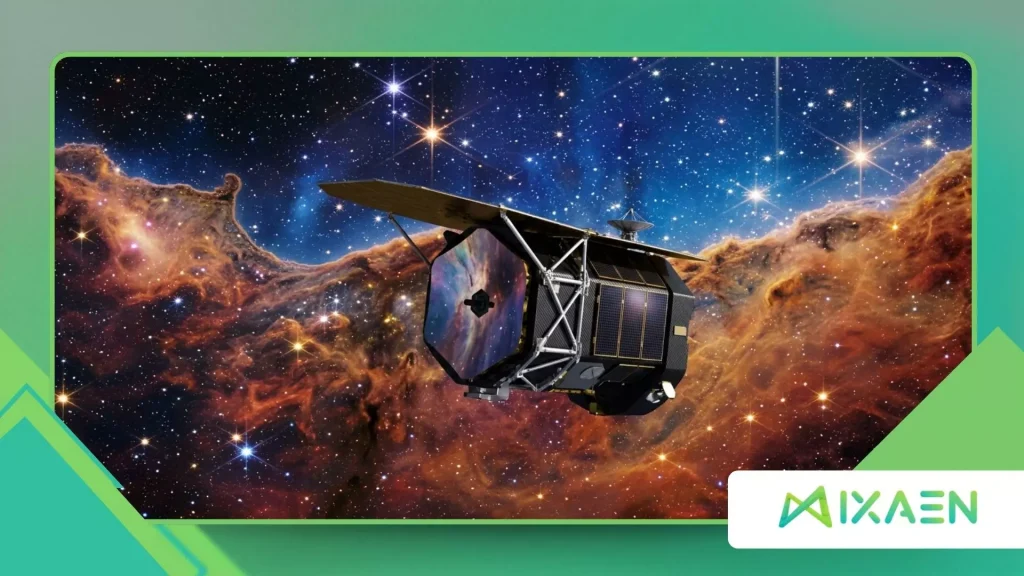
The European Space Agency’s Euclid space telescope, currently executing its deep cosmic mapping mission, aims to isolate the mysterious force driving cosmic expansion.
However, the initial waves of highly detailed 2026 data indicate that dark energy might not operate as a static cosmological constant.
Instead, its repulsive strength appears to fluctuate across different epochs of cosmic history, confounding our most reliable mathematical frameworks.
If dark energy changes dynamically over time, it introduces a massive layer of complexity that completely destabilizes our prediction equations.
This unexpected variance leaves scientists holding a broken puzzle, wondering if our understanding of Einstein’s general relativity breaks down on large scales.
We built a machine to find an answer, but it handed us a far more terrifying, shifting variable.
How Does Increasing Instrument Precision Fuel the Hubble Tension?
What Is the Hubble Tension Confronting Modern Astrophysics?
The Hubble tension represents a massive, existential crisis in modern science regarding the precise measurement of the universe’s current expansion rate.
Measurements derived from the cosmic microwave background the ancient afterglow of creation yield a distinctly slower expansion rate than measurements taken from nearby exploding stars.
For decades, researchers assumed that building highly precise instruments would eventually eliminate this frustrating numerical gap, chalking it up to simple human error.
Instead, as our tools grow increasingly precise, the statistical gap between these two completely separate methodology values has actually locked into a permanent contradiction.
The error bars have shrunk to near zero, meaning both contradictory numbers are mathematically correct within their independent measurement frameworks.
This troubling reality suggests that something fundamentally crucial is missing from our core equations regarding the universe’s grand geometric evolution.
Also read: Cosmic Lithium Problem Defies Big Bang Predictions Today
Why Do New Distance Indicators Introduce Deeper Systemic Contradictions?
To break this intellectual deadlock, scientists deployed new cosmic distance indicators like red giant stars and highly predictable Type Ia supernovae.
The latest infrared observations from modern telescopes were supposed to act like an objective referee, settling the score between the competing expansion numbers.
Instead, these sophisticated indicators generated a third, independent value that further muddies the water, expanding the cosmological debate into chaos.
Imagine three different ultra-precise atomic clocks placed in the exact same room, each stubbornly insisting on a completely unique time.
You can no longer blame a loose gear or human error; you must accept that your fundamental understanding of timekeeping is broken.
This is precisely why every new telescope deepens the mystery, transforming simple measurement tasks into profound philosophical dilemmas.
Read omre: Why Extreme Magnetar Flares Produce Unusual Gamma-Ray Signals
How Do Gravitational Lensing Studies Defy Traditional Physics?
Using massive galaxy clusters as cosmic magnifying glasses, telescopes map how dark matter bends light traveling from the edge of creation.
The resulting high-resolution dark matter maps show dense, highly localized concentrations of invisible mass that far exceed the limits predicted by standard cold dark matter formulas.
These precise observations reveal that dark matter clumps together far more aggressively than our computer models can replicate.
This structural discrepancy indicates that our current simulations lack key physical forces or particle interactions that govern the dark sector.
We are forced to invent new, unverified hypothetical particles like sterile neutrinos or axions to patch the widening cracks in our theories.
Our telescopes are essentially working too well, delivering pristine data that our current theories simply lack the sophistication to process.
Why Does Mapping the Cosmic Web Reveal Unforeseen Structures?
What Is the Unfathomable Scale of the Cosmic Web?
The cosmic web stands as the largest structural architecture in existence, a breathtaking network of hydrogen filaments binding galaxies together across voids.
The latest wide-field spectroscopic space telescopes allow us to map these invisible structures by tracking how they absorb light from distant quasars.
This mapping reveals an intricate, glowing network that looks strikingly similar to the complex neural pathways found inside a human brain.
However, this mapping process has revealed massive cosmic walls and superclusters that stretch across billions of light-years of space.
According to the cosmological principle, the universe should look perfectly smooth and homogeneous when viewed on these staggeringly large cosmic scales.
Finding these titanic, highly organized structures completely violates this foundational rule, implying that matter did not distribute evenly during the primordial inflation era.
How Do Massive Cosmic Voids Challenge Our Gravity Theories?
In between the glowing filaments of the cosmic web lie immense, terrifying expanses of near-absolute emptiness known as cosmic voids.
Our latest deep-field space surveys reveal that these voids are expanding much faster and contain far fewer stray galaxies than physics dictates.
The emptiness behaves like an active, expanding bubble that actively pushes surrounding matter away with surprising force.
Some theoretical physicists argue that these anomalies prove we must modify our understanding of gravity on large scales, moving past Einstein.
The fact that emptiness can exert such a massive influence on the structural distribution of galaxies highlights our profound lack of understanding.
The deeper our telescopes peer into these vacant spaces, the more we realize the vacuum of space holds undiscovered secrets.
Why Do Black Hole Growth Rates Contradict Thermodynamic Accretion Limits?
Our space-based X-ray and infrared telescopes have successfully located supermassive black holes sitting at the hearts of the earliest galaxies.
These gravitational monsters possess the mass of billions of suns, yet they exist mere fractions of a second after cosmic time began.
According to standard thermodynamic rules, a black hole requires billions of years of steady feeding to reach such astronomical sizes.
Finding these fully formed monsters so early is like walking into a kindergarten classroom and discovering a fully grown, six-foot-tall student.
It forces astronomers to concoct radical new theories, like the direct collapse of massive primordial gas clouds skipping the star phase entirely.
Our instruments refuse to validate our neat, orderly theories, continually forcing us to confront a far more radical reality.
Observational Capabilities of Next-Generation Space Telescopes
The informative table below tracks how our advancing imaging technologies actively disrupt established cosmological paradigms.
| Space Observatory | Primary Spectrum | Core Mission Objective | Major Foundational Disruption |
| James Webb (JWST) | Infrared | Deep primordial tracking | Revealed mature galaxies at the dawn of time |
| Euclid (ESA) | Optical / Near-IR | Dark sector mapping | Indicated dark energy strength might change dynamically |
| Nancy Grace Roman | Wide-Field Infrared | Exoplanet & Dark energy surveys | Every new telescope deepens the mystery |
| Chandra / IXPE | X-Ray | High-energy structures | Located supermassive black holes that defy growth limits |
| Vera C. Rubin (Ground) | Optical Survey | Synoptic sky mapping | Exposing unexpected large-scale cosmic web walls |
Re-evaluating Our Place in the Infinite Dark
We must conclude this cosmic exploration by realizing that every new telescope deepens the mystery because the universe possesses an infinite depth of complexity.
Our technology advances in linear steps, but each technological leap reveals that reality is non-linear, layered, and beautifully chaotic.
We build these magnificent engineering marvels expecting to find final answers, only to discover that every answered question births a dozen beautiful paradoxes.
This perpetual cycle of discovery and confusion should not inspire academic despair; rather, it should ignite a profound sense of wonder.
The fact that the universe refuses to be neatly categorized proves that we are participating in an unfolding adventure of human understanding.
Our telescopes do not fail when they break our models; they achieve their highest purpose by forcing us to look at the dark sky with fresh eyes.
Do you think humanity will ever find a final “Theory of Everything,” or will the cosmos keep hiding its secrets? Share your thoughts and theories in the comments section below!
Frequently Asked Questions
Why does a more powerful telescope create more questions instead of answers?
Higher precision reveals fine details and anomalies that were completely invisible to older instruments, completely breaking our old, simplified models.
Is the current Hubble tension a sign that Einstein’s theories are completely wrong?
Not necessarily; it likely indicates that his equations are incomplete on large scales, requiring a modification rather than a total replacement.
How can a galaxy exist if it is too old for the age of the universe?
This paradox suggests our current formulas for calculating the age of the universe or star formation speeds require massive revisions.
Will the upcoming Nancy Grace Roman telescope finally solve the mystery of dark matter?
Based on historical trends, it will likely provide highly precise data that refutes current dark matter theories, opening up entirely new fields of study.
