
Is the Universe Older Than We Think? Hidden Clues in the Data
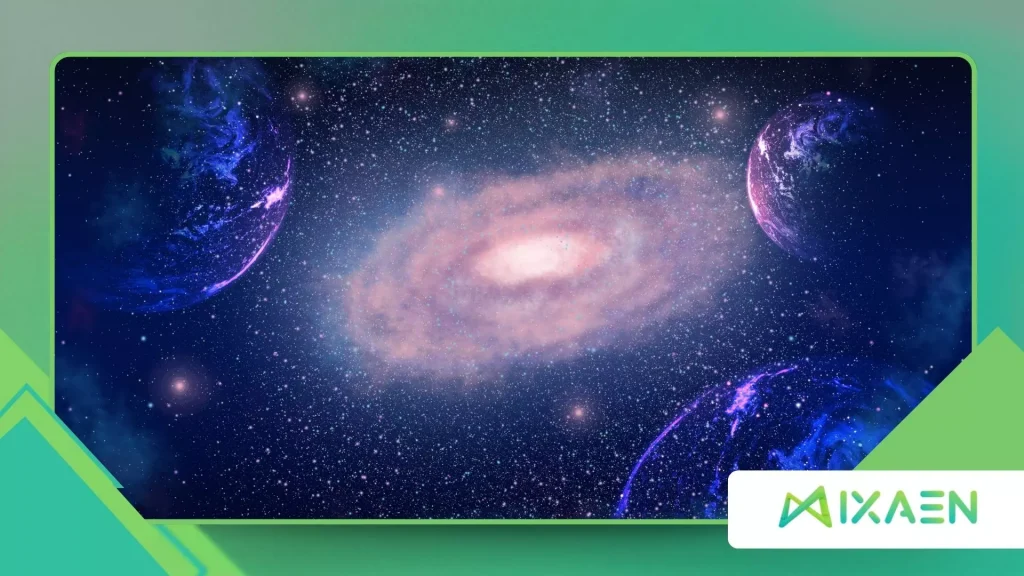
Hidden clues in the data collected by modern space telescopes challenge our fundamental understanding of cosmological time and stellar evolution.
Astronomers analyzing deep cosmic observations face an intriguing puzzle regarding the actual age of the expanding universe.
Recent measurements from advanced observatories suggest our standard cosmological models might require a profound revision.
Delving into these cosmic anomalies opens doors to revolutionary theories that stretch human comprehension beyond established scientific boundaries.
Researchers worldwide scrutinize every digital readout to determine if our timeline needs stretching by billions of years.
Are you prepared to rethink everything you know about the origin of the cosmos?
Exploring the Cosmic Timeline
- Analyzing anomalies within the cosmic microwave background radiation profiles.
- The impact of early massive galaxies on standard cosmological models.
- Evaluating alternative theories that challenge the 13.8 billion-year age.
What Are the Cosmic Anomalies That Baffle Modern Astrophysicists?
hidden clues in the data gathered by the James Webb Space Telescope reveal galaxies that formed far too early in cosmic history.
These massive stellar systems possess maturity levels that standard astrophysics models simply cannot reconcile with a young universe.
Think of finding a fully constructed skyscraper in a city built only yesterday; it defies all chronological logic.
Researchers scrutinize light spectra to verify distances and masses with unprecedented precision, ruling out simple observational errors.
When multiple independent teams confirm the same impossible galactic structures, theoretical physics must confront uncomfortable truths.
The scientific community stands at a crossroads, questioning foundational assumptions about cosmic expansion rates.
Why Do Early Galaxies Look So Mature?
Massive star clusters within the early universe exhibit heavy chemical enrichment that typically requires billions of years to accumulate.
Observing such complex structures merely a few hundred million years after the Big Bang breaks conventional timeline expectations.
Astrophysicists now test whether rapid star formation rates operated differently under primordial conditions.
++ How Transient Lunar Phenomena Continue Defying Clear Explanations
How Do Expansion Rate Discrepancies Fuel the Debate?
The ongoing Hubble tension highlights a persistent mismatch between local and early universe measurements of cosmic expansion speeds.
Different observation methods yield conflicting values, signaling gaps in our current theoretical framework.
Resolving this tension might demand expanding our timeline to accommodate slower early growth.
Also read: Cosmic Lithium Problem Defies Big Bang Predictions Today
Can Alternative Cosmologies Explain the Mystery?
Some theoretical physicists propose modifying gravity laws or introducing variable dark energy parameters to reconcile the age discrepancy.
These bold hypotheses attempt to preserve standard physics while accommodating unexpected observational realities.
Rigorous mathematical testing continues as scientists evaluate these unconventional models against fresh data.
How Do Researchers Extract Secrets From Deep Space Measurements?
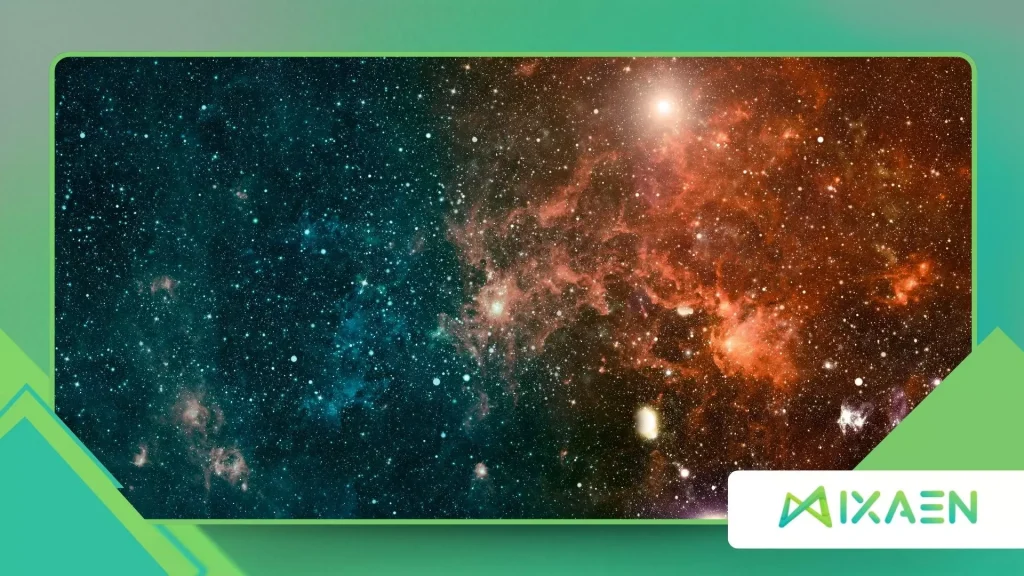
hidden clues in the data require sophisticated computational algorithms to filter out cosmic noise and interstellar dust interference.
Data scientists deploy machine learning models to parse terabytes of photometric observations captured by orbiting observatories.
This digital filtering allows astronomers to isolate faint signals from the oldest objects in the universe.
Precision calibration remains paramount when analyzing photons that traveled across space for over thirteen billion years.
Every instrument adjustment alters the final interpretation, making peer review and cross-telescope verification essential.
Science progresses slowly, ensuring that extraordinary claims withstand rigorous scrutiny before entering mainstream textbooks.
Read omre: Why Extreme Magnetar Flares Produce Unusual Gamma-Ray Signals
What Role Do Spectroscopic Signatures Play?
Spectroscopy breaks starlight into component frequencies, revealing the precise chemical composition and redshift of distant galaxies.
These atomic fingerprints act as unalterable historical records stamped directly onto incoming light beams. Analyzing these lines helps researchers reconstruct the exact timeline of element creation.
Why Is Gravitational Lensing Crucial?
Massive galaxy clusters bend and magnify light from behind them through gravitational lensing, acting as natural cosmic telescopes.
This magnification effect permits astronomers to spot extremely faint, distant objects that would otherwise remain invisible.
Utilizing this phenomenon unlocks unprecedented views into the deepest reaches of space.
How Do Supernovae Help Measure Distances?
Type Ia supernovae serve as standard candles because their intrinsic peak luminosity is well understood by astrophysicists.
Comparing their apparent brightness with theoretical values allows teams to map cosmic expansion distances accurately. These stellar explosions anchor our entire cosmic distance ladder.
Why Does the Debate Over Cosmic Age Matter to Science?
hidden clues in the data carry profound implications for our understanding of physics, thermodynamics, and the ultimate fate of reality.
Establishing an accurate cosmic age affects how we model dark matter behavior and particle interactions during the early expansion phase.
Getting the timeline right serves as the cornerstone for all future astrophysical research and space exploration.
A revised timeline would ripple across multiple scientific disciplines, rewriting textbooks and altering philosophical perspectives on human existence.
We find ourselves peering into a vast, intricate mirror that reflects our relentless drive for objective truth. The quest to measure the cosmos mirrors humanity’s eternal curiosity about its own deep origins.
How Does Dark Matter Influence the Timeline?
Dark matter provides the gravitational scaffolding necessary for galaxies to coalesce from primordial gas clouds efficiently.
Modifying its properties or distribution could alter how quickly early structures assemble in models.
Theorists constantly refine these invisible parameters to match real-world observations.
What Are the Next Steps for Observational Astronomy?
Upcoming space missions and next-generation ground-based telescopes will provide even sharper resolution of the early universe.
These instruments aim to resolve current data conflicts and pinpoint exact formation dates for the oldest stars. Anticipation runs high as the global scientific community awaits these upcoming revelations.
Can Citizen Science Contribute to This Research?
Public participation projects allow amateur astronomy enthusiasts to help classify galaxy morphologies in massive public datasets.
Distributed human computing power accelerates the discovery of rare astronomical anomalies hidden in plain sight.
Collaboration between professionals and amateurs enriches modern scientific discovery.
Observational Metrics and Timeline Comparisons
The following table summarizes the primary observational methods and their respective implications for determining the age of the cosmos.
| Observational Method | Primary Focus Area | Implication for Cosmic Age | Current Data Status |
| Cosmic Microwave Background | Remnant thermal radiation from Big Bang | Supports ~13.8 billion years standard model | Highly refined by Planck satellite |
| Globular Cluster Dating | Oldest stellar populations in Milky Way | Suggests lower limit near 13 billion years | Ongoing calibration refinements |
| JWST High-Redshift Galaxies | Early massive structure formation | Points toward potential timeline extension | Active research and debate |
Reflections on the Cosmic Horizon
Uncovering hidden clues in the data demonstrates that our comprehension of the universe remains an evolving work in progress.
Embracing these scientific uncertainties allows researchers to push past established boundaries and formulate revolutionary paradigms.
The universe guards its deepest secrets well, inviting curious minds to decode its intricate celestial architecture.
What groundbreaking discovery do you think awaits us in the next decade of space exploration? Share your insights in the comments below!
Frequently Asked Questions
Is the Big Bang theory disproven by early galaxies?
No, the discovery of early massive galaxies does not invalidate the Big Bang model itself.
Instead, it suggests that our understanding of how quickly stars and galaxies coalesced during the infancy of the universe requires significant refinement.
How do scientists calculate the age of a star?
Astronomers determine stellar ages by studying their mass, luminosity, and chemical composition using stellar evolution models.
Comparing these characteristics with known nuclear fusion rates provides a reliable estimate of how long a star has burned.
Why is there a debate over the expansion rate?
Discrepancies arise because measurements taken from the local universe yield a faster expansion rate than predictions derived from early universe radiation data.
This persistent conflict, known as the Hubble tension, drives modern astrophysical research.
