
The Deepest Cold in the Universe: What Happens Near Absolute Zero in Space?
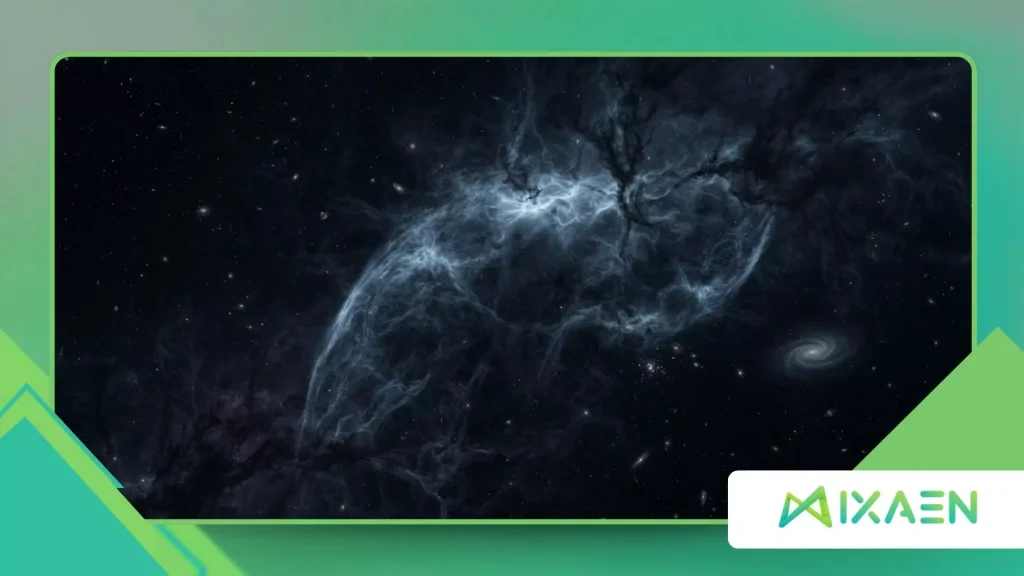
Deepest cold in the universe defines the bizarre quantum realities that emerge when temperatures approach absolute zero across deep space regions.
Modern astrophysicists continuously probe extreme cosmic laboratories to witness how matter behaves when thermal agitation ceases entirely.
Deep space harbors natural refrigeration zones that defy standard thermodynamic expectations observed on our home planet.
Exploring these hyper-frigid domains unlocks profound secrets about the fundamental fabric of spacetime.
Reaching absolute zero challenges the limits of human engineering and theoretical physics simultaneously. Atoms freeze into unified quantum waves, erasing individual identities completely.
Think of these chilled particles as synchronized dancers moving in absolute unison across a silent stage. Are you ready to explore the most chilling frontiers known to modern science?
Navigating Extreme Cosmic Chill
- Uncovering natural refrigeration mechanics within distant cosmic nebulae and voids.
- Analyzing quantum behavior and Bose-Einstein condensates near absolute zero.
- Evaluating advanced laboratory cooling technologies deployed in space missions.
- Examining thermodynamic limits governing matter in deep interstellar space.
What Is the Coldest Natural Region in Space?
Deepest cold in the universe naturally occurs inside the ghostly expanse of the Boomerang Nebula, located five thousand light-years away from Earth.
Cosmic gas expanding rapidly outward from a dying star cools down below the ambient background temperature of space itself.
This phenomenal expansion rate chills molecular clouds to an astonishing one Kelvin, freezing matter into a bizarre thermodynamic state.
Imagine opening a compressed aerosol can so fast that the metal container instantly frosts over completely.
Data published by the National Radio Astronomy Observatory confirms that the Boomerang Nebula absorbs cosmic microwave background radiation actively.
This unique thermal deficit makes the nebula colder than the rest of the expanding universe. Natural processes can push thermal energy down to remarkable limits without artificial laboratory intervention.
Space conceals thermodynamic anomalies that challenge our deepest assumptions about cosmic heat distribution.
How Does Rapid Gas Expansion Chill Nebulae?
Stellar winds expel gas clouds outward at supersonic speeds, forcing molecules to expand and lose thermal energy instantly.
This adiabatic expansion drops internal temperatures below the ambient three-kelvin microwave background. Physics turns simple gas expansion into a powerful natural refrigerator.
++ How Transient Lunar Phenomena Continue Defying Clear Explanations
Why Does the Cosmic Background Radiation Matter?
The leftover microwave radiation from the Big Bang acts as a universal floor keeping deep space warm. Only regions experiencing hyper-expansion can temporarily drop below this cosmic thermal baseline.
Understanding this baseline reveals how cosmic structures cool over billions of years.
Also read: Cosmic Lithium Problem Defies Big Bang Predictions Today
Can Interstellar Dust Pockets Reach Record Lows?
Dense dust lanes shield internal molecular cores from stellar starlight, allowing pockets of gas to approach extreme sub-kelvin temperatures.
These dark nurseries represent the quietest, most motionless environments found between galaxies. Matter rests there in near-total kinetic silence.
How Do Quantum States Change Near Absolute Zero?
Deepest cold in the universe triggers radical phase shifts where quantum mechanics overrides classical Newtonian physics entirely.
Atoms cooled near absolute zero merge into a single macroscopic quantum object known as a Bose-Einstein condensate.
Individual particle boundaries dissolve, creating a ghostly fluid that flows without any internal friction or resistance. Picture a crowded room of independent runners suddenly fusing into one fluid, synchronized wave.
Laboratory experiments aboard orbiting space stations achieve temperatures fractions of a nanokelvin above absolute zero successfully.
The International Space Station houses specialized laser-cooling apparatuses that immobilize rubidium atoms completely in microgravity.
These ultra-cold quantum laboratories allow physicists to test gravitational anomalies with unprecedented precision. Matter behaves in ways that defy everyday human intuition completely.
Read omre: Why Extreme Magnetar Flares Produce Unusual Gamma-Ray Signals
What Is a Bose-Einstein Condensate?
Bosons cooled to extreme temperatures collapse into the lowest quantum state, acting as a single giant super-atom.
This exotic state of matter exhibits quantum phenomena on a macroscopic, visible scale. Researchers use these condensates to study wave-particle duality directly.
How Do Lasers Freeze Atomic Motion?
Laser beams strike moving atoms from opposing directions, absorbing momentum and slowing their kinetic jitter instantly.
This optical molasses technique reduces atomic temperatures down toward absolute zero safely. Light energy manages to stop physical motion in its tracks.
Why Does Microgravity Aid Quantum Cooling?
Earth gravity forces falling atoms out of magnetic traps too quickly during delicate laser cooling phases.
Orbiting laboratories provide prolonged free-fall conditions, allowing researchers to reach colder temperatures than ground facilities. Microgravity transforms space into the ultimate cryogenic workbench.
Why Is Absolute Zero Physically Impossible to Reach?
Deepest cold in the universe remains an elusive theoretical boundary governed by the strict laws of thermodynamics.
The third law of thermodynamics dictates that removing the final fraction of thermal energy requires infinite work and time. Nature always maintains a residual baseline of quantum zero-point energy within every single vacuum pocket.
Think of trying to sweep every single grain of sand off a beach while the tide keeps rolling in.
Astrophysicists understand that complete thermal stagnation would violate fundamental uncertainty principles governing subatomic particle positions.
Even the quietest vacuum fluctuates with virtual particle pairs bubbling in and out of existence constantly.
Absolute zero is a mathematical horizon rather than an accessible physical destination. The cosmos prefers perpetual motion over absolute stillness.
What Is Zero-Point Energy?
Quantum mechanics dictates that particles retain irreducible kinetic energy even at absolute zero temperatures.
This inherent fluctuation prevents any physical system from becoming completely motionless. The vacuum of space is never truly empty or dead.
How Do Thermodynamic Laws Prevent Complete Freezing?
Entropy and heat transfer equations prove that extracting the final unit of thermal energy requires an infinitely large refrigerator.
Each step closer to absolute zero demands exponentially more work than the previous stage. Nature guards its thermal floor fiercely.
Can Artificial Systems Bypass Thermodynamic Limits?
Advanced cryogenic chambers utilize magnetic and laser cooling arrays to approach billionths of a kelvin successfully.
Despite these technological marvels, thermal barriers prevent absolute zero attainment consistently. Human ingenuity edges closer, but the ultimate floor remains forbidden.
Cosmic Temperature Extremes Comparison Matrix
The structured table below contrasts various thermal environments across the universe, ranging from stellar cores to quantum laboratories.
| Cosmic Environment | Temperature Range | Physical State of Matter | Dominant Thermodynamic Force |
| Stellar Core | 15,000,000+ Kelvin | Ionized plasma | Gravitational compression & fusion |
| Cosmic Microwave Background | 2.725 Kelvin | Dilute photon gas | Universal expansion cooling |
| Boomerang Nebula | ~1 Kelvin | Expanding molecular gas | Adiabatic expansion cooling |
| Space Station Quantum Lab | Nanokelvin fractions | Bose-Einstein condensate | Laser cooling & microgravity |
Embracing the Chill of the Cosmos
Deepest cold in the universe reveals the astonishing versatility of matter when driven to its absolute thermodynamic limits.
By studying natural frost pockets and artificial quantum labs, science decodes the hidden rules governing reality. Extreme cold is not merely an absence of heat, but a doorway into profound quantum revelations.
What new technological breakthroughs will emerge as we push closer to absolute zero? Share your thoughts in the comments below!
Frequently Asked Questions
Can human beings survive exposure to absolute zero in space?
Human tissue would freeze instantly upon exposure to extreme cryogenic environments, though the immediate cause of danger in open space is lack of oxygen and pressure.
Space is a poor thermal conductor, meaning objects lose heat primarily through slow radiation rather than instant freezing.
Why can temperature never drop below absolute zero?
Absolute zero represents the theoretical point where molecular kinetic energy drops to its absolute minimum value.
Removing further energy violates the quantum mechanical uncertainty principle, which requires particles to retain baseline zero-point motion.
How do scientists measure temperatures close to absolute zero?
Researchers utilize specialized electronic sensors, magnetic susceptibility scales, and laser spectroscopy to measure minute atomic velocity distributions.
These instruments calculate temperature by observing how laser light scatters off chilled atom clouds.
