
Are Interstellar Visitors Like ‘Oumuamua Natural or Artificial?
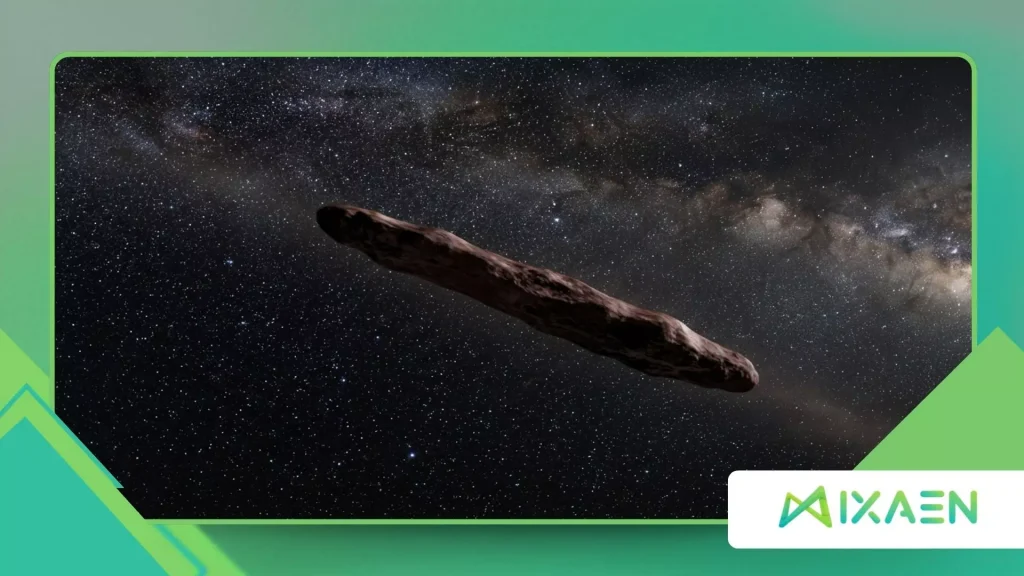
Interstellar visitors like ‘Oumuamua represent one of the most provocative enigmas in modern astrophysics.
When this object streaked through our solar system in 2017, it defied conventional classification, prompting intense debate among world-class researchers.
Its unusual acceleration and non-cometary appearance challenged every existing model of solar system dynamics. We stand at a threshold where our understanding of cosmic transit is undergoing a radical, evidence-based paradigm shift.
Determining whether such objects arise from natural geological processes or sophisticated engineering requires precise data and open-minded inquiry.
As telescopes grow more powerful in 2026, we are poised to detect more of these transients, potentially resolving the mystery of their origin.
Could these elusive travelers be the silent probes of civilizations long gone? This inquiry forces us to reconsider our place in a crowded, active, and deeply mysterious galactic neighborhood.
Navigating the Galactic Mystery
- Analyzing the anomalous acceleration of the first known interstellar guest.
- Distinguishing between natural outgassing and potential artificial light-sail propulsion.
- Evaluating the statistical likelihood of alien technology drifting through our local space.
- Future detection strategies for the next generation of space observatories.
What Defines These Objects as Anomalous?
Most visitors to our solar system follow predictable, gravity-governed paths, typically originating from the Oort Cloud or scattered Kuiper Belt populations.
These objects usually exhibit characteristic tails of dust and gas as they approach the sun, a process we call outgassing. The initial observations of ‘Oumuamua, however, revealed no such coma, leading scientists to question the standard cometary explanation.
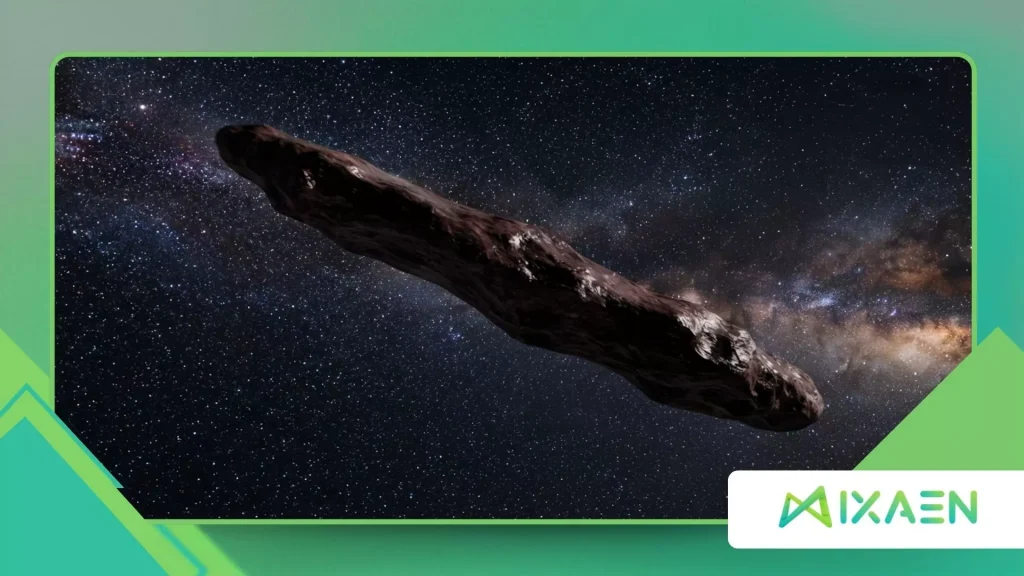
The object’s shape likely highly elongated or pancake-flat further complicated the scientific narrative, as no known natural asteroid matches these bizarre geometric proportions.
It moved with a peculiar, non-gravitational acceleration that initially suggested an engine-like boost.
While some researchers quickly proposed various natural mechanisms to explain the movement, the lingering anomalies kept the discussion firmly in the scientific spotlight.
How Does ‘Oumuamua Defy Conventional Asteroid Models?
Natural asteroids are usually chunks of rock or ice that tumble through space as they orbit their parent stars.
‘Oumuamua appeared to accelerate without the characteristic jet of evaporating gas that should have been visible through powerful infrared telescopes.
This specific behavior remains the primary catalyst for the hypothesis that external forces might be involved.
Why Do Some Scientists Argue for Artificial Origins?
The proponents of the artificial hypothesis, including theoretical physicists from top institutions, point to the object’s trajectory as evidence of intelligent design.
They argue that a thin light-sail could explain the observed non-gravitational acceleration without requiring the presence of vaporizing material.
This theory, while controversial, highlights the limitations of our current catalog of natural cosmic phenomena.
++ How Transient Lunar Phenomena Continue Defying Clear Explanations
Can Natural Mechanisms Explain Everything?
Skeptics argue that we simply lack a complete understanding of rare geological processes in distant star systems.
They suggest that frozen hydrogen or nitrogen icebergs could accelerate as they evaporate in the solar heat, mimicking propulsion.
This natural explanation remains the consensus view, yet it requires theoretical conditions that remain difficult to replicate in lab settings.
What Does Statistical Analysis Reveal About Galactic Traffic?
Estimating the density of objects in interstellar space requires rigorous mathematical modeling based on the few detections we have achieved so far.
If ‘Oumuamua was just one of many objects, the sheer volume of such items suggests a high degree of cosmic activity. The probability of intercepting such an object, given the small size of our solar system, is remarkably low.
If these interstellar visitors like ‘Oumuamua are indeed natural, then every star system must eject massive quantities of debris into the interstellar medium.
Conversely, if they are artificial, then our galaxy might be filled with remnants of past technological expansions.
Calculating the exact density of this galactic traffic remains a top priority for researchers using the latest data from the Vera C. Rubin Observatory.
How Frequent Are These Cosmic Transit Events?
Current data suggests that interstellar objects pass through the inner solar system at a rate of approximately one or more per year.
This frequency is much higher than we estimated before the discovery of ‘Oumuamua.
As detection technology improves, we expect to catalog dozens of these transients, providing a clear statistical profile of their origins.
Also read: Cosmic Lithium Problem Defies Big Bang Predictions Today
What Role Do Future Surveys Play?
Planned surveys will monitor the entire sky with unprecedented sensitivity, allowing us to spot these objects much further from the sun.
Detecting them early gives us time to redirect existing satellites for high-resolution imaging or fly-by missions.
This proactive approach turns discovery into a routine scientific operation rather than a lucky, once-in-a-decade accident.
Read omre: Why Extreme Magnetar Flares Produce Unusual Gamma-Ray Signals
Are We Looking for the Right Signals?
Searching for physical objects is only one part of the equation, as we also monitor for potential electromagnetic signatures during transit.
Integrating radio-astronomy with optical tracking provides a comprehensive view of these phenomena.
We are moving toward a multi-messenger approach to ensure no potential detail, natural or artificial, goes unnoticed.
Why Is the Debate Regarding Artificiality So Intense?
The scientific community maintains a strong preference for the simplest explanation, often called Occam’s Razor, which favors natural processes.
Proposing that interstellar visitors like ‘Oumuamua are artificial requires extraordinary evidence that current telescope data cannot yet provide. This tension between innovation and caution defines the modern era of deep-space research.
Engaging in this debate pushes science toward more rigorous standards, ensuring that our search for truth remains objective.
Even if the artificial hypothesis proves false, the process of investigating it forces us to define what “technosignatures” actually look like in the real world.
We are building a dictionary of cosmic behavior, one anomaly at a time, to prepare for the inevitable arrival of another guest.
How Does the Search Shape Our Technology?
The challenge of tracking such fast-moving objects has inspired new, hyper-responsive telescope designs. These instruments must pivot instantly to capture data before the object exits the solar system forever.
The lessons learned here directly benefit our broader goal of protecting Earth from near-Earth asteroids and other space-based threats.
Can We Ever Confirm Artificial Origins?
Definitive confirmation would require direct physical evidence, such as a recovered sample or high-resolution imagery revealing internal structures.
While a deep-space mission to intercept an interstellar visitor remains technically daunting, conceptual designs for such a chase are already under development.
Until then, we rely on indirect data analysis and complex computer simulations.
What Is the Philosophical Impact?
Finding an artificial object would permanently alter our understanding of the universe, proving we are not alone in the galaxy.
It would serve as a cosmic wake-up call, shifting our focus from planetary isolation to galactic integration. The debate itself, regardless of the outcome, enriches our perspective on the fragile, beautiful complexity of the cosmos.
Comparative Data: Interstellar Visitor Profiles
The following table summarizes the observed characteristics of significant interstellar objects detected to date, comparing natural asteroids with anomalous candidates.
| Attribute | Natural Asteroid | Anomalous Visitor |
| Outgassing Coma | Always present near sun | Often absent |
| Acceleration | Gravity-based only | Anomalous, non-gravitational |
| Shape | Irregular, spherical, or elongated | Highly unusual (Flat or thin) |
| Orbit | Periodic or hyperbolic | Strictly hyperbolic |
| Origin Probability | High (Common debris) | Extremely low (Requires exotic model) |
Conclusion
The mystery surrounding interstellar visitors like ‘Oumuamua remains a compelling driver for innovation in modern astronomy.
Whether these objects are rare natural phenomena or relics of a distant civilization, they force us to refine our observational capabilities and question our cosmic assumptions.
By systematically tracking every visitor that enters our neighborhood, we bridge the gap between myth and empirical reality. The next discovery might provide the answers we have sought for generations.
We are entering an era of unprecedented exploration. Have you thought about what finding a non-natural object would mean for humanity? Share your theories in the comments below!
Frequently Asked Questions
Could these objects be space junk from other civilizations?
It is a theoretical possibility that these visitors are remnants or non-functional probes from other systems.
Scientists classify these as potential technosignatures and continue to analyze their light curves and trajectory data for any signs of non-random behavior.
Why have we not seen more of these objects?
Until recently, our telescope sensitivity was too low to detect such small, dark objects at a distance.
With the deployment of next-generation wide-field survey telescopes, we expect to see dozens of these interstellar travelers every year, significantly increasing our dataset.
How do we distinguish between natural and artificial?
The primary diagnostic tool is the analysis of non-gravitational acceleration.
If an object accelerates without clear evidence of mass loss or outgassing, it triggers a deeper investigation into potential alternative propulsion methods, including light-sail physics.
