
How Astronauts Are Protected from Solar Radiation in Space
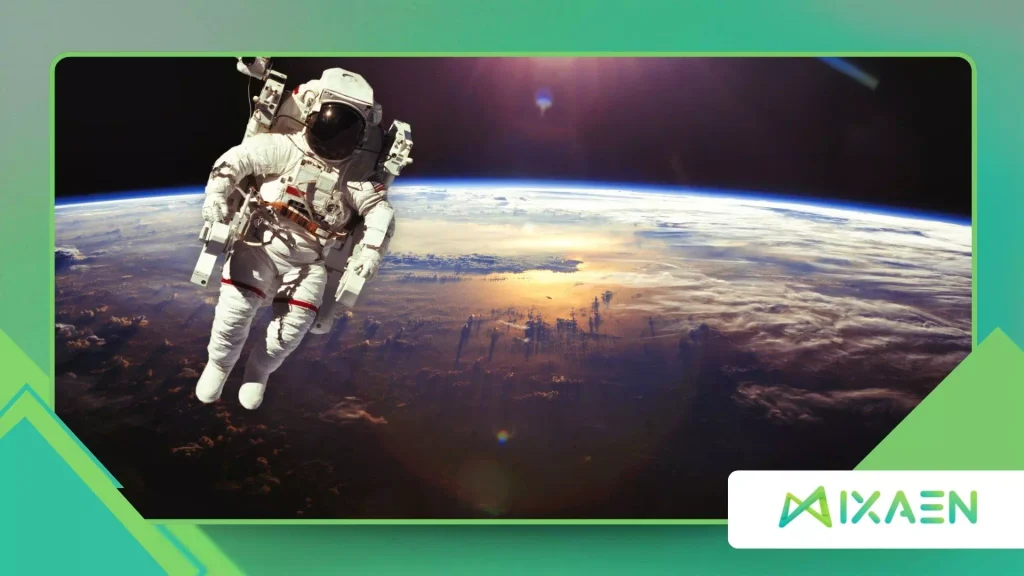
How astronauts are protected from solar radiation in space is a critical engineering and biological challenge as humanity expands its presence beyond low Earth orbit toward the Moon and Mars.
Deep space missions expose crews to intense solar particle events and galactic cosmic rays without the natural shielding of Earth’s magnetic field and dense atmosphere.
Space agencies worldwide implement sophisticated defense mechanisms, combining heavy shielding materials, real-time radiation monitoring systems, and specialized storm shelters inside spacecraft.
Understanding these protection strategies reveals how modern aerospace engineering safeguards human life against invisible cosmic hazards during extended interplanetary voyages.
What You Will Discover Inside:
- The fundamental mechanics of solar radiation and space weather hazards.
- How spacecraft engineering and physical barriers deflect high-energy particles.
- Real-time monitoring technologies used by agencies like NASA and ESA.
- Comprehensive FAQs addressing astronaut radiation safety and mitigation.
Why Solar Radiation Poses a Severe Threat to Space Explorers
What Is Space Radiation and Where Does It Come From?
Space radiation primarily originates from galactic cosmic rays, trapped radiation belts, and violent solar particle events erupting from the Sun.
These dynamic solar eruptions hurl high-energy protons and heavy ions across the vacuum of space at nearly relativistic speeds.
Without sufficient protection, astronauts are protected from solar radiation in space through rigorous planning, yet severe solar flares can still pose acute health risks.
Chronic exposure to these energetic particles can damage cellular DNA, increase cancer risks, and cause acute radiation sickness if unmitigated.
How Does the Earth’s Magnetic Field Shield Humans?
Earth’s geomagnetic field acts as an invisible invisible shield, deflecting the majority of charged solar particles away from the surface and into the Van Allen belts.
Low Earth Orbit stations like the International Space Station benefit from this partial geomagnetic protection while orbiting roughly four hundred kilometers above the ground.
Beyond this protective bubble, spacecraft enter interplanetary space where magnetic deflection is virtually absent, leaving travelers entirely exposed to ambient cosmic rays.
Consequently, interplanetary missions require advanced artificial shielding structures to compensate for the total absence of natural planetary protection.
++ How the Sun’s Magnetic Field Shapes the Entire Solar System
What Are the Biological Impacts of Cosmic Rays on Human Tissues?
High-energy galactic cosmic rays consist of stripped atomic nuclei moving with immense kinetic energy that easily penetrate standard metallic hulls.
When these particles strike human tissue, they ionize molecules and create secondary radiation cascades that damage cellular structures and neural pathways.
Prolonged exposure can accelerate cataract formation, compromise cardiovascular health, and induce degenerative changes in the central nervous system over extended mission durations.
Mitigating these profound biological hazards demands precise dosimetry, pharmaceutical countermeasures, and highly optimized vehicle designs that minimize cumulative radiation dosage.
How Spacecraft Engineering Implements Advanced Radiation Shielding
What Materials Are Most Effective Against High-Energy Particles?
Aluminum has traditionally served as the primary structural material for spacecraft, but modern engineers increasingly favor lightweight hydrogen-rich polymers and advanced composites.
Hydrogen atoms are uniquely effective at slowing down and absorbing high-energy protons without generating secondary neutron radiation hazards inside the cabin.
Researchers are actively testing polyethylene-lined sleeping quarters and water storage walls to create dense protective buffers surrounding crew living spaces.
These innovative material choices significantly reduce cumulative equivalent doses during long-duration lunar transit and deep space exploration campaigns.
Also read: Solar Tornadoes: What They Are and Why They Matter
How Do Storm Shelters Protect Crews During Solar Flares?
During sudden solar particle events, space weather forecasters provide critical warning windows allowing crews to retreat into heavily reinforced central storm shelters.
These designated safe havens concentrate food supplies, water tanks, and dense equipment storage around the sleeping quarters to maximize mass thickness.
By surrounding themselves with thick layers of hydrogenous materials, astronauts can successfully weather intense proton storms without sustaining fatal radiation injuries.
This tactical positioning strategy remains a cornerstone of emergency space mission architecture for deep space exploration.
Read more: The Parker Solar Probe: Flying Into the Heart of Our Star
Why Are Magnetic Shielding Concepts Revolutionizing Future Travel?
Future interplanetary spaceships may utilize active magnetic deflection fields, artificially replicating Earth’s magnetosphere around crew compartments to push away charged particles.
Although current power requirements and heavy superconducting magnet weights remain challenging, laboratory prototypes demonstrate promising deflection efficiencies against solar wind ions.
Combining active magnetic shielding with passive material barriers represents the next evolutionary leap in comprehensive radiation protection technology for crewed Mars missions.
As power generation technologies improve, active magnetic shielding will likely become standard equipment for deep interplanetary vessels.
What Real-Time Monitoring Systems Ensure Ongoing Crew Safety?
How Do Dosimeters Track Radiation Exposure in Real Time?
Active radiation dosimeters and tissue-equivalent proportional counters are permanently installed throughout spacecraft cabins to measure cumulative dosage rates and particle energy spectra continuously.
These sensitive instruments alert flight controllers and crew members instantly whenever ambient radiation spikes due to an unexpected solar eruption or CME impact.
Accurate real-time tracking ensures that mission commanders can adjust operational timelines, suspend extravehicular activities, and implement emergency protocols before dangerous exposure thresholds are reached.
How Do Space Weather Centers Predict Dangerous Solar Flares?
Global meteorological agencies and dedicated solar observation satellites monitor the Sun’s corona twenty-four hours a day to detect coronal mass ejections early.
Advanced predictive algorithms analyze magnetic field lines on the solar surface, providing hours or even days of advance notice before particle streams reach Earth orbit.
This crucial early warning framework allows deep space mission planners to reschedule critical spacewalks and prepare internal shielding configurations well in advance of solar storms.
Reliable space weather forecasting serves as an indispensable first line of defense for safeguarding human spaceflight operations.
How Do Crew Health Protocols Manage Cumulative Dosage Limits?
Space agencies enforce strict career radiation limits for every astronaut based on age, biological sex, and projected mission duration to manage lifetime cancer risks.
Medical teams monitor biomarker changes, perform frequent blood analyses, and evaluate individual radiosensitivity before clearing candidates for long-duration orbital flights.
If an astronaut approaches their regulatory dosage ceiling, they are permanently reassigned to ground-based roles to preserve their long-term health and wellbeing.
This rigorous medical oversight guarantees that professional exploration standards prioritize human longevity above all mission objectives.
| Shielding Category | Material Type | Protective Mechanism | Primary Advantage |
| Passive Shielding | Polyethylene / Hydrogen-rich polymers | Moderates and absorbs high-energy protons | Lightweight and non-conductive structure |
| Water Wall Buffer | Potable water storage tanks | Dense mass barrier surrounding crew quarters | Dual-purpose life support and radiation defense |
| Active Magnetic | Superconducting electromagnetic coils | Deflects charged particles via Lorentz force | Eliminates heavy physical mass requirements |
| Storm Shelters | Centralized equipment and supplies | Maximum thickness barrier during solar flares | Immediate acute protection during CME events |
Safeguarding Human Futures Among the Stars
Ensuring robust physiological safety during interplanetary voyages remains the definitive engineering frontier of modern space exploration and scientific discovery.
By synergizing advanced hydrogenous materials, active magnetic deflection concepts, and real-time space weather forecasting, aerospace engineers continue to push the boundaries of human endurance.
As humanity prepares for permanent outposts on the Moon and crewed expeditions to Mars, mastering radiation mitigation will dictate our long-term success.
Share your thoughts and experiences regarding space exploration challenges in the comments below.
Frequently Asked Questions
How do astronauts handle unexpected solar particle storms while working outside the International Space Station?
Astronauts wear specialized spacesuits with limited inherent shielding, making extravehicular activities extremely hazardous during active solar flare alerts.
When solar particle events are detected, mission control immediately orders spacewalkers to abort exterior tasks and re-enter the pressurized airlock safely.
Spacecraft systems continuously monitor proton flux levels to ensure crews never encounter unshielded particle streams during routine maintenance operations.
Why is hydrogen considered better than lead for shielding spacecraft cabins?
Lead is dense and blocks gamma rays effectively, but high-energy proton collisions with heavy nuclei generate dangerous secondary neutron radiation inside spacecraft.
Hydrogen-rich materials absorb proton kinetic energy smoothly without producing harmful secondary particle cascades, making them significantly safer for enclosed human habitats.
Consequently, modern aerospace design prioritizes water, polyethylene, and specialized polymers over traditional heavy metals for interior crew protection.
What is the maximum radiation dose an astronaut is allowed to receive during their career?
Space agencies establish career dose limits typically corresponding to an acceptable excess lifetime cancer mortality risk of approximately three percent.
These individualized limits vary depending on age at first flight and biological sex, with female astronauts often having adjusted thresholds due to specific tissue sensitivities.
Medical boards review these metrics meticulously before approving any individual for subsequent long-duration space missions.
Can personal medications protect astronauts from cosmic radiation damage?
Researchers are currently investigating radioprotective pharmaceutical compounds and antioxidant supplements that could mitigate cellular damage caused by free radicals generated during radiation exposure.
While these experimental medications cannot stop high-energy particles from penetrating human tissue, they help repair cellular DNA mutations more efficiently afterward.
Clinical trials on Earth and aboard the space station continue to evaluate the efficacy of these promising preventative pharmacological treatments.
How do lunar bases plan to protect inhabitants from unhindered solar radiation?
Future lunar habitats will likely be constructed beneath thick layers of lunar regolith or inside stable volcanic lava tubes to provide natural radiation shielding.
Robots could mound surface soil over inflatable habitats, creating an effective multi-meter barrier against both cosmic rays and micrometeorite impacts.
This in-situ resource utilization approach minimizes cargo launch mass while establishing secure, long-term living quarters for permanent lunar explorers.
