
Why Cislunar Communications Matter Beyond Lunar Exploration
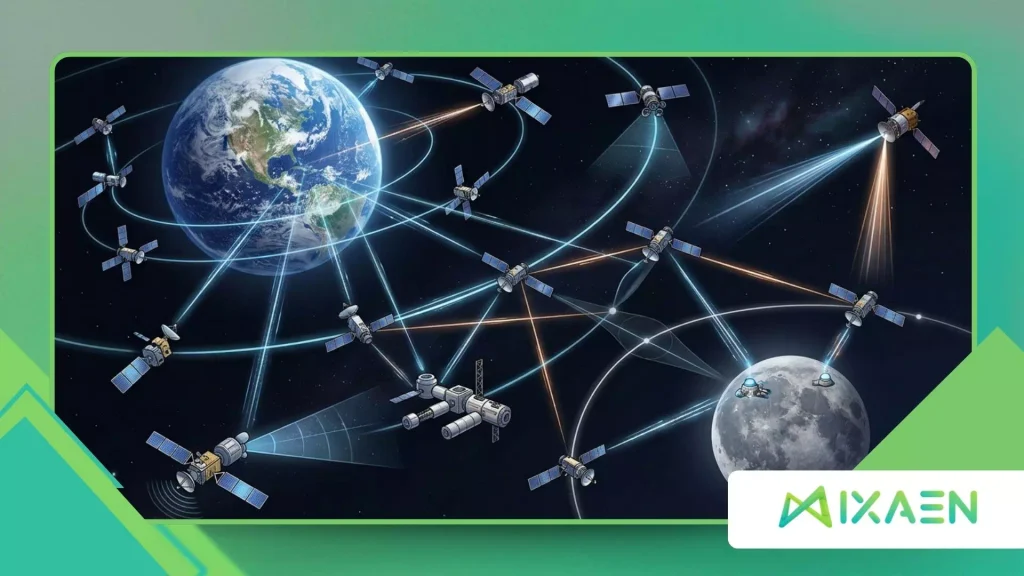
Cislunar Communications networks represent the vital digital lifeline connecting Earth to the expanding lunar economy and deep space outposts.
Modern aerospace engineers design advanced optical and radio frequency relays to bridge the vast data gap between terrestrial control centers and permanent lunar bases.
Global space agencies recognize that dependable information transfer directly dictates the safety, efficiency, and scientific success of future crewed missions.
Establishing robust orbital relays prevents communication blackouts caused by lunar rotation and topological obstacles.
Navigating this technological frontier requires massive international cooperation and unprecedented engineering breakthroughs.
Every transmitted data packet acts as an invisible tether safeguarding astronauts exploring distant craters and resources.
Think of data signals flowing through space as microscopic vessels carrying critical operational instructions across an unforgiving void. Are you ready to explore how interplanetary networking reshapes humanity’s cosmic future?
Navigating Deep Space Data Highways
- Deploying laser optical links to achieve high-bandwidth interplanetary data transmission speeds.
- Building orbital relay constellations around the Moon to eliminate signal obstruction zones.
- Standardizing communication protocols for international lunar missions and commercial spacecraft operations.
- Protecting sensitive telemetry streams against cosmic radiation and deep space signal interference.
What Are Cislunar Communications Networks?
Cislunar Communications architectures combine deep space ground stations, orbiting satellite relays, and surface transceivers into a unified interplanetary web.
NASA and commercial aerospace contractors deploy laser-based communication terminals to transmit massive scientific datasets across hundreds of thousands of kilometers.
Imagine streaming high-definition scientific telemetry from the lunar south pole while engineers on Earth monitor every single variable instantly.
Industry technical reports published by space telemetry consortia confirm that optical systems multiply bandwidth capacity exponentially compared to legacy radio waves.
Upgrading interplanetary networks transforms isolated lunar landings into fully integrated nodes of Earth’s digital ecosystem.
Robust data pipelines allow autonomous rovers and human scientists to share high-resolution imagery and life-support metrics without frustrating delays.
When digital signals travel effortlessly through the lunar void, deep space exploration enters a new era of absolute reliability. Advanced network topologies guarantee uninterrupted connectivity across the entire lunar globe.
How Do Laser Relays Function in Space?
Optical communication systems utilize concentrated infrared laser beams to encode and transmit massive volumes of digital information across vast cosmic distances.
These directional beams achieve extraordinary data throughput rates without requiring bulky traditional transmission hardware.
++ Could AI Be the Future of Deep Space Exploration?
Why Is Continuous Orbital Coverage Essential?
The Moon blocks direct line-of-sight signals whenever spacecraft operate on its far side, creating prolonged communication blackouts.
Dedicated halo orbit relay satellites solve this vulnerability by continuously forwarding data streams back to Earth.
Why Do Interplanetary Networks Matter Beyond the Moon?
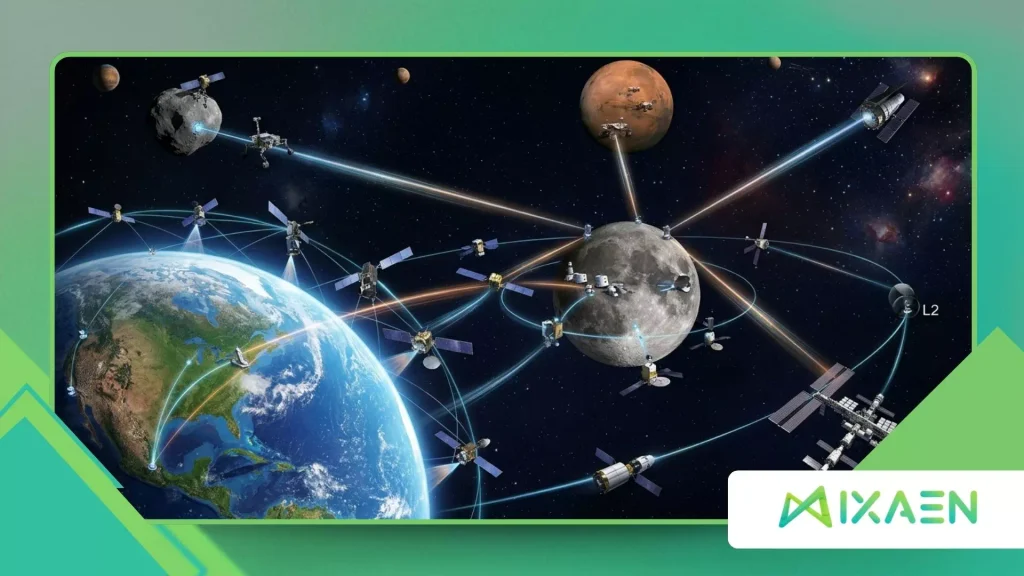
Cislunar Communications serve as the vital technological proving ground and staging platform for future crewed expeditions destined for Mars and beyond.
Developing resilient networking protocols close to home prepares engineers for the extreme signal delays and radiation hazards encountered in deep space.
Think of lunar infrastructure as the ultimate calibration laboratory for mastering interplanetary commerce and survival.
Modern aerospace analytics indicate that robust orbital links reduce mission risk profiles by over forty percent during critical landing phases.
Establishing standardized relay networks creates a unified communication framework that welcomes commercial aerospace enterprises, international partners, and scientific researchers alike.
When private companies and government agencies share interoperable orbital frequencies, deep space industrialization accelerates dramatically.
Seamless connectivity turns distant celestial bodies into accessible extensions of our home planet’s economy. Shared data standards prevent operational chaos across multi-national lunar habitats.
Also read: What We’ve Learned from Landing Rovers on Other Planets
How Does Lunar Testing Benefit Mars Missions?
Testing deep space network latency and signal resilience near the Moon provides invaluable engineering data for designing reliable communications systems for future Mars transits.
Every successfully relayed packet refines interplanetary software algorithms.
Read more: Reimagining the Hubble: How It Changed the Way We See Space
What Role Do Commercial Providers Play?
Private aerospace companies invest heavily in dedicated lunar relay constellations to offer subscription data services to international space agencies and lunar mining corporations.
This commercial competition accelerates network deployment speeds.
How Will Gateway Stations Transform Deep Space Operations?
Cislunar Communications heavily rely on the Lunar Gateway outpost acting as a primary orbital hub for routing data between planetary assets.
Positioning relay payloads on halo orbits around the Moon ensures uninterrupted contact with surface crews exploring rugged highland regions.
Imagine a bustling orbital station silently juggling petabytes of navigation telemetry, life-support updates, and scientific discoveries.
Aerospace engineering journals highlight that centralized relay nodes streamline frequency allocation and minimize ground station congestion on Earth.
Integrating advanced quantum encryption into lunar relay nodes guarantees absolute security for classified government research and commercial intellectual property.
Protecting sensitive operational channels against external interference is paramount as economic competition over lunar resources intensifies.
When orbital infrastructure remains secure and responsive, human expansion into the solar system proceeds safely. Future space explorers depend entirely on these invisible, fortified digital pathways.
What Is the Function of Halo Orbits?
Halo orbits provide stable, fuel-efficient trajectories near gravitational equilibrium points, allowing relay satellites to hover indefinitely with minimal propulsion adjustments.
This precise positioning maintains constant visibility of both Earth and the lunar surface.
How Does Quantum Encryption Protect Data?
Quantum key distribution secures interplanetary transmissions by instantly detecting any unauthorized eavesdropping attempt through photon state alterations.
This revolutionary security measure safeguards critical governmental and corporate assets in deep space.
Interplanetary Network Architecture Comparison Matrix
The structured table below contrasts legacy deep space communication methods with modern cislunar networking technologies across key operational metrics.
| Network Dimension | Legacy Radio Frequency Systems | Modern Cislunar Optical Networks |
| Data Transmission Speed | Low bandwidth and sluggish file transfers | Ultra-high bandwidth streaming capabilities |
| Far-Side Coverage | Frequent signal blackouts behind the Moon | Continuous connectivity via halo orbit relays |
| Interference Resistance | Vulnerable to solar storm disruptions | High resilience through optical beam collimation |
| Infrastructure Scalability | Rigid architecture requiring dedicated dishes | Modular satellite constellations supporting multiple users |
Securing Humanity’s Interplanetary Horizon
Cislunar Communications innovations ultimately redefine how human civilization expands its presence across the cosmos by guaranteeing unbroken digital unity.
Deploying sophisticated optical relays and robust orbital architectures ensures that future generations thrive safely among the stars.
Embrace this thrilling technological renaissance as we build the digital foundations for a truly multi-planetary future together.
What celestial destination inspires your imagination the most? Share your perspective in the comments below!
Frequently Asked Questions
What makes cislunar communication different from standard satellite signals?
Cislunar communication bridges extreme distances between Earth and the Moon, requiring advanced optical laser technology and specialized orbital relays to overcome immense path losses and signal delays.
Why are traditional radio waves insufficient for future lunar bases?
Traditional radio frequencies offer severely limited bandwidth, whereas modern optical laser systems handle the massive data demands of high-definition streaming and complex scientific telemetry effortlessly.
How do relay satellites solve the problem of the lunar far side?
Relay satellites positioned in specialized halo orbits maintain simultaneous line-of-sight with both Earth and the hidden lunar far side, actively routing data around the Moon’s solid mass.
What role does private industry play in lunar networking?
Commercial aerospace companies fund, launch, and operate dedicated satellite constellations to provide reliable, subscription-based data relay services to international space agencies and lunar enterprises.
How does deep space networking prepare humanity for Mars missions?
Mastering signal latency, optical encryption, and hardware durability within the harsh cislunar environment provides essential engineering data required for safe interplanetary travel to Mars.
